Growers to be on alert for high gout fly pressure this autumn
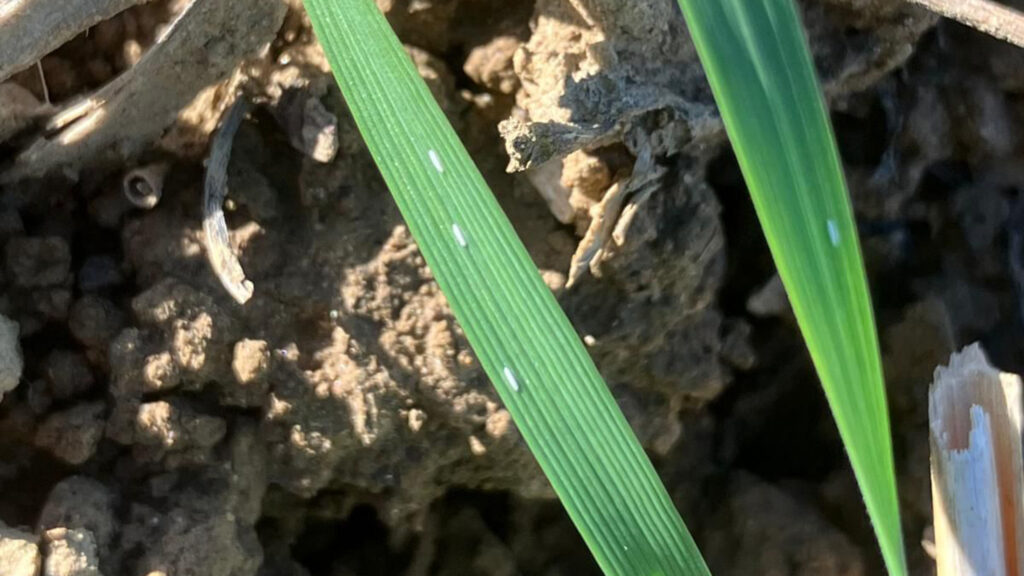 Gout fly eggs © Neil Harper
 Gout fly pressure is notably high this season, with eggs already detected on several cereal crops this autumn. Treatment thresholds are based on 50% of plants having eggs at growth stage 12.
Agrii agronomist Neil Harper says: “We saw a few eggs last year but nothing like the pressure this year.
“There have been reports of crops already meeting the treatment threshold initially in crops of early-drilled winter barley, but now winter wheats,” he says.
See also: OSR growers alerted to the threat of phoma leaf spot
Gout fly are typically 4-5mm long, yellow with black markings, and lay white/ pale cream-coloured cigar-shaped eggs on cereal leaves as soon as crops emerge.
“They lay eggs on the underside of leaves, which appear as little white dots similar to a small grain of rice,” says Neil.
These hatch into the tiller and “balloon up”, causing a bulge in the stem, which when cut open reveals a maggot that kills the tiller from the inside out.
If the 50% threshold is reached, Neil recommends applying an insecticide such as lambda-cyhalothrin before the eggs hatch.
“This is the same insecticide for barley yellow dwarf virus control, so treatments can coincide with each other,” he says.
Early attacks are likely to do the most damage, which is why timely responses are essential.
Damaged crops may develop stunted, thickened “gouted”, tillers that are most noticeable in early spring.
If sufficient control is not met, there can be carryover into the spring, with spring crops at greater risk of attack due to their limited tillering abilities.
As eggs are often on the underside of the leaf, effective spray coverage can be a challenge. That’s why Neil recommends insecticides as a last resort and advises using angled nozzles and the minimum water dose to ensure good coverage of the target area.