Growers to benefit from new cereal virus risk tool
 © Blackthorn Arable
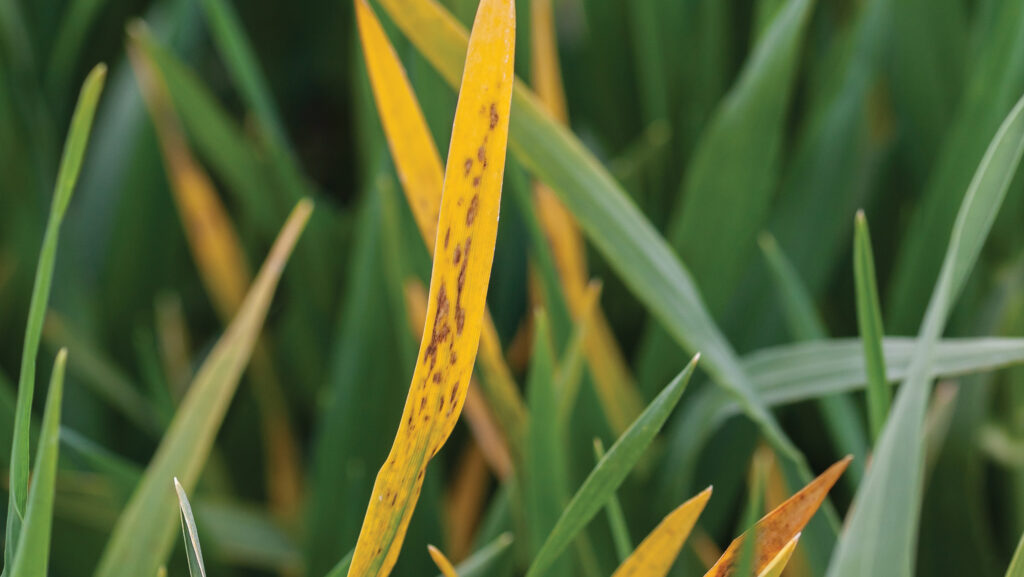
 Cereals growers have a new tool aimed at helping them achieve better control of aphids carrying barley yellow dwarf virus (BYDV) in winter wheat and winter barley.
As well as helping growers make better spraying decisions, the new tool also shows how drilling dates affect the risk of the virus.
Based on several years of AHDB-funded work, the web-based tool supersedes the the long-established temperature-based (T-sum) tool.
See also: How mapping software could simplify and speed up SFI applications
Sacha White, lead crop protection scientist at AHDB, points out that the new tool accounts for many important risk factors not considered by the T-sum tool, such as the number of aphids flying, the proportion that carry virus and the relationship between infection and yield and financial losses in susceptible varieties.
“Our research shows that using the tool’s spray and sow-date assessments, alongside local knowledge, can help reduce the number of insecticide applications and protect more yield compared to the T-sum tool when BYDV is present.”
Practical and easy to use
During 2026, AHDB worked closely with farmers to ensure the tool is practical, intuitive and effective.
To obtain an assessment, users need only enter a small number of farm-specific details, including field location, crop type, sowing date and whether the field is surrounded exclusively by arable land.
The tool also includes default values representing typical UK cropping situations, covering factors such as plant population, expected yield, grain price, insecticide treatment costs and whether the farm is receiving Sustainable Farming Incentive payments for not using insecticides.
Growers can replace the defaults with field-specific values to generate a more tailored assessment.
Supporting spray and sowing decisions
The tool’s spray assessment indicates the date when the next spray decision is needed.
This is based on the economic threshold, which is the predicted point at which the cost associated with yield loss equals the treatment cost.
The tool predicts infection impacts for several weeks, with the autumn particularly critical for management.
The predictions are strongest for autumn-applied sprays (especially the first spray), but the tool also indicates risk during winter, when colder temperatures reduce crop-infection events.
Finally, the tool’s sow-date assessment reveals how BYDV risk could change when crops are drilled earlier or later than the farm’s standard target sowing date. Drilling later can significantly reduce BYDV risks.
Farmers can find the new BYDV tool on the AHDB website.
Built on years of research
The AHDB’s new barley yellow dwarf virus (BYDV) tool is powered by a model trained on the bird cherry-oat aphid, now recognised as the most significant BYDV vector across the UK in most situations.
It uses regional data on bird cherry-oat aphid numbers (historic and actual) from the Rothamsted Insect Survey suction-trap network and a suction trap in Northern Ireland run by Agri-Food and Biosciences Institute (AFBI).
Based on virus screens over several autumns, about 20% of aphids carry BYDV on average.
AHDB explains that the model uses this historical data to determine aphid infectivity levels, but replaces this data with regional virus estimates during the season.
The use of aphid data is a major advance over the T-sum tool, which assumes that virus-carrying aphids are present at crop emergence or after a spray.
The BYDV tool also automatically uses many other inputs, such as historic, actual and forecast temperature (for the next nine days) data, as well as information on pyrethroid insecticide persistence and the diminishing returns associated with follow-up sprays.