New biostimulant offers OSR defence against flea beetle
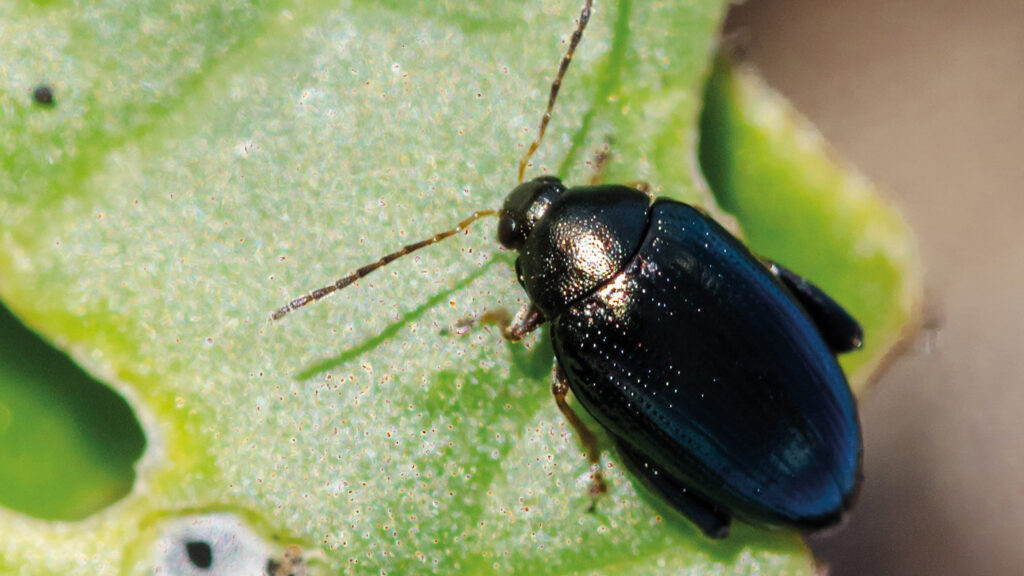 Cabbage stem flea beetle © Blackthorn Arable
 A new biostimulant offers oilseed rape growers another tool for managing cabbage stem flea beetle in emerging crop this autumn.
Reports of cabbage stem flea beetle infestations in harvested crops this summer have underlined the potential risk from the pest to this summer’s establishment of an increased area of oilseed rape.
See also: Growers warned of herbicide drift damage in seed potatoes
Finding plenty of flea beetles at harvest can be an early warning sign of local pressure for the following crop, although plenty of other factors – including distance from old crop to new crop, migration timing, drilling date and post-harvest stubble management – will play an important role in assessing risk, explained Chris Martin, Agrovista’s head of soils.
Recent experience has shown that various tactics can add up to increasing the chance of establishment, including the use of organic amendments.
That is one of the reasons Agrovista has been trialling the use of SeaBoost – a formulated combination of fish hydrolysate, Sea2Soil and L-CBF TerraFed, a liquid carbon fertiliser based on molasses.
“This is a brand-new concept we’re developing,” Mr Martin said.
Damage reduction
In Niab trials, Sea2Soil showed a 90% reduction in damage to oilseed rape leaves from cabbage stem flea beetle 12 days after application, while also lowering flea beetle damage to stems by 59% 22 days after application.
Anecdotal evidence suggests flea beetles cannot digest the sugars in the molasses in L-CBF Terrafed, which is an equivalent product to L-CBF Boost without the addition of urea and other nutrients.
“It doesn’t kill or stop them, but it seems to make them feel bloated and unhappy,” Mr Martin said.
Where Agrovista agronomists tested the concept last season commercially by tank-mixing L-CBF Boost and Sea2Soil, reports from the fields have been encouraging, he added.
“They have reported visible greening of the crop, even under low flea beetle pressure.”
Further trials to find the best timing to apply SeaBoost to test its deterrent activity in a more controlled manner are planned for this autumn.
Agrovista will also investigate mixing it with its cellulose nanofibre product, Nanomesh, which acts as a physical barrier against the pest, to find out whether that approach provides further protection.