Scientists identify key genes for slug-resistant wheat
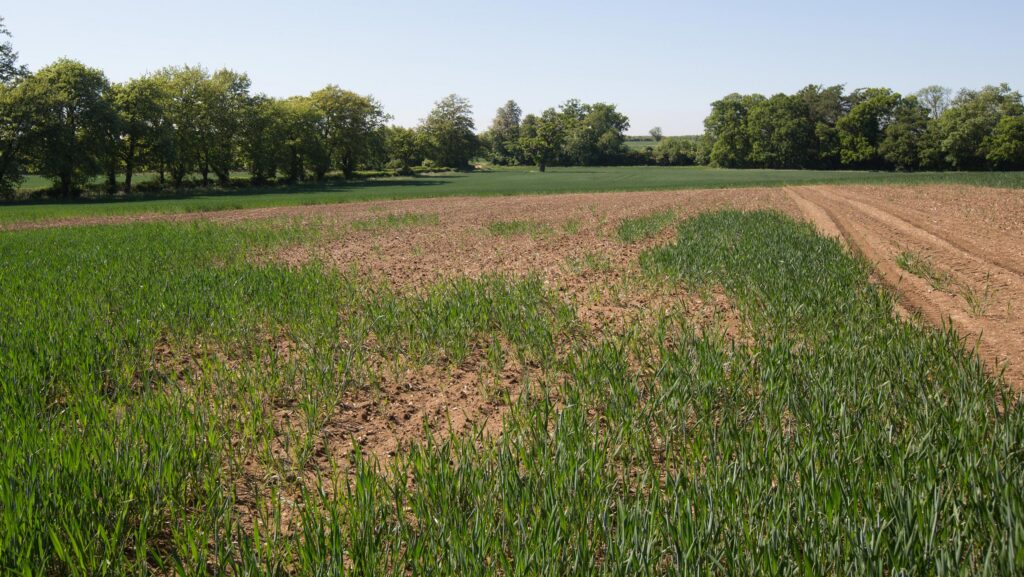 © Tim Scrivener
 The development of slug-resistant wheat varieties is edging closer as UK scientists identified three regions of the wheat genome responsible for resistance to the grey field slug.
Researchers at the John Innes Centre are working on a three-year Defra funded project known as “Slimers” which has brought together scientists, farmers and industry partners to tackle the persistent pest problem.
The findings build on more than a decade of research that began in 2015, when scientists at the John Innes Centre screened wheat varieties from the historic Watkins Collection for natural slug resistance.
A landrace wheat originally collected in Turkestan (part of modern-day Kazakhstan), known as Watkins 788, stood out.
See also: Study suggests silicon spray reduces cereal slug damage
As part of the project, farmers trialled Recombinant Inbred Lines (RILs) developed from crossing Watkins 788 with commercial wheat variety Paragon.
This allowed researchers to observe how the lines performed under varying soil types, weather conditions and slug pressure.
Dr Victor Soria-Carrasco and his team carried out detailed slug feeding trials using grey field slugs from across the UK.
“We know slug populations can vary, so using a wide range of grey field slugs helped us ensure the results represented real-world conditions,” notes Victor.
In total, researchers tested 77 Recombinant Inbred Lines alongside their parent lines.
All the wheat lines were genetically sequenced, allowing scientists to identify the genomic regions linked to slug resistance more quickly than would previously have been possible.
The discovery of the genomic regions linked to slug resistance gives plant breeders powerful new tools to develop commercial “slug-resistant” wheat varieties.
Dr Simon Griffiths of John Innes Centre said: “The thousands of data points collected in the feeding trials helped us identify the specific molecular markers, or parts of the chromosome, linked to slug resistance.
With that understanding, and the screening protocol we have developed, plant breeders can now select for those markers to produce a slug-resistant variety.”
The project was run in conjunction with the British On Farm Innovation Network (Bofin) and include project partners UK AgriTech Centre, Harper Adams University, Agrivation, Fotenix and Farmscan Ag.