Why OSR growers shouldn’t discount slugs ahead of drilling
 © Blackthorn Arable
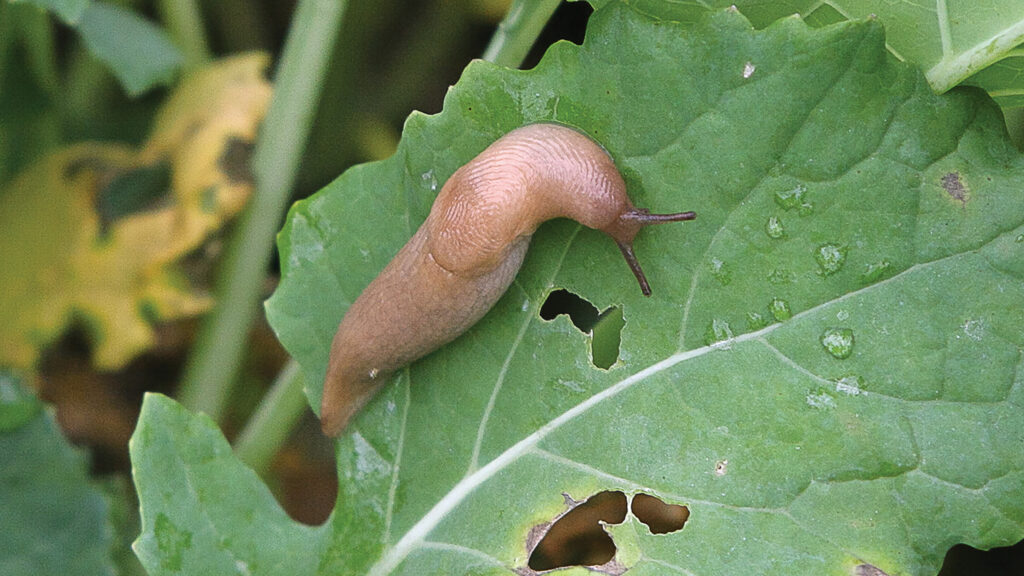
 Oilseed rape growers should not be lulled into a false sense of security when it comes to managing slug risk in the coming months, warns one agronomist.
Dry conditions through much of spring and summer may well have kept slug activity low, but numbers were high earlier in the year, and pressure could quickly increase given more moisture, warns Hutchinsons agronomist and technical support adviser, Amie Hunter.
See also: OSR growers to benefit from new slug pellet
“Oilseed rape is traditionally a high-pressure crop for slugs, and with the advice to only drill when there is adequate moisture, that means slug risk will inevitably be higher.”
In-field trapping pre-drilling is key to understanding potential pressure, rather than pelleting prophylactically, Amie advises.
“If you’re following winter barley, which has been harvested early with a flush of volunteers, looking for slug damage on those volunteers can also be a useful indicator,” she notes.
Large amounts of surface trash from the previous crop provides an ideal dark, damp, environment for slugs, so this should be managed carefully, with cultivations, or a stubble rake, she adds.
“Even if you’re baling the straw, there can still be a lot of chaff and residues left behind in bands, so it helps to even this out across the field.
“Raking or cultivating also disturbs the habitat and destroys some adults and eggs in the process.”
Good consolidation post-drilling is equally important, either on the drill itself, such as with press wheels to close the slot behind a direct-drill disc, or with a separate pass to roll afterwards.
It is critical to protect crops until they reach the leaf three/leaf four stage, so where risk dictates, pellets should be applied, Amie says.
“Adjust pellet choice according to pressure, weather, and individual situations. We see big differences in pellet quality, with higher quality wet processed pellets lasting longer in wetter conditions.
“There can also be notable differences in how well products spread at distance, so that’s something to consider too.”