Why strategic soil sampling is key to PCN control in potatoes
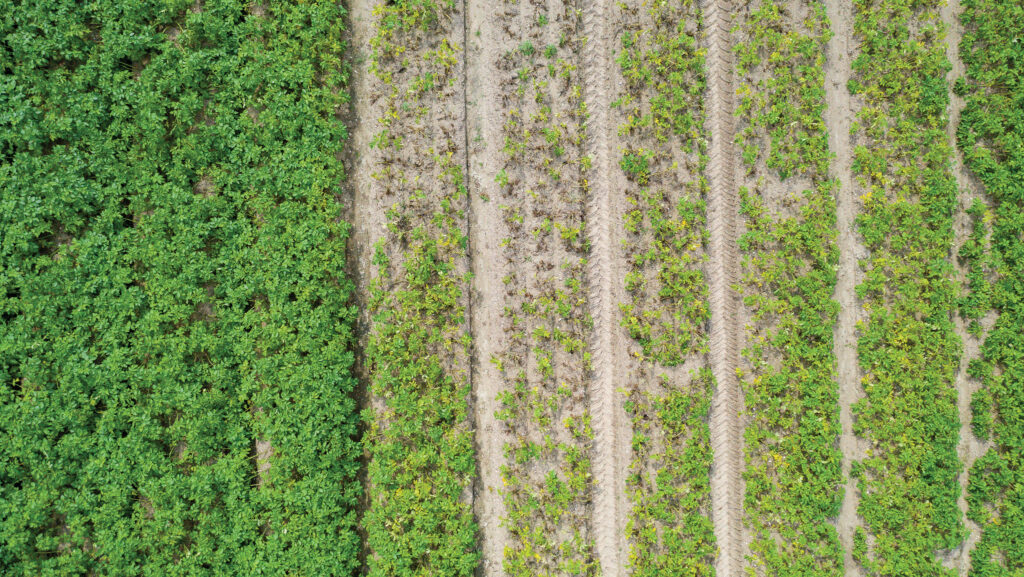 © Blackthorn Arable
 As harvest approaches, potato growers are being urged to prioritise accurate soil sampling to support more informed potato cyst nematode (PCN) management decisions for future crops.
PCN remains one of the most persistent challenges facing UK potato production, and effective control relies on an integrated pest management (IPM) approach.
See also: How to control nematodes in potatoes with a trap crop
At this point of the growing season, Simon Alexander, independent agronomist and Nematicide Stewardship Programme (NSP) group member, says the starting point is understanding what is in the soil.
“Soil testing gives you the information needed to make informed decisions, but it is important not to interpret PCN figures too literally,” he says.
Results usually show PCN cyst numbers per 100g of soil and egg numbers per gram of soil.
This is where Simon says it is important to understand the distinction between the egg count, as this indicates the current burden, and cysts, which show historical PCN activity.
He warns that sample results showing ’none found’ should not be taken to mean there is no PCN present.
“A 200g sample per hectare is only a handful of soil, so the overall chance of missing eggs or a PCN hotspot is significant,” he says.
The more soil that is sampled overall, the more reliable the result is likely to be.
To improve monitoring accuracy, Simon recommends growers should consider reducing the area being sampled – for example, sampling half a hectare rather than one hectare – which doubles the number of sampling points in the field.
“The more detailed your sampling, the better your understanding of how PCN is distributed and the more information you have to shape your management plan.”
He also recommends sampling two years ahead of planting potatoes, rather than immediately before the crop goes in to give growers time to be more proactive, while still providing a useful picture of current pressure.
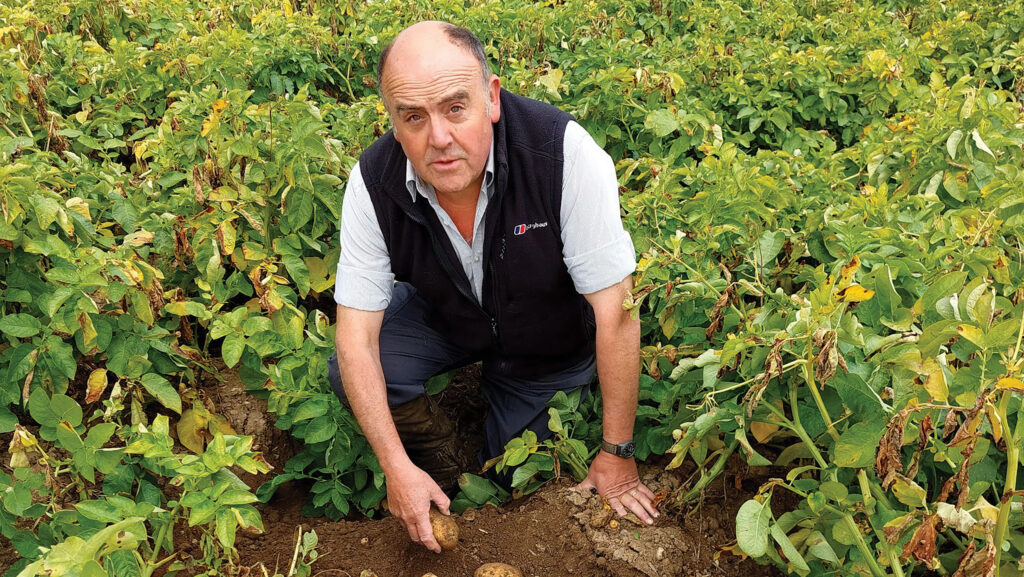
Simon Alexander © Simon Alexander
Species identification
Species identification is also becoming increasingly important. Knowing whether Globodera pallida or Globodera rostochiensis is present will influence variety choice and wider IPM planning.
Once results have been interpreted, growers can decide on the most appropriate strategy, including cultural options such as trap cropping or biofumigation, and whether products containing fosthiazate, such as Nemathorin, have a justified role.
Where pressure is low, granular nematicides may not always be required, particularly where a suitable resistant variety is being grown.
However, decisions should also consider soil type, variety performance and field history.
“If PCN levels are very high, it is worth asking whether potatoes should be grown in that area at all,” adds Simon.
Where nematicides form part of the strategy, growers should seek advice from a Basis-qualified agronomist.