Wireworm threat highlighted in new Scottish potato survey
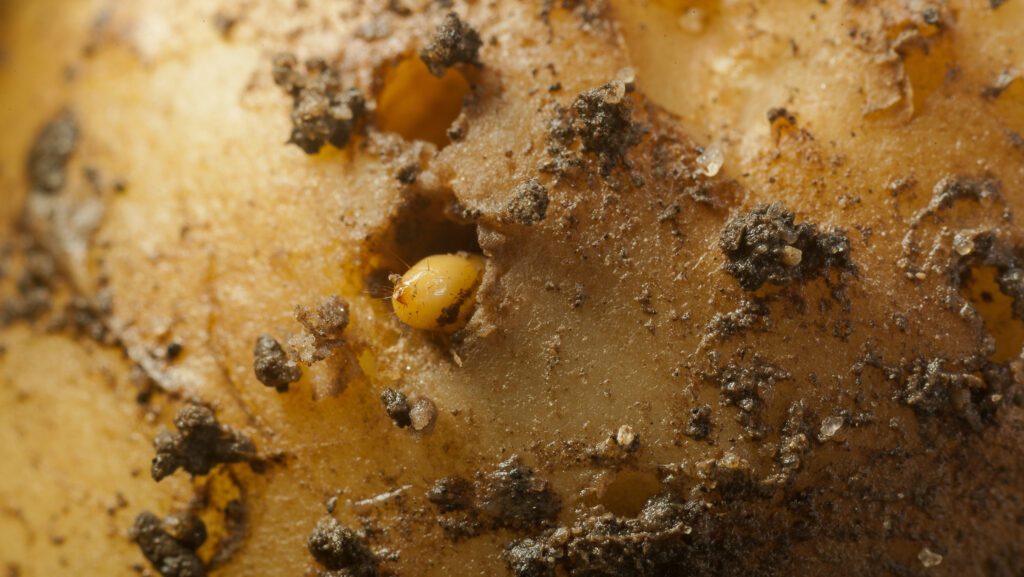 © Blackthorn Arable
 Latest research findings have revealed a clear picture of the wireworm species present in Scotland.
Agriotes obscurus remains the dominant species affecting Scottish potato crops, with the first independently confirmed records of A lineatus in the Borders, Perthshire and Angus.
Kerry Leslie, potato consultant at SAC Consulting explains a lack of modern survey data left significant gaps in understanding of the pest’s distribution north of the border.
“There hasn’t been any consistent data from Scotland on wireworm populations for a long time.
“The last UK census was carried out shortly after the Second World War and largely focused on England and Wales,” says Kerry.
See also: Yellow virus risk found to be higher in late-drilled sugar beet
To address this, the project trapped wireworm beetles in 20 potato-growing fields across Scotland, covering most major production regions.
The findings
Pheromone traps targeting the three main pest species – Agriotes obscurus, Agriotes lineatus and Agriotes sputator – proved more effective than traditional bait traps, with almost 2,000 adult beetles identified during the 2025 season.
A. obscurus remains the dominant species in Scotland. However, researchers also recorded A lineatus in the Borders, Perthshire and Angus.
“We only found small numbers, but it is the first time it has been independently confirmed here,” Kerry says.
One unexpected finding was the absence of A sputator, a species commonly encountered in England. This suggests the pest has not yet spread significantly into Scottish potato-growing areas.
Researchers also discovered another click beetle species, Hypnoidus riparius, which has received little attention in UK research but is reported to cause potato damage in Norway.
Timing of beetle activity may also be shifting. Trapping began in mid-April in line with published guidance.
But the first trap checks already contained more than 100 beetles, indicating that emergence had started earlier than expected.
“If I knew what I know now, I would have started trapping at the end of March,” says Kerry.
The findings highlight the importance of earlier monitoring to identify risk fields well in advance of potato planting.
As wireworm larvae can persist in soil for several years, effective management relies on identifying high-risk fields well before potatoes enter the rotation.
“Integrated pest management for wireworm is difficult if you only discover the problem the season before planting,” explains Kerry.
“You really need to know a couple of years ahead of time to reduce populations.”
A practical guide covering trapping methods and risk assessments is expected to be published imminently and will be accessible via the Plant Health Centre’s website.

Staying sharp shouldn't be a chore