Six new farmers join the Arable Insights farmer panel for 2026-27
A new cropping season brings a new Arable Insights farmer panel. Mike Abram does the introductions.
See also: Nutsedge findings point to gap in invasive weed defences

Anna Wylie © Anna Wylie
Scotland: Anna Wylie, Longloch Farm, Burntisland, Fife
Anna farms about 480ha split between arable and beef enterprises near Buntisland in Fife, alongside her mum, sister and with the help of a farm manager.
About 200ha of the farm is used to grow winter wheat, spring barley, winter barley and spring beans in rotation, with a proportion fed to the 170-head suckler herd in a closed-loop system.
“We’d like to integrate our cattle a bit more into the arable side to prolong the grazing season,” she says.
The wheat area is up on the farm this season as a result of the downturn in malting spring barley prices. Other crops, such as oats and oilseed rape, have been grown in the past, with Anna keen to trial new crops or practices to see whether they can fit the system.
That innovative desire led to Anna joining the British On-Farm Innovation Network as a ‘Pulse Pioneer’ in a recent project, with the farm now investigating the potential for increasing the area of beans, either for human consumption or potentially for whole cropping to add to livestock rations.
“We’re thinking of different ways of keeping the nutritional value of the beans, while not having to combine in November, which we did a couple of years ago.”
Finance is the biggest barrier to taking more risks and doing new projects, she admits. “The biggest limiting factor is trying to make it work financially.”
A delayed single farm payment (SFP) isn’t helping, while the farm also missed out on Scotland’s Future Farming Investment Scheme (FFIS) grants worth up to £20,000 for improving farm efficiency, reducing greenhouse gas emissions and protecting the environment.
The backlog from FFIS has led to the delays in paying SFP, which is causing some cashflow concerns, particularly with the high cost of diesel and other inputs, Anna says.
John Taylor © John Taylor
North: John Taylor, Lapwing Estate, Nottinghamshire/South Yorkshire
John Taylor is farm director for the Lapwing Estate, which runs 2,000ha across north Nottinghamshire, south Yorkshire and north Lincolnshire.
The business is split between organic and conventional production. The 1,400ha Polybell Farms grows about 300ha of organic brassicas, leeks and celeriac, alongside organic wheat, barley, fertility fallows and environmental stewardship schemes, while the conventional business, Lapwing Farms, rents out land for potatoes, carrots and red beet, while growing winter wheat on the remainder.
A number of factors drove the decision to switch back to conventional on the 600ha, including increased weed burdens following years of organic production, reductions in organic cereal prices and a need to lighten the load on farm management time, John explains.
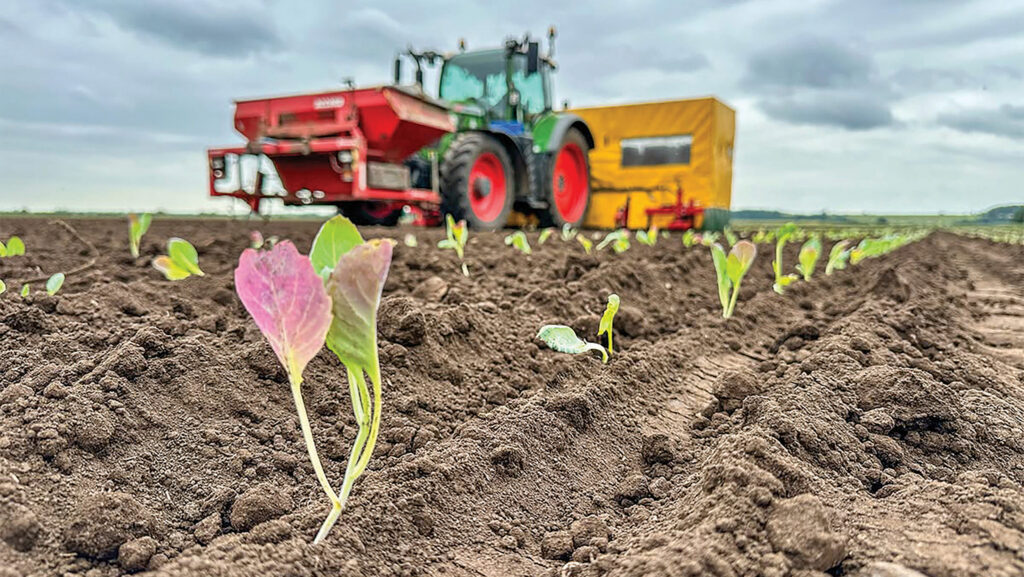
© Polybell Farms
“At the same time, we were losing our single farm payment quicker than other farms because of our size, so we made some fairly drastic changes to reduce overheads and to replace the income we were losing.”
Those included exiting organic sheep production and reducing staff numbers, as well as the part-switch to conventional. “Like a lot of businesses, we were busy fools, and it took the change in single farm payment policy to drive us into action,” John says.
One of the big successes has been restructuring the organic vegetable business to only grow for customers that could leave a margin.
Labour recruitment for brassicas remains a key challenge, while a key target for the coming year is to use water more efficiently. “We have a large abstraction licence compared with many farms, but our system needs upgrading. We need to be more resilient to weather extremes.”
The Lapwing Estate is also a keen supporter and investor in start-ups, including Earth Rover’s precision light-based weeding robot and UPP, a company that turns discarded broccoli stalks and florets into plant-based protein and fibre ingredients.
David Passmore © MAG/Emma Gillbard
South: David Passmore, Mays Farm, Ewelme, Wallingford, Oxfordshire
David Passmore runs a traditional mixed livestock and arable farm in the Chiltern Hills in Oxfordshire. Made up of mostly Grade 3 soils over chalk, with some gravel, his 360ha is two-thirds owned, one-third rented, and grows winter wheat, spring barley, peas, oilseed rape and winter oats.
About 150 beef cattle and 200 breeding ewes are fully integrated into the arable system, with forage crops, such as stubble turnips and forage mustard rotated alongside rotational leys with arable cropping.
“It’s the type of farming that used to be quite normal in the 1960s and is now relatively unusual, although it is becoming a bit more fashionable again,” David says.
Most of his arable crops are grown on seed contracts. Crops are established following the full range of cultivation strategies, from ploughing and min-till to direct drilling, depending on crop, position in rotation and field need. “We are doing less ploughing than we used to, but it is still an important part of the farming system.”
Geopolitical challenges are having a direct effect on the farm, he says. “The financial hit on a small farm like this from Donald Trump is tens of thousands of pounds in higher fertiliser and diesel costs, plus the knock-on extra cost of deliveries that come on lorries.”
Mitigating is not straightforward. “We’ve used lots of various organic manures for a long time, and while it is easy to cut costs by trimming diesel use, it’s harder to do so without trimming output.”
He is also unsure whether it is worth, at this stage, changing cropping after two dry and hot summers. “I don’t think we know enough yet about the implications. Reading about the climate on the Oxford University website, there is no doubt it is changing. Summers are getting warmer, but they’re not necessarily drier, and sometimes in a sunny summer you get very good wheat yields.
“For me, it’s not clear how it is going to unfold. In 20 years, we might look back and say, yes, it was the end of spring cropping, but I’m not quite there on making any big changes.”
Stuart Tabenor © Mike Abram
East Midlands: Stuart Tabernor, FRW Farrington & Son, Bottom Farm, Hargrave, Northants
Stuart Tabernor is farm manager for the LEAF Marque-accredited 290ha Northants arable farm that produces Farrington’s Mellow Yellow cold-pressed oilseed rape oil.
“I’m contractually obliged to grow oilseed rape,” Stuart says, only half joking.
Depending on rotation and field sizes, the farm grows 30-50ha/year, enough for up to 16 weeks of supply to the cold crushing plant, with the remainder sourced from other local LEAF farms.
Winter beans and spring oats following an overwintered cover crop also rotate around winter wheats, grown every other year. “We’re aiming to grow for the niche market of low-carbon crops for human consumption.”
© GNP
Customers for the wheat include Weetabix through the Weetabix Growers Group and Nestlé through a contract with Camgrain, while the spring oats are grown for Alpro, also via a contract with Camgrain.
“It’s how we want to farm,” Stuart says. “We’re not changing how we farm to chase the premium, rather the premiums come to us because of how we farm.”
Reducing the carbon footprint comes through direct-drilling 90% of the farm’s crops, as well as removing as much groundwork as possible, and minimising inputs where possible.
“We follow the old holistic management principle of only buying what we need and not doing what’s not needed. There are probably not many solo-working farm managers on a 290ha arable farm working core hours of 8am-5pm, Monday to Friday. But I can generally stick to them as we don’t have a big workload because of how we farm.”
Other than weather and government policy, the biggest challenge for the business is trying to find the correct solution for further reducing the dependency on synthetic inputs without having a detrimental effect on yield and quality.
“We’re trialling Johnson-Su compost, but we still have a lot to learn,” he says.
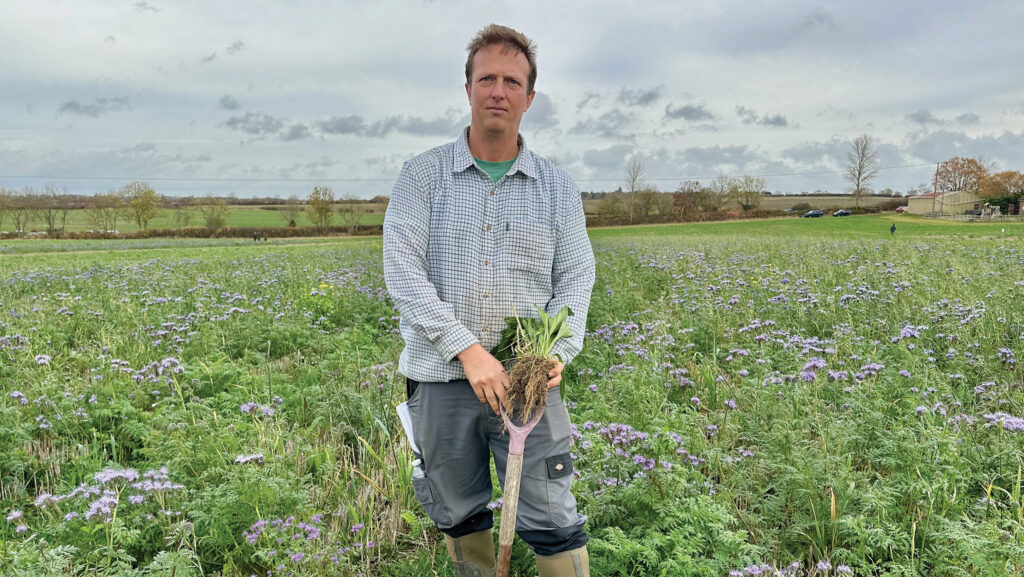
Andrew Williamson © Andrew Williamson
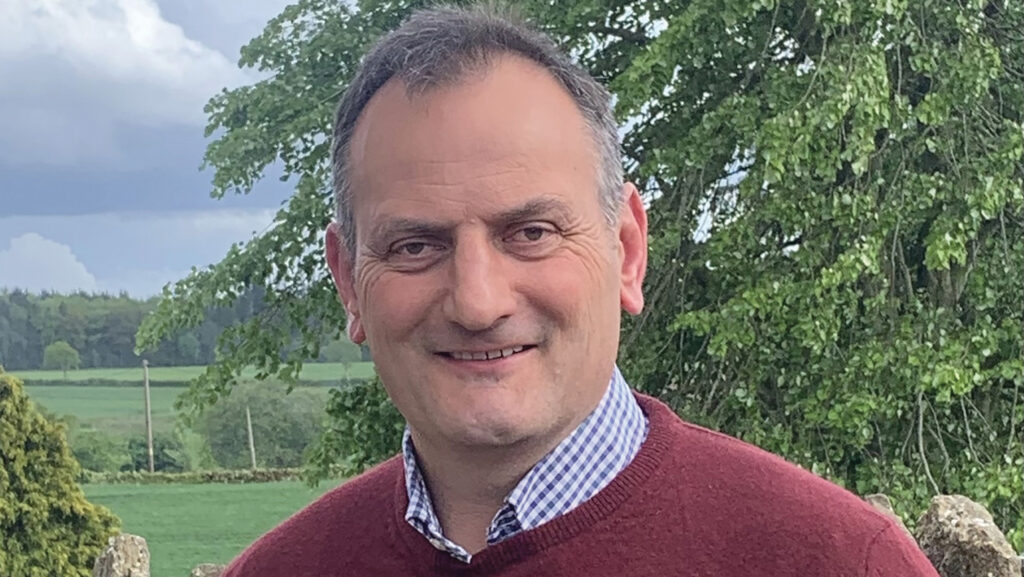
West Midlands: Andrew Williamson, Upper Overton Farm, Bridgnorth, Shropshire
Andrew Williamson farms 364ha in south Shropshire, with 90% of the predominantly silty clay loams managed under tenanted, share-farming or contract-farmed agreements.
But, somewhat unusually, he also farms with his next-door neighbour, sharing machinery between the two farms. “We don’t employ any labour full-time apart from a bit of seasonal labour at harvest.”
He focuses exclusively on growing combinable crops – winter wheat, winter oats, oilseed rape, winter barley, winter beans and spring barley – while the entire farm is in various environmental schemes, from Entry Level Stewardship/Higher Level Stewardship to Countryside Stewardship and SFI.
Oilseed rape has been the farm’s success story in the past couple of years, making him glad he persevered with it. “We’re learning how to grow it better, which has included growing a bit less, so once every six years rather than four.”
Most of the crops are direct-drilled, while he also uses precision farming techniques widely, including variable rate drilling, nitrogen, base fertiliser and on occasions fungicides and growth regulators.
Making arable cropping profitable in the current climate is challenging, he acknowledges. Generally winter cropping, especially oilseed rape, winter wheat and winter oats, provide the best gross margins, but drilling too much in the autumn has left the farm exposed to grassweed pressure, especially Italian ryegrass and, more frequently in recent years, meadow and rye bromes.
But while spring cropping is used to target fields where grassweed control has become difficult, spring crop yields have been fairly horrendous in the past three seasons, adding to the profitability challenge.
“It’s a balance,” he says. “But there is more of an argument for having a good, competitive crop and dealing with the weeds, rather than waiting to drill, not having a competitive crop and still having weeds.”
Bryony Graham © Bryony Graham
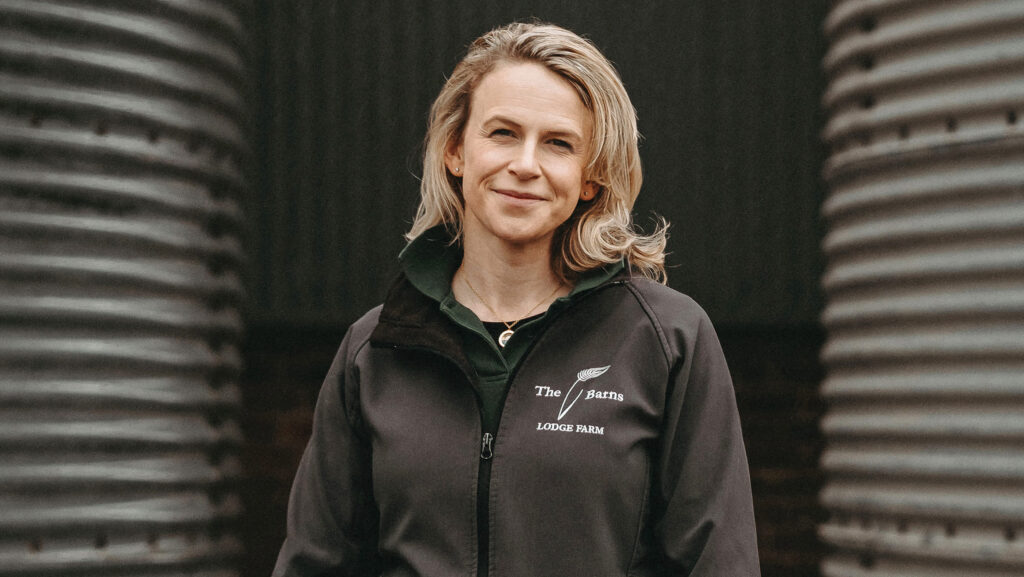
East Anglia: Bryony Graham, Lodge Farm, Nazeing, Essex
Bryony Graham farms the 300ha Lodge Farm in Nazeing, just south of Harlow, alongside brother Archie and father Robert.
With a traditional Essex heavy clay soil, the farm will grow winter wheat, winter beans and spring crops this season. The amount of spring cropping will depend on the autumn weather, she says.
“We haven’t drilled anything yet as it has been so dry. Nothing will grow, not even the weeds have germinated – it’s obscene.”
Climate, not just this autumn, is the farm’s biggest challenge, whether it is short working windows or the direct effect on crops. “Last autumn was kind for crop establishment, but we then lost 20% of yield between May and July.”
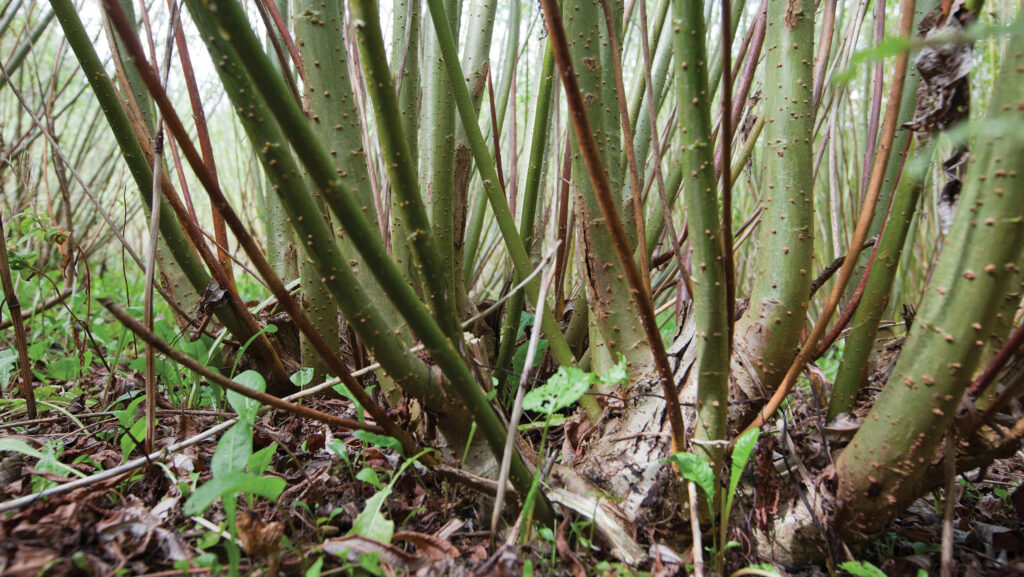
Short-rotation willow coppice is one alternative crop being tried at Lodge Farm in Essex © Mike Goldwater/Alamy Stock Photo
That climate concern is leading Bryony to explore alternative crops to grow on land she describes as marginal. “I don’t know how much of a future there is for arable,” she says. “But we are trying to be proactive rather than reactive.”
The first alternative being tried is short-rotation willow coppice. “We grow it for fuel for a biomass boiler put in under the renewable heat incentive scheme, but we have an Adopt trial looking at alternative end uses, in particular as a peat-free compost, combining it with cuttings from herbal leys to provide the nitrogen content.
“It’s one of the most drought-resilient crops – it was the only thing that stayed green on the farm this summer, so we think it is worth pursuing as an option, but we need to find an end market.”
Diversification is playing an important role in keeping the business afloat. “We converted some of our buildings into a wedding and events venue in 2018 and do about 90 events a year now. That’s quite a significant income stream – I don’t think we would be farming without that, but we’re determined to keep land in production somehow,” she says.