3 key steps for assessing biostimulant product claims
 © Tim Scrivener
The rising cost of inputs such as fertiliser, combined with the dwindling number of pesticide actives and a need to solve problems like cabbage stem flea beetles in OSR, is fuelling interest in using alternative products.
Especially as the industry comes under greater pressure to reduce pesticide use and the impact of cropping on the environment by adopting regen farming.
See also: Tips on making every kg of fertiliser count next spring
However, farmers are being bombarded with products promising higher yields, reduced inputs and solutions to problems. The challenge is selecting which product will bring real benefits from those that are a costly disappointment.
Speaking at a recent AHDB Myth-busting biologicals roadshow in Warwickshire, Adas crop physiologist Sarah Clarke says the starting point is to consider what the product is. Is it a biostimulant or a biopesticide? Also what does it do?
Generally, a biostimulant is a product that stimulates plant nutrition processes independently of its nutrient content with the aim of improving one or more of the following:
- Nutrient use efficiency
- Tolerance to environmental stress such as drought
- Improve crop quality
- Availability of nutrients in the soil or rhizosphere
Products with claims that extend beyond the definition of a plant biostimulant may be subject to other regulation.
For example, biopesticides with claims that they help manage a pest, weed or disease are regulated by the Chemicals Regulations Division of the HSE.
This means they have been assessed for the claims. However, there is no specific requirement for biostimulants, although in Northern Ireland they can be CE marked, but this is not mandatory.
What this means in practice is that biostimulants on the market have not been required to meet any efficacy testing standards.
And if they have been tested it may not have been under relevant UK crops or conditions, says Sarah.
Therefore, it is important for farmers to go through and test the evidence being given that they may work on their farm and warrant a trial.
To help farmers make these informed choices, Adas has put together some new guidance.
1. What to look for in terms of claims
Sarah says it is a three-stage process. The first step is to determine what the claim is and see if it is relevant for the crop you are planning to use it on.
And, is it relevant for the conditions you will experience on your farm?
In addition, are the claims specific and plausible? For example, a product claiming to reduce fertiliser requirement by a large quantity such as more than 50kg/ha.
Biostimulants are not meant to be fertilisers themselves. Some will claim to increase nutrient use efficiency or fix nitrogen, but this is unlikely to provide large quantities of nutrients, says Sarah.
So ask for evidence from trials where it has replaced the quantity of fertiliser claims for the crop you are planning to use and under realistic conditions.
Finally, knowing how much extra yield a crop might achieve will help you decide whether it’s worthwhile trying the product. Ask the supplier or merchant for evidence of the yield improvements.
2. What good evidence looks like
Once you have been supplied the evidence, the second step is to check how robust it is. Has it been tested in the crop you are going to use it on and in similar conditions?
For example, if the trial is in Spain, it might not behave the same as UK.
There may be a photo of treated and untreated plants, but farmers need the data to back up the benefit.
“Photos without supporting data should be treated with caution. It’s easy to pick small and large plants from the same field, which could be down to natural variation.”
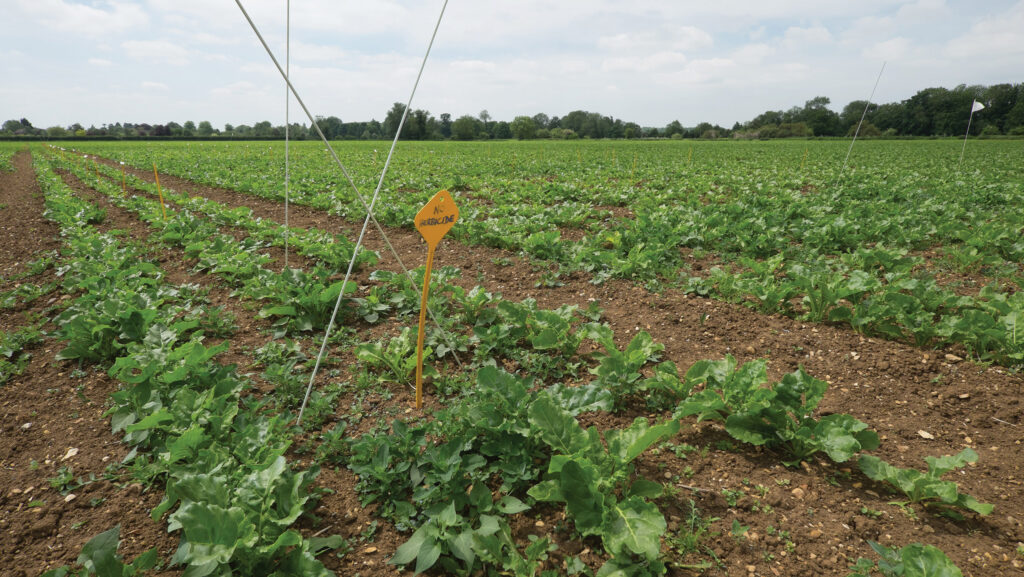
The differences seen in a trial could be down to chance, so it’s important to look for replication in results.
Has there been replication within the trial (plots)? Has there been replication across different farms in different locations? Also, has it been replicated over time in difference seasons?
© Tim Scrivener
The best way to tell if a trial has been replicated is to look for error bars on graphs or some mention of error in the text. Look for P values which give a probability that the difference seen was down to chance.
For example a P value of 0.05 (standard in scientific literature) means there is a 5% chance it was chance. “The smaller the number, the more confident farmers can be in the results.”
Also look for different letters on the bars of a graph, treatments with different letters are statistically different.
The next thing to check is what it has been compared with, as it’s essential to have an appropriate control.
For example, Sarah points out if the product contains a little nitrogen, that should also be applied to the control so the biostimulant is the only difference. This rules out any N effect.
Simple charts are attractive and easily readable, but sometimes the temptation to simplify them can exaggerate any effects.
Check the scale, it should be a sensible scale for the crop being tested and look for the units. For example, has yield been corrected to 15% moisture.
And don’t forget to check the size of the trial; is it data from a glasshouse pot trial or field? If it’s just a glasshouse, can you be confident that it will work the same way in a field?
3. Test it first
Finally, once you have decided it is worth a try, the third stage is to test it before rolling out across your farm. This will see if it delivers the benefits that you would expect before going to the full cost.
On-farm trials are now easier to carry out with NDVI and yield mapping. Although trials without statistical analysis are less robust, there are some steps farmers can take to increase their confidence in the results.
- Collaborate with other farmers to test the same product. This will make the results more trustworthy and useful.
- Take care choosing fields and designing the trial – lay out plots fairly so they fit with prior patterns of field variation. Natural field variation will usually exceed the effects of your treatments. A simple split field trial is easier to carry out, but replicated areas offer more confidence in results.
- It is important to mark and record trial and treatment locations to accurately analyse yield mapping data. Canes can help achieve accurate treatment applications. In season drone and satellite data can also be useful to explain results.
- Good harvesting is critical. Yield mapping gives the best confidence that treatment differences are real rather than from in field variation. A weighbridge can be used, but it will need an accurate measure of the area. Combine data can be used, but remember, it can be affected by non-full swaths and turning areas.
Different types of biostimulants |
|
|
Biostimulants cover a very diverse range of products with lots of complicated terminology. Basically, they fall into two broad categories, microbial/fungal and non-microbial. Examples include seaweed extracts, humic acids and microbial products. They often claim to improve abiotic stress resistance, yield or nutrient efficiency. |
|
|
Group |
Product type |
|
Non-microbial |
Amino acids |
|
Seaweed extracts |
|
|
Humic and fulvic acids |
|
|
Protein hydrosalates |
|
|
Synthetic or chemical biostimulants such as silicon |
|
|
Microbial or fungal |
Arbuscular mycorrhizal fungi |
|
Non-pathogenic fungi |
|
|
Microalgae |
|
|
Growth promoting bacteria |
|
|
Cyanobacteria |
|
Myth-busting roadshows
The experts were speaking at the recent AHDB Myth-busting biologicals roadshow 2026-27 at Stoneleigh. Check out the other roadshow locations in the coming weeks at the dedicated AHDB web page.
The Biostimulants: Making Evidence-based Decisions For Your Farm booklet was produced by Adas and funded as part of the Defra project “Efficacy, Safety and Environmental Impacts of Plant Biostimulants”. It can be found at farmpep.net/resource/biostimulants-making-evidence-based-decisions-your-farm.
For farmers looking to set up a trial, an Adas guide is available