5 reasons why ryegrass is the UK’s most difficult weed
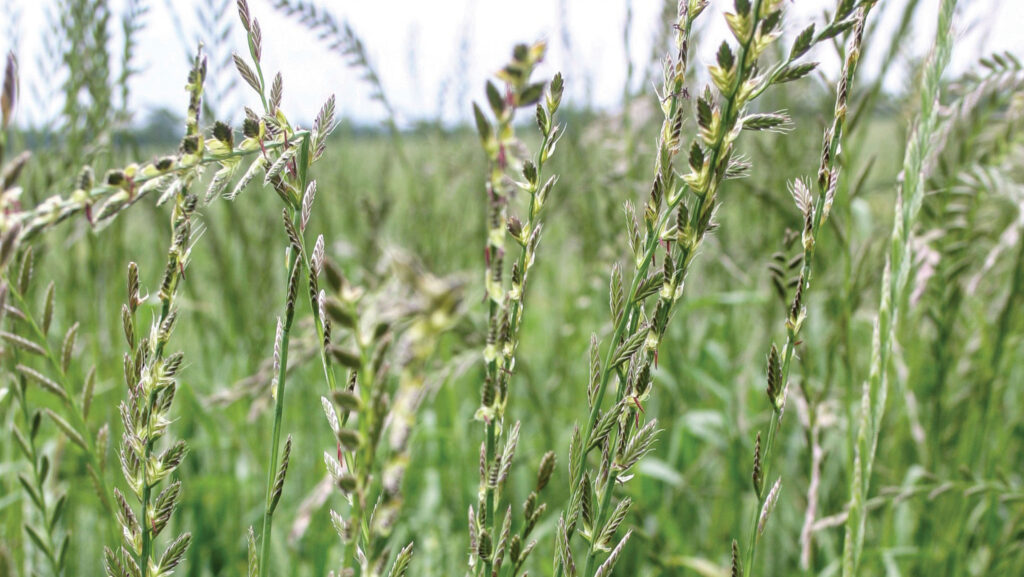 © Blackthorn Arable
 The AHDB, Rothamsted Research and Niab all rank ryegrass as the UK’s number one weed.
Here, experts from Adas and BASF discuss what makes ryegrass so challenging and how to manage it on farm.
See also: How to tackle the increasing problem of Italian ryegrass
(1) Ryegrass is twice as competitive as blackgrass
“One of the reasons ryegrass is so problematic is because it is very vigorous and fast growing,” explains Matt Keane, BASF agronomy manager.
“As a result, it competes aggressively with crops for light, water and nutrients, robbing yield in the process.”
(2) Prolific and persistent seeds
A single plant can easily produce more than 20 heads, resulting in upwards of 5,000 seeds for each plant.
While the majority of seeds germinate or degrade within two to seven years, some dormant seeds can survive deep in the soil profile for up to 20 years.
“There is a population level implication of not getting enough control in a single year,” adds John Cussans, principal consultant at Adas.
“With the population able to increase within a single generation, not only are you impacted in the crop that you’re managing right now, your costs in future crops escalate, due to the seed burden return that you’re going to have to manage for several years into the future.
“Weed control is important for economically sustainable crops.”
(3) Massive yield losses from low numbers
A population of just one or two ryegrass plants/sq m can reduce winter wheat yields by 5% to 10%.
“Blackgrass plants can cost you yield, which is significant, but ryegrass impact is even worse. This aggressive grassweed will take hold if robust control is not achieved,” notes Stuart Kevis, BASF business development manager.
(4) Protracted emergence
The majority of ryegrass seeds germinate between September and November, although some will chit in spring.
“While we’d expect around 90% of a blackgrass population to have chitted by mid-October, it is likely that only 40-50% of the ryegrass population will have done so,” says Matt.
“Delayed drilling and stale seed-beds remain fundamental tools, but the staggered emergence makes them less effective against ryegrass. Autumn is when ryegrass germination peaks, so using the best chemistry at pre-emergence continues to be the most effective strategy.”
(5) Widespread herbicide resistance
Italian ryegrass populations develop more diverse herbicide resistance more quickly than blackgrass populations do.
Today there are populations with resistance to acetyl-CoA carboxylase (ACCase) inhibitors, acetolactate synthase (ALS) inhibitors, group 15 chemicals such as flufenacet and/or non-selective chemistry like glyphosate.
“Herbicide-resistant ryegrass is much more challenging than blackgrass,” says John.
“We’re beginning to see a trend towards increased tolerance to the pre-ems in blackgrass. But the situation with flufenacet in ryegrass is much more worrying with some populations incredibly tolerant.”
Effective management of ryegrass
While the principles of managing ryegrass are the same as blackgrass, the weed’s characteristics and behaviour change the risk equation.
Its tendency for staggered germination, for example, reduces the impact of autumnal activities, though the experts agree, it remains the optimal time for control.
“Autumn sees ryegrass germination peak,” notes BASF’s Stuart Kevis. “It is also when the plants are at their most vulnerable, so this is best time to control it.”
“Protracted emergence makes delayed drilling more important, the longer there is for the seeds to chit, the more of the population will be controlled.”
Matt Keane adds that using the best chemistry like Luximo (cinmethylin) first helps make the most of the opportunity.
“Looking out at some fields near me, I can already see a strong flush of ryegrass coming through.
“While ryegrass germination is more staggered than blackgrass, the first flush remains the largest, so your strongest chemistry must be first in your programme.”
Adas’s John Cussans agrees, noting that one of the best ways to reduce risk is to get the strongest chemistry on first, rather than leaving the window open for poor conditions to remove the chance to complete a sequence.
He also says that with ryegrass able to develop resistance quickly, applying multiple modes of action is essential.
“Farmers and agronomists on the ground have to make some decisions about risk. If you’ve got a really tight sequence and miss the second part or even worse, you skip the first part, it is highly unlikely that you will achieve the control needed,” he says.
Ultimately, ryegrass is the UK’s number one weed because its behaviour shifts the balance of risk in ways blackgrass does not.
Controlling it comes down to recognising that, and paying close attention to the details – the timing, the sequence, and the chemistry you use first.