Glyphosate – pros and cons of another GB licence renewal
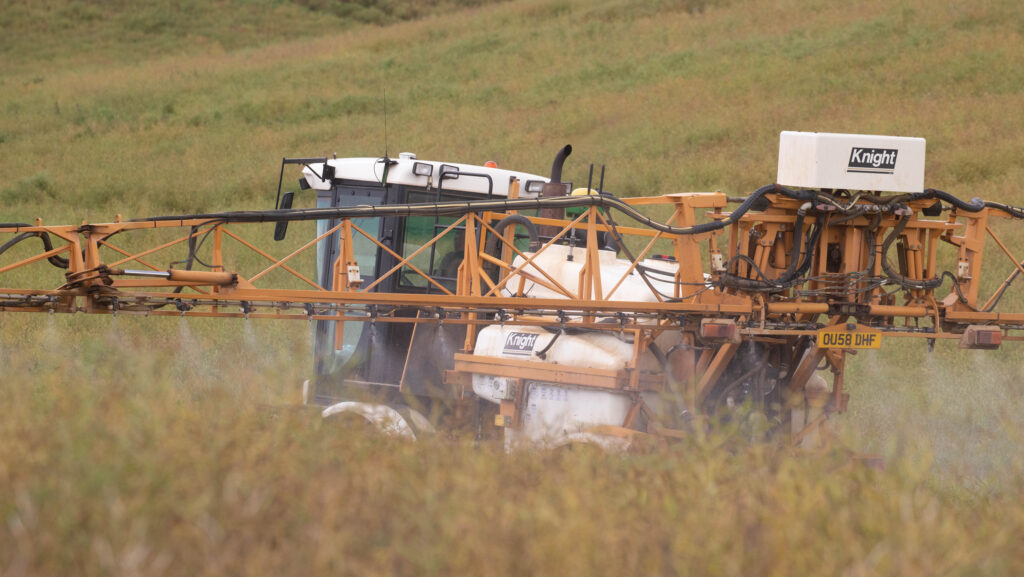 © Tim Scrivener
 After more than 40 years of continuous use in agriculture, the future of glyphosate is again in the spotlight following a succession of expirations, extensions and renewals since 2002.
Last year, the government decided to extend its licence for use in Great Britain until 15 December 2026 to give more time to assess the latest research into its safety and efficacy.
The Health and Safety Executive (HSE) is also set to launch a major public consultation in early 2026, to give the public a chance to comment on its draft recommendations ahead of a possible 15-year licence renewal.
See also: GB glyphosate licence renewal set to enter critical phase
But the wisdom of granting that extension triggered some lively debate at the recent Oxford Real Farming Conference in a session called “Glyphosate – resistance or renewal”.
Here is a summary of the debate:
1. How safe is the product?
Glyphosate is often described as the “safest pesticide in the world”, yet Michael Antoniou, professor of molecular genetics and toxicology at Kings College, London whose team has been researching the herbicide for more than a decade, maintains its human health effects can be deadly.
Prof Antoniou told the audience the product was a derivative of amino acid glycine, which Monsanto discovered in the 1970s had broad-spectrum weed-killing properties.
It works by inhibiting what is known as the shikimate biochemical pathway, so preventing the production of essential amino acids and leading to plant death.
“Because the shikimate pathway is not present in animals or humans, it was thought glyphosate was incredibly safe,” he said.
“What Monsanto failed to acknowledge is that the shikimate pathway is present in certain bacteria and fungi, including bacteria in our gut.”
Glyphosate ingestion could, therefore, affect the gut microbiome.
Other mechanisms
Prof Antoniou said glyphosate could deliver toxicity through other mechanisms, for example what is known as “oxidative stress” – the production of reactive oxygen molecules in the body, which can cause damage to cells, protein and DNA.
This “genotoxic outcome” was a major factor for the development of cancer in animals and humans, he suggested.
Prof Antoniou added that, in practice, glyphosate was not used in isolation by farmers, groundsmen and gardeners, but was mixed with adjuvants whose main role was to effectively “punch holes” in the plant cell walls, to allow glyphosate to get into the plant.
Research had shown that these adjuvants could be highly toxic in their own right, he claimed. “Unfortunately, regulators throughout the world only consider glyphosate toxicity in isolation. They fail to consider the toxicity profile of the co-formulant.”
Daily intake
In the EU and UK the acceptable daily human intake of glyphosate on its own was set at 0.5mg/kg bodyweight/day, Prof Antoniou told the audience. “Within the realms of pesticides, that is actually quite a high value,” he said.
Work in 2017 by Prof Antoniou’s team in London had shown that exposure of rats to a commercial glyphosate formulation at rates far lower than the official “safe” level for humans, had caused non-alcoholic fatty liver disease.
“This is a progressive disease and can eventually result in liver damage, sclerosis and liver cancer,” said Prof Antoniou.
Experiments on rats also showed exposure to glyphosate changed the balance of fungi and bacteria in their gut microbiome, as well as oxidative stress, causing cellular damage, inflammation and so-called “leaky gut”.
“Every measure we made pointed to the animal going down a cancer-causing pathway,” said Prof Antoniou, adding that using commercial formulations gave even more pronounced effects.
Ramazzini study
He also pointed to a June 2025 study by the Ramazzini Institute in Italy, which exposed rats to glyphosate from mid-pregnancy to two years after birth, using glyphosate alone and two commercially available formulations at permitted intake levels.
“This research found statistically significant increases in cancer incidence in multiple sites of the bodies of these animals – leukemia, skin cancers, liver cancers to name but a few,” said Prof Antoniou.
Studies of human populations showed that people more exposed to glyphosate had higher levels of non-alcoholic fatty liver disease, increased markers of oxidative stress, and higher incidence of non-Hodgkin lymphoma, he added.
This was the key factor behind the more than 100,000 settled lawsuits and another 60,000 outstanding issued against Monsanto/Bayer in the US.
Exponential rise
Prof Antoniou said there had been an exponential rise in the use of glyphosate worldwide since the development of glyphosate-resistant GM crops in the 1990s.
With glyphosate up for GB licence renewal this year, he had two messages for the HSE: first, to consider commercial formulations, not just glyphosate in isolation; and second, to look at the latest evidence from animal studies which call into question current accepted daily intake levels – and massively reduce them.
They should also consider that the impact of glyphosate exposure could take a very long time to manifest itself.
2. What are the challenges for farmers?
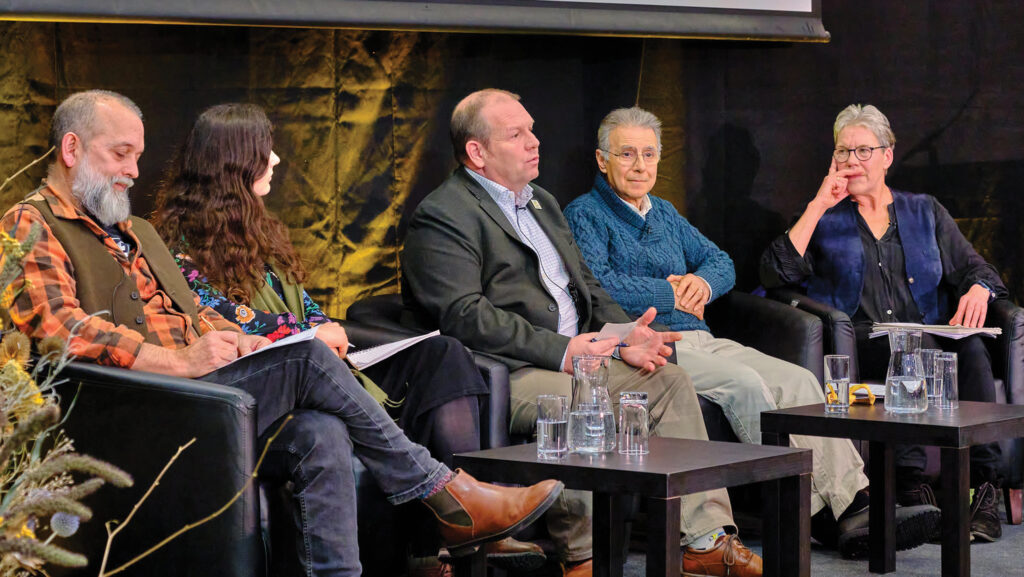
© Hugh Warwick
While questions remain around the safety of glyphosate, Nature Friendly Farming Network chief executive Martin Lines said he continued to use it as an integral part of his regenerative arable farming operation in Cambridgeshire.
“We have moved away from using lots of it, but we still use it on some cover crops,” he said.
In an effort to reduce dependence, which would ultimately lead to resistance, Mr Lines said he had been looking at various management strategies.
“We only use it for weed management in our cover crops, and never as a preharvest desiccant on a crop going into the food chain,” he said.
Alternative approaches
Mr Lines explained that he had tried crimp rollers on cover crops as an alternative to spraying off with glyphosate, but it had no effect on blackgrass.
He had also tried integrating livestock to graze down the cover crops, but it had still not solved the weed problem, and he’d looked at changing the rotation and introducing break crops.
“If we go to spring cropping on heavy clay soil, a shallow cultivation doesn’t really do it,” he told the audience.
“We have to do at least two passes, which adds cost, and we saw a 60% yield drop in our spring barley, compared with when we used glyphosate and direct drilled.”
Mr Lines said this presented a real economic challenge, especially given the lack of a price premium for a regenerative approach.
Bird life and run-off
Moving into stubble with a cultivator in the spring also had implications for bird life. “I have a lot of ground nesting lapwings and skylarks – and I know I am killing some of them by cultivating,” he said.
Another alternative to using glyphosate would be to cultivate in the autumn and leave the ground bare over winter, but this would lead to increased soil run-off.
“I really am caught in the middle of trying to find a pathway. Glyphosate is a tool we use,” he said.
Transitioning away from glyphosate would also require investment, for example in swathers to harvest rape, harrows and spring tines to target weeds, and even a new combine harvester, more able to deal with higher weed contents without jamming up.
Such a transition would therefore require a whole supply chain approach and supportive government policy, he added, both to upskill farmers and increase capacity “so that we can harvest more on the best days”.
RSPB view
Georgie Bray, who manages the RSPB’s Hope Farm in Cambridgeshire, told a similar story, as the farm had to balance delivering for nature and climate with achieving a reasonable profit.
While glyphosate use had fallen 50% in the past 10 years, and the aim was to reduce it further, it was still used on the farm.
Farming regeneratively with reduced cultivations had led to improved soil health and biodiversity seemed to be improving, she said. “Yet to reduce those cultivations, we use glyphosate, to remove the cover crop and form a stale seed-bed.”
The farm team was looking to cut glyphosate use further, but it was not easy, especially on heavy clay soils which could often not be cultivated early in the spring, leaving a wide enough window to drill spring crops.
“Then in the autumn, the soil goes from being so dry that you can’t get the weeds to grow that you want to terminate, then so wet that you can’t travel on the land to drill a crop,” Ms Bray explained.
Crop failure
One of the key uses of glyphosate at Hope Farm was to reduce weeds prior to drilling in the spring.
“Inter-row hoeing has been considered, but we’re concerned about the threat to ground-nesting birds using our spring crops,” said Ms Bray.
“We would not be popular with a lot of people in the RSPB if we started destroying skylark nests,” she said.
Ms Bray said the RSPB supported further restrictions on glyphosate use, including restrictions on using as a pre-harvest desiccant, but agreed that farmers need to be supported in transitioning away from its use.
3. What do campaigners want?
With so many question marks around the safety of glyphosate, Pesticide Action Network (PAN) policy officer Nick Mole told the Oxford audience the time had come for an outright ban,
“We don’t even know how much glyphosate is being put out into the environment,” he said.
There was no way of knowing how much was being used in private gardens, and while a PAN Freedom of Information request to 400 councils last year suggested about 310,000 litres of glyphosate was used in public spaces, this was likely a massive underestimate.
Data from the crop protection industry also showed that UK glyphosate use in the cereals sector had increased from 165t of active ingredient in 1992 to 1,300t in 2022 – but the data for the whole of agriculture was also incomplete.
With glyphosate residues consistently turning up in food products, Mr Mole outlined some “easy wins” to reduce public exposure, including a ban on sales to the public, a ban on its use in the amenity sector, and banning its use as a pre-harvest desiccant in agriculture.
Glyphosate use was also “unacceptable” within the regenerative farming sector, Mr Mole said, though he suggested organisations that actually benefited from the cachet of labelling products “regen” – such as the supermarkets – should put money into research to support this transition away from it.
Innovation
Continued access to glyphosate was itself a block on innovation, Mr Mole added. “People have said to me that, ‘all the time we have it, we will use it. If we didn’t have it, we’d find something else’. So let’s ban it, and let’s drive some innovation,” he said.
Mr Mole said it was unfair to expect farmers to transition away from glyphosate on their own, and more support was needed from government, from the retailers through investing in research and paying fair prices, and from the public.
“Above all, there is a real question around agronomic advice and what farmers are being told. The linkages between agronomists and the pesticide industry needs to be broken,” Mr Mole suggested.
“We need proper, independent agronomic advice that is not all about selling product to farmers, but is about delivering sustainable systems that will help farmers make a profit.”
Crop protection industry has its say…
One noticeable absence from the Oxford debate was any representative from the crop protection sector.
We therefore invited the Glyphosate Renewal Group, a coalition of eight companies seeking renewal of the active ingredient, to present their argument in defense of the product.
“As the UK Glyphosate Renewal Group, we support a science-based approach to the use of glyphosate,” said a spokesman.
“Glyphosate is one of the most extensively studied herbicides in the world, with more than 50 years of research informing regulatory decisions.
“Leading health authorities and regulators globally have repeatedly concluded that glyphosate-based products can be used safely when applied in accordance with approved instructions.
“In response to the Ramazzini Institute study published last year, the Dutch CTGB — a key regulator in the EU’s glyphosate assessment process — reviewed the findings and reaffirmed its conclusion that glyphosate is not carcinogenic, consistent with assessments from other global regulatory bodies.”
Environmental benefits
The spokesman insisted that glyphosate played an important role in delivering environmental and practical benefits.
“It is a cornerstone of no-till and reduced-tillage farming practices, which are widely recognised for improving soil health, reducing erosion, lowering emissions, and increasing resilience to extreme weather events such as flooding,” he said.
“These practices also help farmers reduce fuel use and labour costs.”
The spokesman said that, at a time when UK agriculture was under significant economic and environmental pressure, “maintaining access to proven, well-regulated tools like glyphosate is essential”.
EU Commission view
A separate statement from the EU Commission says that it has assessed glyphosate three times since 2002, and has been satisfied on each occasion to license it for use – most recently in 2023.
It added that it was aware of the more recent Ramazzini study and was carrying out a “robust” assessment of the raw data, but it did not by itself call into question the outcomes of previous reviews.
“If, in the light of a review of the new information, the European Chemicals Agency or the European Food Safety Authority confirm that glyphosate does no longer meet the approval criteria… the commission will act immediately to amend or withdraw the approval, as appropriate,” it said.