Yield cap and disease control in spotlight at agronomy event
 © Tim Scrivener
 The recent Agronomy Exchange conference (11 February) offered insights into how UK arable farming can be fit for future challenges.
Farmers Weekly rounds up some event highlights.
Agronomy focus shift after YEN reveals hidden yield cap
Velcourt has overhauled its agronomy strategy after Yield Enhancement Network (YEN) data revealed that many of its wheat crops were not limited by disease or canopy longevity, but by insufficient grain sites.
This has led the business to shift its trials focus and on-farm management to tackle “sink limitation” – a move it believes will unlock yield and reduce risk across its farms.
Challenging assumptions
Speaking at the recent Agronomy Exchange conference alongside Adas senior crop research consultant Tom Wilkinson, the firm’s technical director Nick Anderson said YEN benchmarking had provided the objective evidence needed to challenge long-held assumptions.
See also: YEN Awards: Round-up of this year’s highest-yielding farms
© MAG/Colin Miller
He plotted grain number against grain weight across two years of YEN entries on Velcourt farms and found that most crops fell into the sink-limited category having low grain numbers and high individual grain weight.
Put simply, a sink-limited crop lacks sufficient grains as a result of too few ears or too few grains per ear, to realise yield potential. It is typically influenced by factors such as drilling date, seed rate, early nutrition and establishment conditions.
Conversely, a source-limited crop has enough grains, but lacks the photosynthetic capacity or resources to fully fill them, often due to foliar disease, nitrogen imbalance, water stress or heat during grain filling.
“Our source-limited crops yielded nearly 1t/ha more than sink-limited crops. So, first of all, our predominant issue was sink limitation rather than source limitation. That is costing us yield,” said Nick.
Benchmarking reality
Tom had initially set the context by outlining what more than a decade of YEN data has demonstrated. The Adas initiative has analysed more than 3,000 crops and consistently shows a strong relationship between yield and gross margin.
However, he stressed that understanding yield components is crucial to identifying where improvements can be made and it’s this diagnostic framework that has inspired the changes at Velcourt.
“If I’d asked our farm managers what was constraining crop performance, I’d have had a diverse range of answers,” Nick told Farmers Weekly after the event.
Velcourt’s managers consistently benchmark in the top 10% for wheat performance, yet few would have identified sink capacity as the primary limitation.
“Most would point to nutrition or aspects of crop protection, but until you examine crops objectively, you do not know what’s holding them back.”
Strategy shift
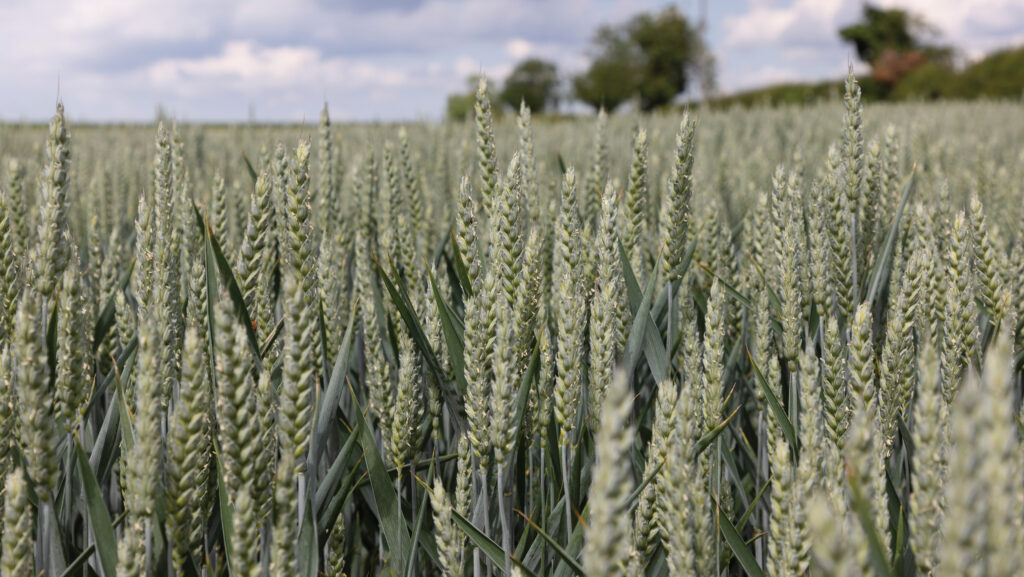
A sink-limited crop lacks sufficient grains/sq m © GNP
One of the immediate consequences of the analysis has been a redirection of Velcourt’s trials programme.
Historically, trials work had been heavily focused on fungicide inputs. While Nick does not dismiss the importance of disease control, he argues that fungicide fine-tuning will not have a significant impact in a sink-limited crop.
Instead, there is now an equal focus on hitting optimal grain numbers.
“That means asking: are we achieving sufficient grains per square metre? Are we getting plant population right? What impact is drilling date having on yield? Is nutrition correct?”
Around one-third of Velcourt’s trials effort is now concentrated on nitrogen strategy and improving nitrogen use efficiency.
“There is clear evidence that we are not getting nitrogen nutrition right often enough. We are either over- or undersupplying.
“Nitrogen is our biggest direct cost and has a significant environmental footprint, so it should be a key focus for our attention.”
Drilling date
Drilling date, plant population and seed rates are key in setting crops up to hit optimal ear numbers and grain sites.
Later drilling – widely adopted to manage grassweeds and septoria – has come under scrutiny as contributing to the wheat yield plateau because it can restrict sink capacity through reduced tillering.
Nick stressed he is not advocating a wholesale return to early September drilling, but where grassweed pressure and/or barley yellow dwarf virus risk allow, it should very much be horses for courses.
“If your main drilling window is 10–15 October, could you sustainably bring part of that area forward by a week? That would move the overall mean drilling date forward and is highly likely to increase sink capacity”.
Increasingly, climate extremes at flowering are reducing grain numbers, making ear number even more important for resilience.
“We can’t control weather, but we can manage ear numbers. If you have more ears, your risk is reduced.”
However, he cautioned that targets must be site-specific.
“I’m not suggesting 600 ears/sq m on a thin brash soil with 8t/ha yield potential.
“But if you’re on fertile, moisture-retentive soil and only achieve 380 ears/sq m, you’ve limited the crop before it starts.”
Agronomists shouldering too much responsibility for compliance
As Farming Rules for Water (FRFW) regulations evolve and enforcement strengthens, Norfolk farmer and water management consultant Andrew Alston believes the industry needs to reconsider where compliance responsibility lies.
Speaking at Agronomy Exchange, Andrew said recent changes to FRFW are creating uncertainty around autumn nutrient applications.
A 2025 update makes evidence-based nutrient planning a strict requirement, forcing farms to match applications to immediate crop needs, rather than seasonal averages.
Enforcement is now “compliance-led”, too, with stricter autumn spreading limits, mandatory five-year soil testing, and increased Environment Agency inspections to prevent diffuse pollution or diminished soil health.
Andrew pointed out that catchment officers are now receiving much improved soil and water training after significant Defra investment, and inspections are expected to move beyond box ticking to closer scrutiny of what is happening on the ground.
And that is where he believes the tension lies.
Unfair responsibility
“Agronomists can write very good management plans, but that doesn’t necessarily reflect what the farmer does. We’re putting more responsibility onto agronomists, and I think that is unfair.”
He now treats his agronomist as much as a compliance adviser as a crop adviser, but he insists ultimate responsibility must sit with the farmer.
“The farmer knows the land. He is the one applying the nutrients and managing the manure. If there is an inspection, it is the farmer who should be accountable.”
He said enforcement should also recognise local context, particularly in sensitive catchments where historic phosphate build-up and poultry expansion created well-documented run-off problems, such as in the Wye Valley.
Blanket bans on autumn applications, he argued, risk simply shifting nutrients geographically due to insufficient land or storage at a holding, rather than solving the underlying issue.
Instead of transferring compliance risk onto advisers, Andrew wants clearer guidance and stronger planning requirements, such as demonstrating sufficient land area for manure use under RB209, to create a more balanced system.
“We all need to get our house in order, but the responsibility has to be shared,” he said.
Redesign disease control with gene editing at its heart, says expert
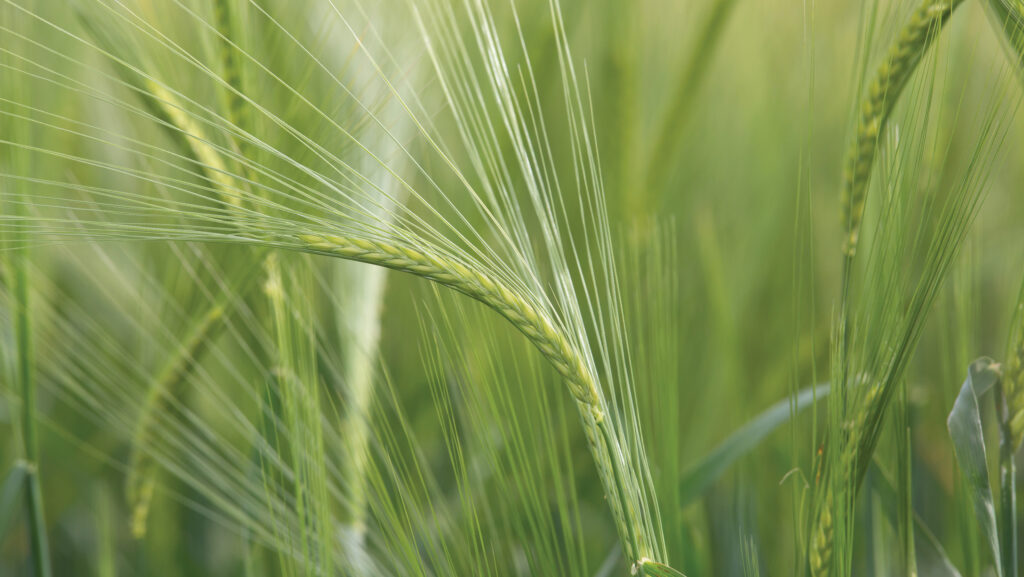
Gene editing could produce mildew-resistant barley © Tim Scrivener
Greener crop protection will not be delivered by a single breakthrough product, but by redesigning whole systems around modern genetic methods.
That was the message from plant pathologist Richard Oliver at Agronomy Exchange, where he challenged the industry to put gene editing at the centre of disease control strategies.
Richard used examples from Australia and the UK where over-reliance on a narrow fungicide toolbox and susceptible varieties had quickly resulted in resistance and significant grower losses.
“Resistance is an evolutionary certainty. Fungicides remain essential, but their lifespan depends on how intelligently they are used and what they are paired with,” he said.
Richard believes the greatest opportunity to move away from a treadmill where new fungicide discovery tries to keep up with pathogen evolution lies in the plant itself.
Technology such as Crispr (clustered regularly interspaced short palindromic repeats) enable breeders to switch off those susceptibility genes, such as the Mlo gene (mildew resistance locus o) in barley, to deliver durable disease resistance in modern cultivars.
“The markers, genomic data and editing platforms already exist, so identifying targets and incorporating them into breeding is technically achievable today,” Richard told Farmers Weekly.
He added that compared with the annual cost of crop diseases, the investment needed to deliver gene-edited, disease-resilient germplasm is modest.
“The future of disease control will not be about replacing chemistry entirely, but about building crops that need less of it and having the will to back the science that can make that happen,” concluded Richard.
The “Planting Seeds for the Future” Agronomy Exchange conference took place on 11 February in London.
Join the Agronomy Edge online community to unlock exclusive insights, connect with industry leaders, and stay ahead of the field.