Cereals 2026: Higher growing costs shape autumn cropping
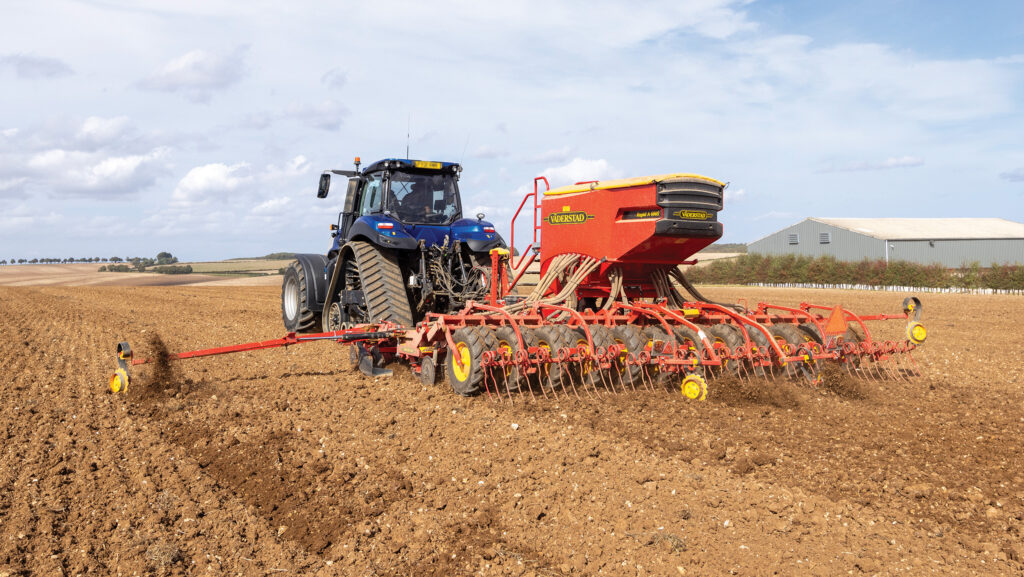 © GNP
© GNP Autumn drilling plans were being finalised at Cereals as growers looked for ways to cope with the greater volatility, increased risk and cost pressures caused by the Iran conflict and continued policy uncertainty.
While most of the growers that Farmers Weekly spoke to at the event were planning to keep some winter wheat in the rotation, there was more uncertainty about the place for milling wheat due to its higher nitrogen fertiliser demand and increased risk.
See also: Dyson Farming launches UK’s biggest research farm
Milling premiums of £20/t were being firmly rejected as insufficient in the current economic climate. Second wheats and crops on lighter or more marginal land were also under review, following another dry spring.
“Most farmers have got a drilling plan for 80% of their land and a chunk of nitrogen fertiliser has been bought,” said agronomist Jock Willmott of Ceres Rural.
“But discussions are continuing and there will be tweaking at harvest when we see how crops have fared.”
In contrast, oilseed rape was coming back into cropping plans, reflecting its stronger price and better yield performance in 2025, along with a cautious willingness to grow it again.
More rye
Wiltshire-based farm manager Robin Aird was intending to grow more rye on the estate’s lighter land, to supply the farm’s anaerobic digester (AD) plant and replace some winter wheat, after a rise in costs.
He was also looking to de-risk the rotation by growing four or five wheat varieties for harvest 2027, rather than just two or three, following last year’s breakdown in yellow rust resistance.
Former Farmers Weekly Arable Farmer of the Year Mark Means has already bought all the fertiliser he will need for next year and has secured enough fuel to see him through until after autumn cultivations.
While requiring sufficient cashflow and storage to be able to do that, it has given him more control over his production costs at a time when margins are being squeezed.
“If I have to switch from milling wheat to feed wheat, then that’s what I’ll do.”
South Herefordshire farmer Martin Williams said there was currently no incentive to grow wheat on his farm, but recognised he was lucky to have other crop choices.
“I can opt for grass, Sustainable Farming Incentive options, fodder beet and maize, which may be better financially, although I think that the wheat price might be higher by next February.”
For farm manager Julian Gold of East Hendred Farming Partnership in Oxfordshire, steps have been taken to ensure that the 1,600ha business is lean, mean and fit for a less-than-certain future.
Focus on yield
It involved taking on more land, spreading fixed costs by losing two staff members and one combine, and focusing on yield. Julian is moving away from some of the low-input farming practices that have cost the business.
“I will be upping our nitrogen rates on wheat,” he said. “I had reduced them from 240kg/ha to 190kg/ha, but the resulting yield drop was 1t/ha.
“I’ve secured ammonium nitrate for around £465/t, so I know what the figures look like for harvest 2027.”
The farm can achieve yields of 12t/ha, he added. “We get a good return from nitrogen fertiliser and fungicides – the economics of farming now mean we can’t afford to keep sacrificing yield.”
The same is true of his oilseed rape crop which saw a margin reduction where an autumn fungicide wasn’t used last year. “It caused more winter kill, so yields were down.”
Reducing fungicide costs
The Diddly Squat farm trials conducted by Ceres Rural compared three fungicide programmes across a range of varieties, with the aim of determining what a sensible spend looks like and identifying situations where costs could be reduced.
A high-input programme costing £107/ha and a low-input approach costing £60/ha were alongside untreated plots, with varietal differences visually apparent in a year in which yellow rust was the main disease challenge.
“Yellow rust doesn’t need the same fungicide expenditure as septoria, but you do need to monitor crops closely,” reported farming consultant Rosalie Sanders.
Not surprisingly, some varieties have been better suited to a reduced spend, with Vibe, Arnie and Extase good examples.
“The higher spend hasn’t always delivered a benefit, but it is variety dependent, and a few of them struggled even under the high input regime.”