Spring barley: Will Arrow’s arrival de-risk barley supply?
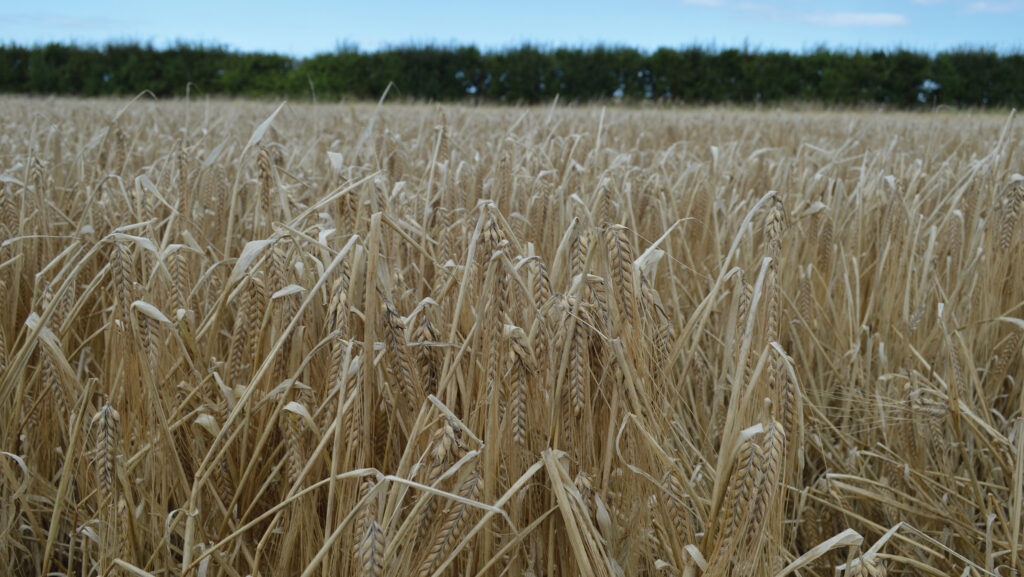 Arrow barley © David Jones
Getting a new spring barley variety through the testing system and onto a brewer’s radar takes commitment, especially when the end market perceives there’s nothing wrong with the status quo.
That’s the situation RAGT is facing with its new spring barley Arrow – a high-yielding variety that was recommended in 2025 and has since been going through the official Malting Barley Committee (MBC) testing system for both brewing and distilling.
See also: New barley set to be key dual-purpose variety across UK
Already fully cleared for distilling, it has provisional approval for brewing and is expected to receive full endorsement later this month – making it one of a handful of varieties that suit both end markets and are increasingly favoured by maltsters.
Standing in Arrow’s way is another dual-purpose variety, Laureate, also from RAGT, which has stood the test of time since it joined the AHDB Recommended List (RL) in 2016 and is currently responsible for a whopping 76% of the spring barley market.
Given that dominance, commentators warn that Laureate’s popularity makes the supply chain over-reliant on one variety, at a time of climate and economic vulnerabilities and heightened operational risks.
European demand
As Tracy Creasy, malting barley portfolio manager at RAGT explains, there’s nothing wrong with Laureate and its success right across Europe is testament to its strengths.
“It’s still a high-yielding variety with good disease resistance that works for maltsters across locations and performs consistently.”
New ownership
RAGT bought the Syngenta spring barley breeding programme last year, so Laureate and Arrow are now part of the company’s new malting barley business.
Included in the sale was the trials site at Market Stainton in Lincolnshire, where much of the variety development work takes place and new sustainability and resilience traits are being assessed.
She adds that while there’s no immediate rush to replace it, continual development of varieties is essential given climate variability and other challenges (see panel below) – some of which have been very clear to see in the past two seasons.
Global barley challenges: What are the constraints?
- 27% of the world malting barley supply is impacted by climate variability
- 25% of the world’s barley regions are experiencing temperature increases exceeding 2C
- 18% of global malting barley crops face protein inconsistency issues
- 22% of global production areas experience water scarcity affecting yield
“Whether it’s drought or heavy rainfall, higher temperatures or shorter growing seasons, there are plenty of threats to the crop and potential pitfalls for growers,” she says.
“We have to keep moving forward with varieties and look for those that are more resilient to climate change.”
Over-reliance
Any commercial over-reliance on a single variety is an extremely risky approach, believes Chris Miller, head of procurement at Muntons, who admits that introducing any future-proofing in a declining market with reduced demand is challenging.
“There have been quality issues with spring barley for the past two years – Scotland bore the brunt in 2025 and English crops suffered in 2026.
“As a result, the barley arriving here at our Stowmarket maltings has travelled a much greater distance this year.”
Emerging trends in malting
- Frameworks such as the European Green Deal that push the supply chain to reduce carbon footprints, water use etc
- Widespread adoption of sustainable malting practices – for example, lower energy and water use
- Speciality malt innovations for new food and drink products
- Diversified applications for malt, such as non-alcoholic beers and bakery innovations
- Surge in demand for organic malts for beverages
- Push for supply chain efficiencies that reduce spoilage rates and logistics bottlenecks
- Adoption of digital automation across maltings for better monitoring of processes
Unlike others, Muntons doesn’t overwinter stocks of barley, so the 2027 spring barley area is of interest to the company.
“We know it fell dramatically last year as growers had a rethink on rotations and cropping strategies, given the market pressures and reduced demand. We hope we won’t see a repeat of that.”
Whether those escalating risks and threats to supply have been recognised by brewers remains to be seen, he acknowledges, although he believes that 2027 could be a crunch year after the industry’s consolidation.
“There may have to be a change in the supply chain model and the acceptance of newer varieties will need to be part of that.”
Arrow’s credentials
RAGT’s malting barley technical specialist, Rob Jackson, reports that Arrow performed above its five-year mean in RL trials in 2026 and has already piqued the interest of European brewers, which see it as a good partner for Laureate.
“Arrow offers a higher yield [104%] than Laureate with suitable grain nitrogen for distilling and brewing,” he adds.
“It also has a stronger disease package and earlier maturity than the current data suggests.”
© David Jones
In terms of malting quality, Arrow has better hot water extract (316.5) and predicted spirit yield (438.6) figures than Laureate, but a slightly lower specific weight of 67.7kg/hl.
“We know that maltsters are looking for varieties with global malting approval that can be used across multiple geographies.
“As with all varieties, consistency and reliability are also key requirements.”
RAGT’s efforts to develop global malting varieties rely on having strong relationships with maltsters and brewers, so that new varieties are accepted into testing programmes, Chris notes.
Arrow and Laureate compared |
||
|
|
Arrow |
Laureate |
|
UK treated yield (%) |
104 |
102 |
|
Untreated yield |
86 |
88 |
|
Agronomy |
||
|
Resistance to lodging |
7 |
6 |
|
Height (cm) |
72 |
69 |
|
Resistance to brackling |
7 |
7 |
|
Ripening |
+1 |
+1 |
|
Disease resistance |
||
|
Mildew |
9 |
9 |
|
Brown rust |
5 |
5 |
|
Rhynchosporium |
7 |
6 |
|
Net blotch |
8 |
8 |
|
Grain quality |
||
|
Specific weight (hl/kg) |
67.7 |
68.0 |
|
N content (%) |
1.38 |
1.45 |
|
Malting quality |
||
|
Hot water extract (litre degrees/kg) |
316.5 |
315.2 |
|
Predicted spirit yield (litres of absolute alcohol/t) |
438.6 |
436.2 |
|
Source: AHDB. Agronomy/disease resistance on a 1-9 scale, with 9 showing the characteristic most strongly |
||
The UK malting barley market
The UK ranks fifth in the world for global barley production, producing 6.5m tonnes/year, which represents 4.2% of the world’s output.
However, the key difference with the UK market is that 48% of the barley produced is for malt, of which 30% is for brewing, 5% is for food uses and 52% is for distilling.
That’s in contrast to the wider global market, which sees just 20% of the total go for malting and a much smaller proportion of that end up with distillers.
“Scotland is the largest whisky-producing country in the world, with more than 700m litres a year produced,” reports Tracy Creasy.
“That makes our market distinct and its why the MBC [Malting Barley Committee] approvals process for distilling barleys leads the world.”