The farming practices helping create a better food system
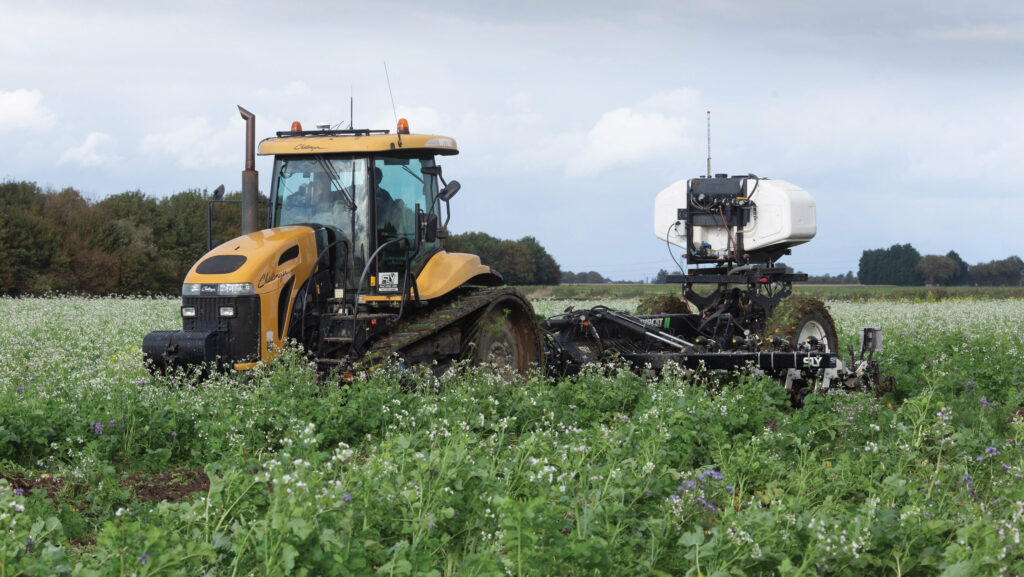 © Tim Scrivener
 Interest in farm practices that improve the nutrient content of food is at an all-time high as consumer focus switches to quality and resilient farming systems.
Farmers Weekly spoke to members of a sustainable supply chain initiated by the Green Farm Collective to understand how their businesses are becoming part of a better food system.
See also: Young couple’s pasta start-up champions 100% British spelt
The farmer
Verity Megginson, Kirkburn Manor Farm, Yorkshire
For Yorkshire grower Verity Megginson, the realisation that she wouldn’t eat the products that she grew was the impetus to change her farming system.
When taking on the 130ha family farm near Driffield in 2021, she inherited a prescriptive, high-input approach to producing wheat, oilseed rape, peas and potatoes.
Verity’s background and training in physiotherapy meant that recovery, resilience and long-term health had always been her focus.
“What we were doing on the farm five years ago was a long way from the nurturing care I gave to my physiotherapy patients,” she says. “We were simply responding to symptoms, not addressing root causes.”
The winter of 2024 was the turning point, after extreme rainfall caused severe damage.
“We had a river running through a field. Soil compaction was a huge problem and there was a lack of life, both above and below ground.”
Crop interventions were based on killing things. That didn’t seem right to Verity; nor did the constant disruption to the soil that growing potatoes was causing.
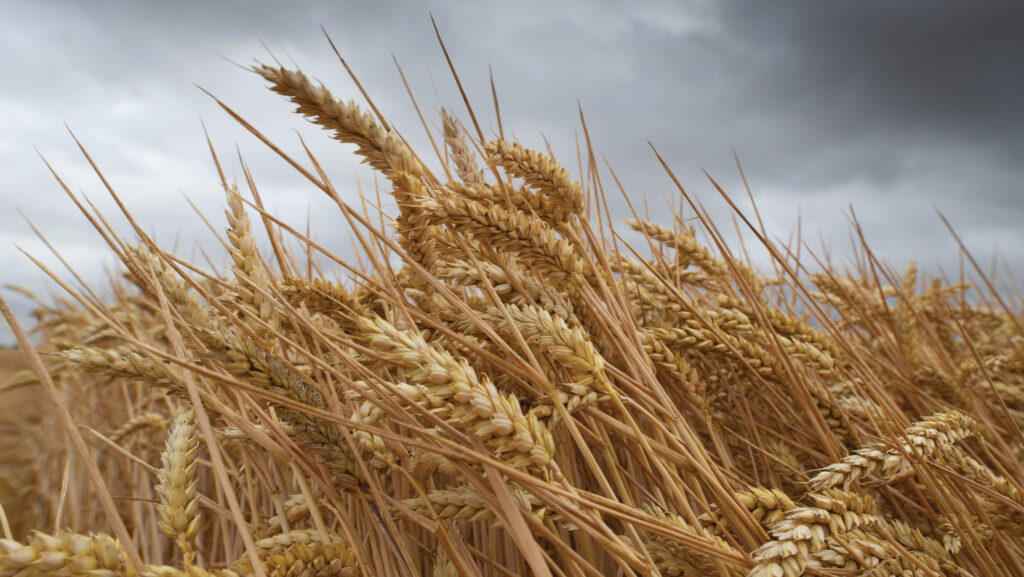
© Tim Scrivener
Having listened to podcasts and read books on different farming systems, she started making changes.
With help from Regenerate Outcomes and through the Royal Countryside Fund, where she met regenerative farmer and adviser Tim Parton, she gathered information on how to transition a low-input system and work with nature.
“We started with soil tests, so we had a baseline,” she recalls. “Then we introduced cover crops and catch crops to help address compaction and bring in diversity.”
Those cover crops are now grazed with sheep, tillage has been reduced and a low-disturbance subsoiler is helping to put air back in the soil. Over time, fertiliser use has halved, fungicide applications have come down and insecticides have been eliminated.
Sap testing is carried out routinely, liquid fertilisers and variety blends are part of a more balanced system, and agri-environment schemes are in place.
“At first, reducing inputs was terrifying,” admits Verity. “We had been putting more nitrogen fertiliser on each year, at extra cost, but we weren’t seeing yield increases and protein levels were falling.”
By 2025, nitrogen use was down to160kg/ha – a far cry from the 290kg/ha that the farm had used previously.
On spring wheat, she uses 80kg/ha. “We also only used one herbicide and one fungicide last year, so progress has been rapid.”
Direct-drilling was more difficult to get right as roots were struggling to go deeper than 15cm due to compaction layers.
That changed when subsoiling was introduced. She now recognises a bit of tilth on the soil surface is required at drilling.
Soil structure, water infiltration and biodiversity have improved, while the farm’s finances have been transformed by having a greater diversity of produce types.
The farm has income from arable, lamb and a recently installed vending machine, which allows Verity to sell the eggs from her laying hens.
“We’re now producing tastier food which the local community is more interested in, and which I’m proud to put my name to.”
The baker
George Herbert, Hobbs House Bakery, Gloucestershire
Gloucestershire-based Hobbs House Bakery plans to source all its flour from healthier soils by 2032, says managing director George Herbert, who explains the company is in it for the long haul.
Currently using a mix of conventional, organic and regenerative flour, the share of the latter is increasing as supply improves and customer expectations ramp up.
“Healthy bread starts with healthy soil,” says George. “For us, a healthy soil shows that the land is being cared for with long-term resilience and future productivity in mind.”
With a commitment to being the best for its people, the community and the environment for generations to come, the family-owned business employs 180 staff across its four bakery shops, hospitality division and one main bakery.
“We care for our people. So, working with farmers that care for the soil is a natural fit. Together we can nourish customers and communities.”
Becoming a Certified B Corp in 2019 set the company a challenge and kick-started the move, acknowledges George.
“It meant we needed to get to know our farmers. Rather than just buying our flour by specification, we had to look at its origin.”
Having always known the local miller, Shipton Mill, he met farm manager Jake Freestone two years ago and started working with the Green Farm Collective, Eurostar Commodities and Matthews Cotswold flour for better farm traceability.
That move means that 27% of Hobbs House Bakery products are now made with organic or regenerative flour, and there are ambitious targets to increase this.
“Currently, all our burger buns are made with 50% regenerative flour and we are planning on making more than eight million buns over the next year.”
The wholesaler
Collectiv Food Partnership, London
Responsibly produced food that competes on performance and price, together with low-carbon distribution based on mini-hubs in urban areas, is helping the Collectiv Food Partnership to transform the wholesale model.
Described as a system that works better for everyone, Natalia Spinetto says that Rise regenerative flour is a good example of a high-standard ingredient that restaurant and professional kitchen customers are able to buy at a commercially attractive rate.
“It’s 100% British, it’s produced using regenerative farming methods, and it’s accessible,” she says.
Repurposed shipping containers are used as chilled points of distribution in urban areas by the wholesaler, improving efficiency and reducing emissions in a one-order, one-delivery, system.
The chef
Brigi Stamber, Brighton
The hospitality industry can have a positive impact on the community around it, with the sourcing of ingredients a key part of that, says Brigi Stamber, a former winner of the Pizza Chef of the Year Award.
She uses regenerative Rise flour exclusively at her Brighton-based restaurant as she strives to be honest, responsible and forward thinking, with the story behind the plate being an important component.
“Relationships matter, which is why partnerships with producers have become so important to our growth and development,” she says.
In her business, local produce is used wherever possible to support a stronger local economy. “That reflects my values of community and transparency. My customers want to know who produced them and how they were grown.”
The people quoted in this article were speaking to Farmers Weekly at the recent Green Farm Collective Soil to Slice conference in Yorkshire

Staying sharp shouldn't be a chore