SFI 2026 options that support resilience on farm
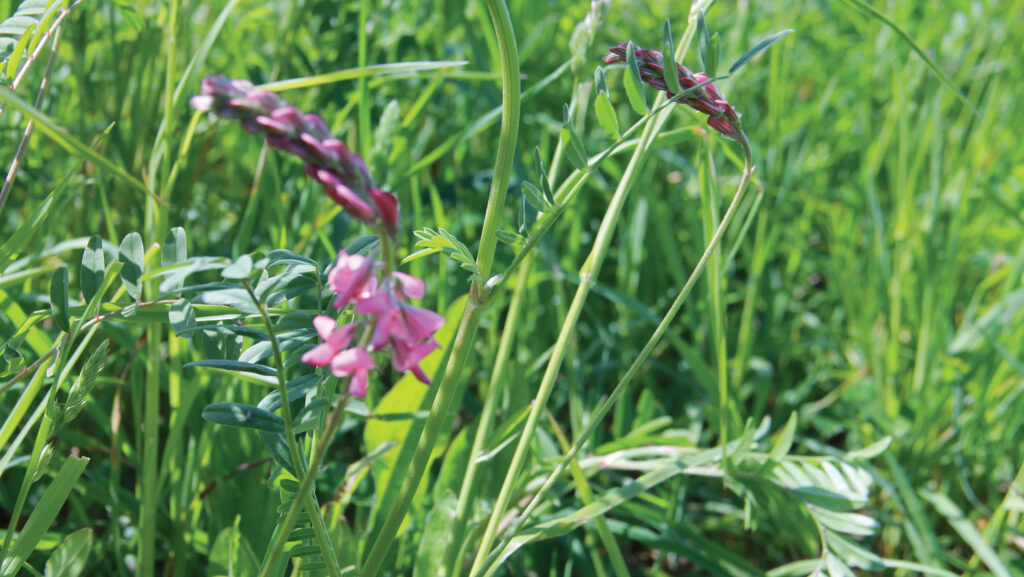 Herbal leys © Soil Association
 The Sustainable Farming Incentive (SFI) 2026 window is set to re-open on the 22 September, which will be a welcome relief for many farmers and growers.
After the repeated heatwaves this summer, many may be thinking longer term about drought tolerance and the resilience of cropping rotations.
See also: OSR revival gathers pace as growers expand acreage
So, what options can help deliver both financial and environmental resilience?
“With the SFI soon to be open, now is the time for farmers to start making these plans to future-proof their farms,” highlights Soil Association senior farming adviser Jerry Alford.
“The repeated heatwaves and long drought this summer has put all types of farm systems under pressure. No doubt this will soon be followed by too much rain.
“Crops have failed and livestock have struggled, but there is no silver bullet, no quick fix, and we need a long-term strategy for food and farming.”
Jerry advises taking a whole-farm approach and consider spreading risk with mixed farming.
“More diverse systems have seen greater resilience than single enterprises.
“The incorporation of livestock into arable systems, or the ability to use home-grown crops for livestock, make businesses more adaptable.”
Below, Jerry shares his SFI top picks that can support farm productivity:
Legumes and companion cropping
- CIPM3 companion cropping £55/ha
- CNUM2 legumes in grassland option £102/ha (for permanent grassland)
- CNUM3 legume fallow option at £532/ha (useful as a break crop option to build soil health but without a harvestable crop to sell)
Legumes have an essential role reducing on-farm nitrogen costs and have long been associated with improved soil structure, which in turn improves drought resilience.
“Intercropping pulses alongside a cereal crop such as beans and oats can be a way of minimising risk in break crops.
“Evidence shows increased total production per hectare, with seasons determining which crop benefits most,” says Jerry.
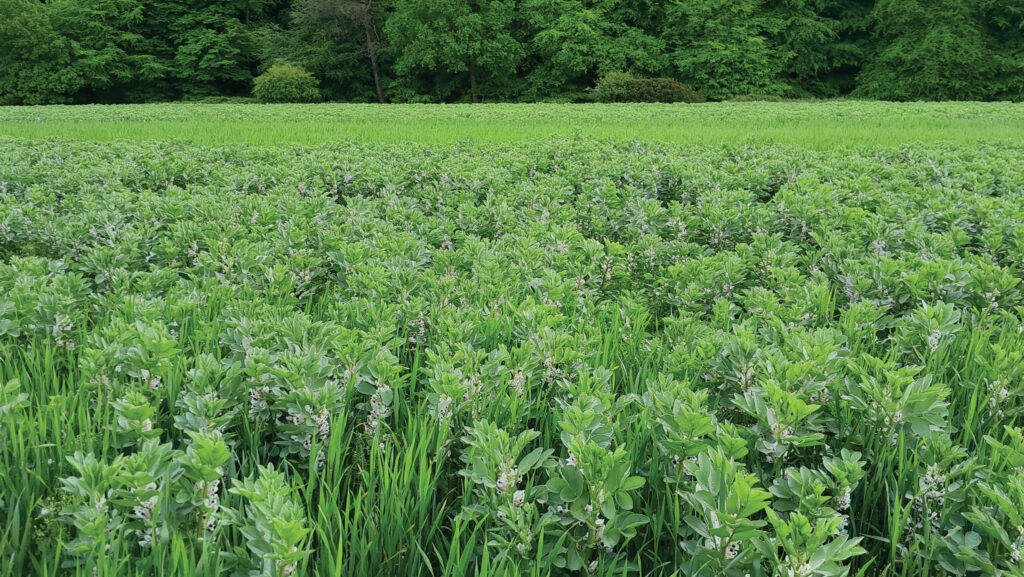
Wheat and beans intercrop © Soil Association
Companion crops can be used to produce a high-protein cereal for feeding, which can be kept on-farm or sold to local livestock farmers.
In grassland, legumes such as red clover, lucerne or sainfoin can replace artificial nitrogen and provide higher quality forage for livestock that can hold up better in dry conditions, while also reducing protein imports to farm.
Herbal leys
- CSAM3 herbal leys, although at a reduced payment rate of £224/ha
Herbal leys can be an effective break crop in an arable rotation, with deep roots improving soil structure.
They are also a great way to integrate livestock on-farm and reduce dependency on artificial fertiliser.
Jerry notes they need slightly different management, with mixes often suited to outdoor grazing or longer periods between cuts for winter forage, compared with traditional ryegrass leys.
Herbal leys are less prone to drought due to much deeper tap roots that can access water for longer.
“The best type of herbal ley will depend on your system, but this year, farmers using mixes with cocksfoot, fescues and chicory have been able to graze for much longer than monoculture leys,” he says.
Cover crops
- CSAM3 multispecies winter cover crops £129/ha
- SOH3 multispecies summer-sown cover crops £163/ha
Cover crops provide an excellent way to keep soil covered over winter, improve the water-holding capacity of soils and reduce nutrient run-off.
“They increase soil organic matter and overall soil resilience, which is essential as we increasingly deal with periods that are either too wet or too dry,” says Jerry.
“Often mixes are grazeable, allowing the incorporation of livestock onto arable farms, which can reduce reliance on imported inputs and improve soil health,” he adds.
Hedgerow management
- CHRW2 manage hedgerows pays £13/100m per side of hedge
Hedges provide shade and shelter for both livestock and crops, plus food sources for beneficial birds and insects.
“Farmers are finding that well-managed hedgerows can provide additional forage for their livestock when grass growth is impacted by drought, and grass can also perform better near to hedges in dry conditions,”
Hedges provide a wide range of nature-friendly benefits as well as their traditional role of acting as field and farm boundaries, and they are even being used to separate soil types that need different forms of management.
Agroforestry
- AGF1 Low density agroforestry of up to 50 trees/ha is £248/ha.
- AGF2 Higher density, up to 120 trees is £385/ha.
Integrating trees into farmland can be an effective way to mitigate against times of extreme weather by creating shade and shelter for livestock and crops.
“Planting rows of trees with wide spaces [50m] allows farming to continue between the rows and can add enterprises to the business – short-rotation coppice as an energy crop and/or fruit trees, or timber in the long term,” explains Jerry.
The associated grass strips at the base of the trees also offer integrated pest management opportunities by harbouring beneficial insects to tackle pests.
Organic conversion/maintenance
- OFC1-5 for organic conversion options pay £96-£1,020/ha
- OFM1-6 organic management options cover grassland, arable rotational cropping, horticultural and top fruit systems pay from £20-£1,920/ha
- Most other SFI options can also be used in addition to conversion or organic management payments to support whole farm actions.
There are a number of organic conversion and maintenance payments available in the SFI.
Like all farmers, organic farmers have faced huge challenges this year.
But organic practices that build fertility double up as techniques to help soils hold more water during flooding and drought, highlights Jerry.
For those considering the organic route, Jerry recommends speaking to a certification body like the Soil Association, who can explain the process.
“It’s also vital to use the knowledge and experience of farmers who are already organic.
“Find out where they have gone wrong and what has worked well for them.
“No-one knows farming better than farmers,” he says.
What to consider – tips and advice
Select options you may already be doing on-farm, such as hedgetrimming.
Ensure options make sense for your long-term business model – don’t just choose something because there’s money behind it.
Select options that fit rotations, improve soil health or simplify systems.