How polycrop is paving way to premium feed market
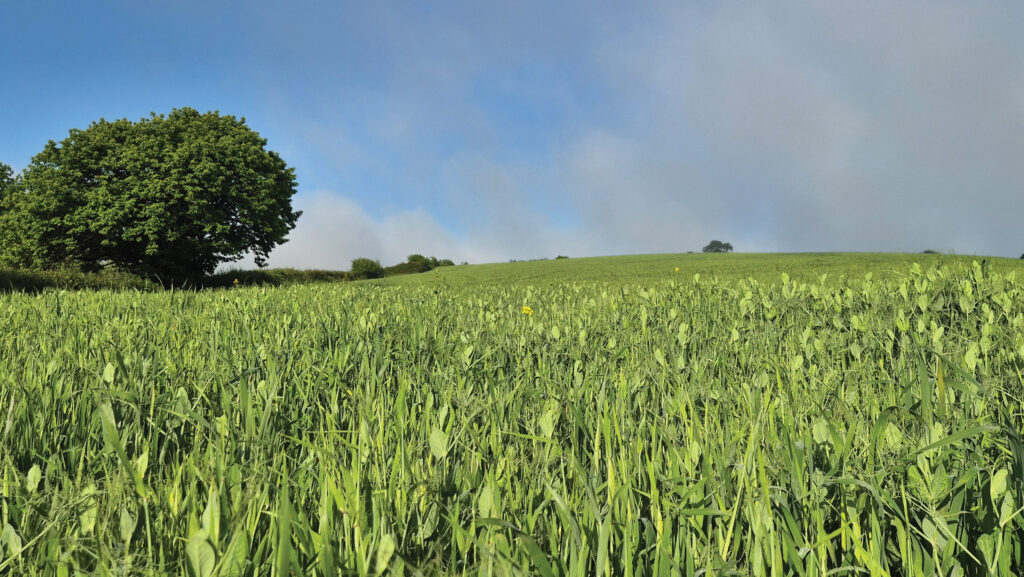
The polycrop at Paul Baker’s farm © Paul Baker
No field is planted to just one type of crop at Paul Baker’s mixed farm in Devon – instead fields are planted to either polycrops, variety blends or companions.
A seven-way species mix destined for premium livestock feed makes up the bulk of the farm’s arable rotation. The spring polycrop consists of wheat, barley, oats, triticale, peas, and more recently, vetch and rye.
Paul grows 50ha of the crop, splitting it between combined grain and whole crop.
See also: Farmer-led trial reveals effect of cultivations on bird life
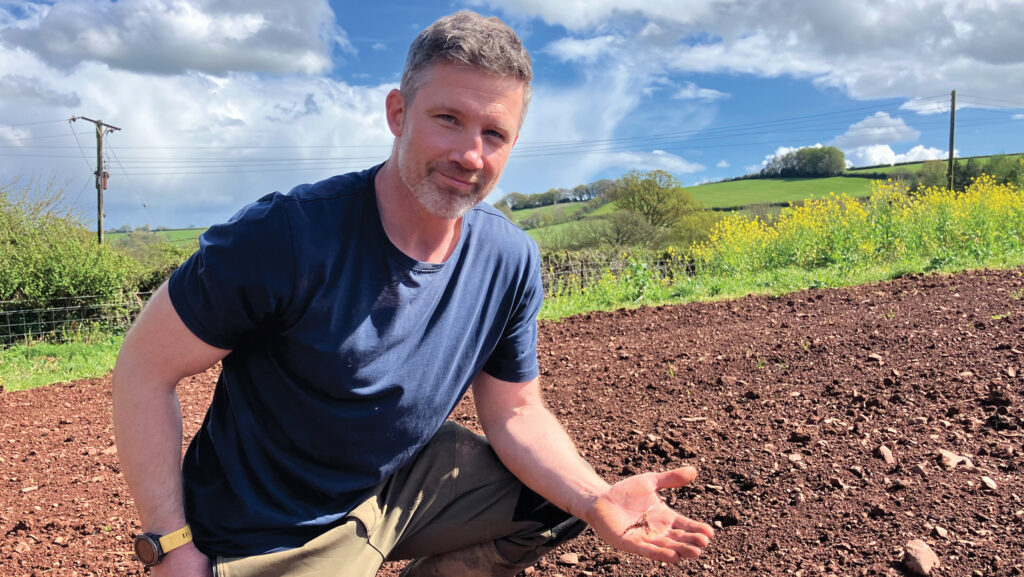
Paul Baker © MAG/Emma Gillbard
Last year’s crop yielded 5.4t/ha and delivered 19.5% protein with a metabolisable energy (ME) of 12.9MJ/kg dry matter at the 140ha farm near Cullompton.
Grain is supplied to a regenerative pig producer, organic deer rearer, and beef finisher, as well as whole crop to a local dairy farm. This has opened the door to a strong local livestock feed market.
“It’s a niche product. It’s high in protein, locally produced and completely soya-free.
“There’s real demand for it,” says Paul, who finds himself in the unique position to influence pricing of how much he sells crops for – an uncommon situation for many arable farmers.
“I’m able to sell the polycrop for a premium price over standard grain markets,” he says. It’s all about adding value. “We’re producing local feed for local farms, and that relationship is incredibly important,” says Paul.
About 30ha are grown fully organic, with the remainder managed in a conventional system, but still grown without synthetic inputs.
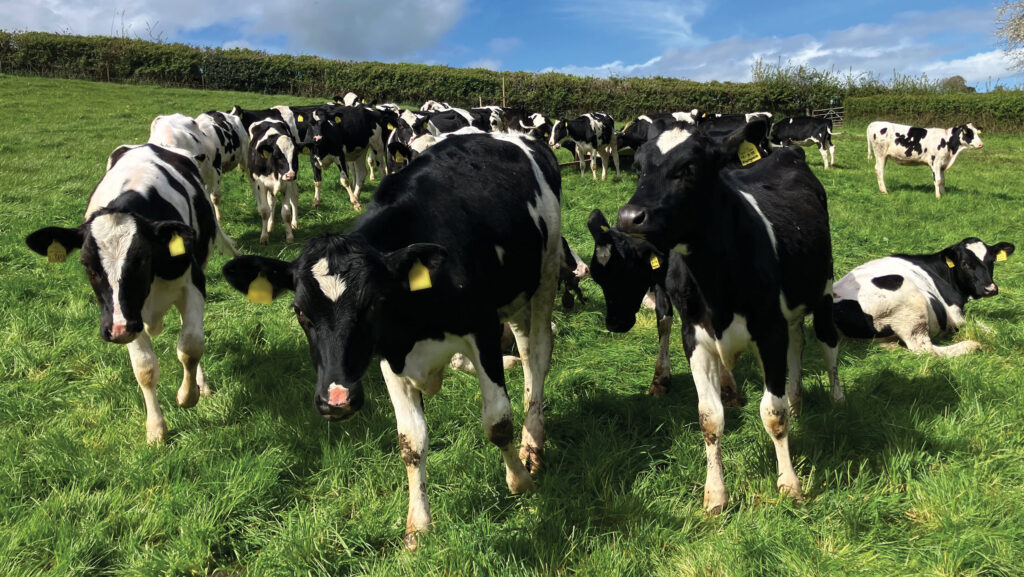
The polycrop has opened the door to a strong, local livestock feed market© MAG/Emma Gillbard
How it started
The move toward polycrops began four years ago as a response to squeezed margins and increasingly dry springs, which were limiting yields and exposing the vulnerability of relying on monocrops.
Operating a mix of organic and conventional cropping, fifth-generation Duchy estate tenant Paul was familiar with intercropping, but wanted to take this to the next level.
After individual crops of beans and oats failed to stack up financially, he decided to give intercropping a go. Bicrops of beans and oats initially proved a success, but it wasn’t long until chocolate spot disease and weed issues began to take hold.
This led Paul to the diversify his mixes further. By introducing multiple species with different rooting depths, growth habits, and stress tolerances, threats from weather, pests, weeds and disease became less of an issue.
Paul started off with a five-way species mix but has since added rye and vetch to the mix this season.
The mix now consists predominately of peas for nitrogen fixation and protein benefits. Wheat makes up a low proportion due to its less competitive nature.
Seven-way polycrop mix
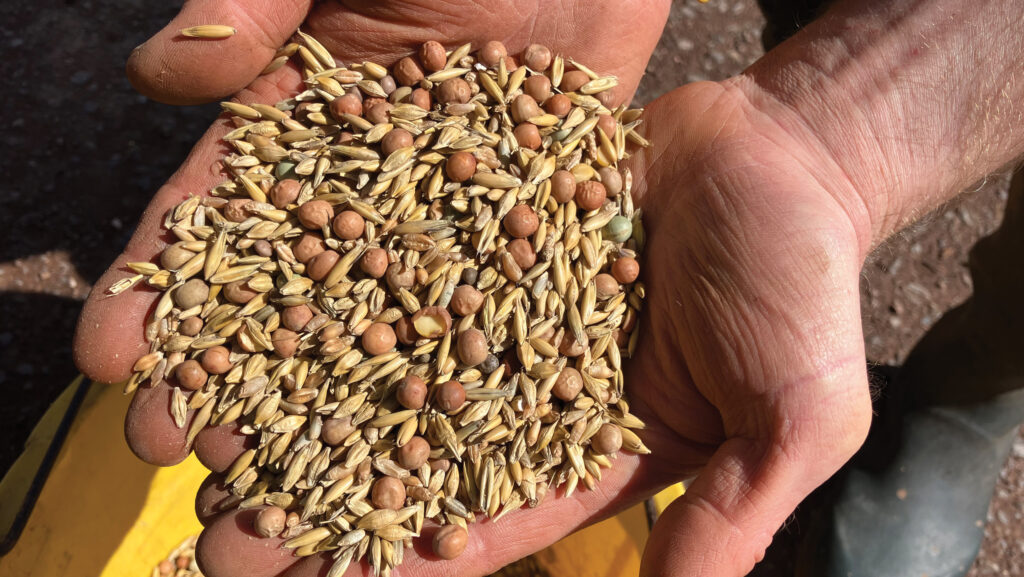
Paul Baker’s polycrop © Paul Baker
- Peas 45%
- Barley 15%
- Oats 15%
- Triticale 10%
- Wheat 5%
- Vetch 5%
- Rye 5%
Multiple species challenges
Managing multiple species in one field comes with challenges. In-season crop monitoring can be one issue.
Paul is an advocate of leaf and sap tissue analysis, particularly on conventionally grown crops which he creates tailored nutrition plans for. But with so many species present, which species do you test?
Currently, Paul works with his agronomist to focus on a single crop throughout the season, but he is not convinced this gives the full picture. More trials are planned as he looks to refine the system.
Harvest and ripening present another challenge. “We’ve been blessed with hot summers the last few years, so the crops have senesced well together, which makes combining easier.
“Crops release a signal through their root networks informing the other crops to senesce at the same time. The challenge is different seeds dry at different rates. The bigger the seed, the longer it takes to dry,” says Paul.
Oats are typically ready first, while peas can take up to 10 days longer.
Drills and establishment
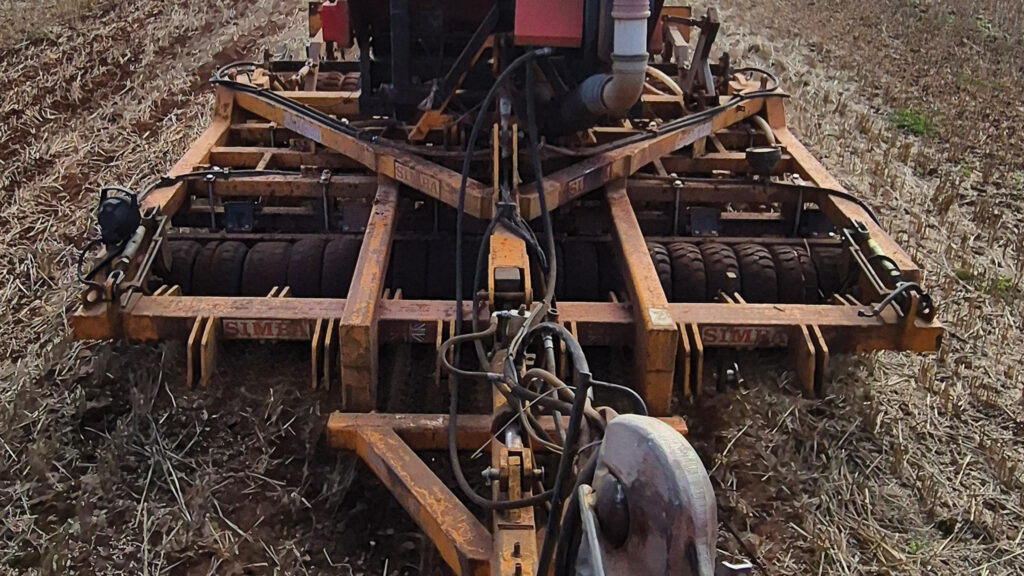
Poly crops are planted in spring using a modified Simba Freeflow strip-till drill © Paul Baker
Rather than investing in expensive new equipment, Paul purchased a second-hand Simba Freeflow strip-till drill for £4,000 and set about modifying it.
The tine drill was re-engineered with JJ Metcalf legs and fitted with a home-made liquid applicator pump, enabling the application of molasses and seaweed at drilling.
The total investment has reached about £7,000 – a fraction of the £50,000 price tag for a new machine.
Polycrops are planted in the spring. On the organic ground, cover crops are grazed and ploughed in ahead of strip-tilling, whereas the conventional ground sees covers sprayed-off before the drill pass.
Soils are frequently deficient in magnesium, so magnesium sulphate – also known as Epsom salts – is applied as a foliar spray at 5kg/ha.
Paul’s journey towards reduced tillage began a decade ago, when he shifted away from a plough-based system.
He went cold turkey with the plough across the conventional area and used a set of discs instead.
In the first year, there was a modest yield penalty which he attributes to reduced mineralisation, as less soil disturbance limited oxygen availability and, in turn, nutrient release for crops.
Other intercrops
Oilseed rape, vetch, linseed and buckwheat, are grown as a companion to mitigate cabbage stem flea beetle attack.
Paul Baker realised the diversity of the plants was beneficial to crop health and he could enhance overall field output by growing more than one crop together.
When the crop came to harvest, he saw no detriment to the oilseed rape yield of 4.9t/ha – but he had the bonus of an extra 1.2t/ha of vetch, which he kept as home-saved seed for cover crop mixes.
Organic rye is also grown with a companion of beans which supply a modest 20kg N/ha if they are grazed/terminated to the cereal.
The crop is grazed by sheep over winter, removing latent disease from the rye, while the beans do not grow back.
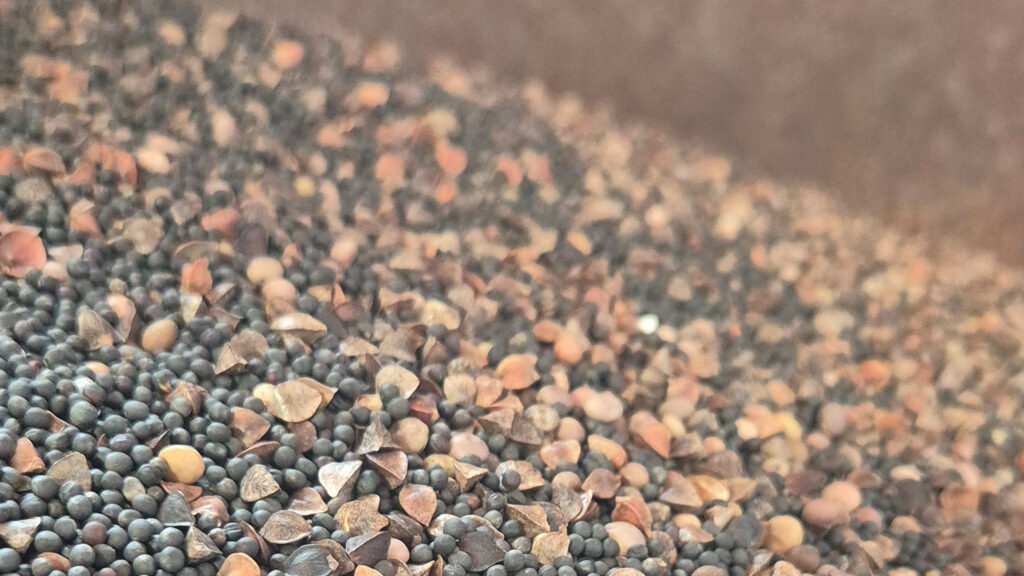
OSR, vetch, buckwheat and linseed © Paul Baker
Wheat variety blends
Today, Paul budgets winter wheat yields at 8t/ha from just 150kg N/ha. Last year’s harvest saw yields achieve shy of 10t/ha.
A five-way winter wheat blend of Extase, Graham, Champion, Beowulf and Mayflower is grown.
Paul has been reducing nitrogen rates by 10kg/ha each year across his conventionally farmed wheat area for the past five years.
He has used farm-saved seed with no fungicide seed treatments for eight years, alongside a fertiliser programme split 50:50 between granular and foliar.
“As soon as there is a canopy, I apply dissolved urea – mainly in the evenings, when there is high humidity to improve uptake,” he says.
Molasses at 1 litre/ha is applied as a carbon source with every sprayer pass, whether it is fertiliser, fungicides, or herbicides in the tank mix.
Furthermore, citric acid is added to herbicide tank mixes to lower pH and improve uptake and reduce risk of product breakdown. A rate of 2kg of citric acid is added to every 1,000 litres of water.
Next step – strip-till
Looking ahead, Paul is exploring how he can introduce strip-till into his organic system to cut cultivations costs and reduce soil disturbance.
Though the precise method for doing so remains a work in progress, among his ideas are growing an understorey crop as a natural means of fertility and weed suppression.
In particular, he is keen to trial a slow and low-growing grass variety which reaches just 5-7.5cm in height that could function as a living understorey.
Red clover cow pats
Feeding cattle harvested red clover seed proved an effective method to redistribute red clover around the farm in “clover cow pats”.
Paul harvested an old AB15 sward full of red clover once its scheme came to an end.
The clover seed was mown, rowed up, and harvested using a conventional combine, and achieved a yield of 400kg/ha.
The harvested red clover was fed to cattle, alongside concentrate feed, with a proportion of seed also retained as cover crop seed.
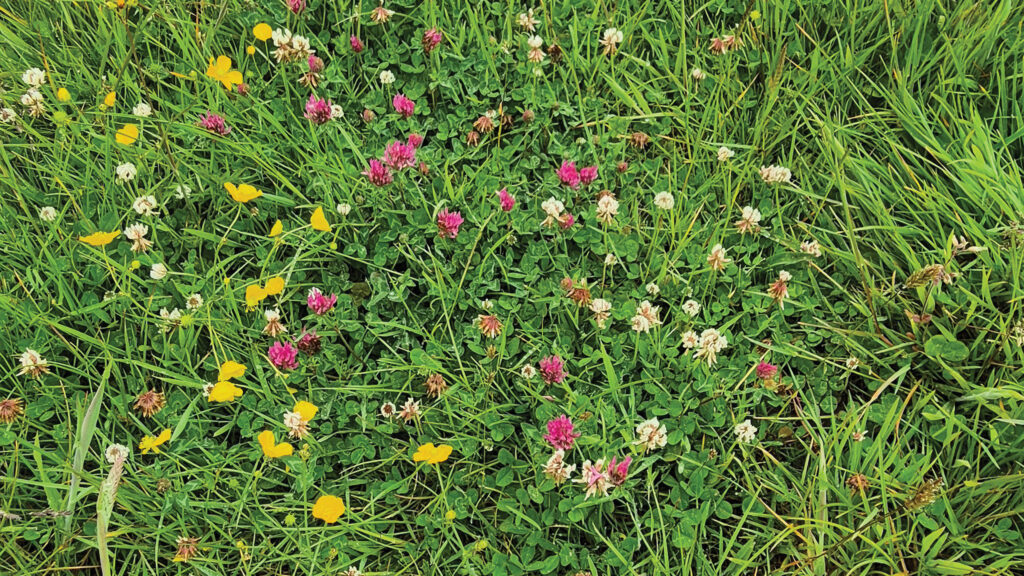
Red clover pats © Paul Baker