A day in the life: Managing 100,000t of grain at PX Farms
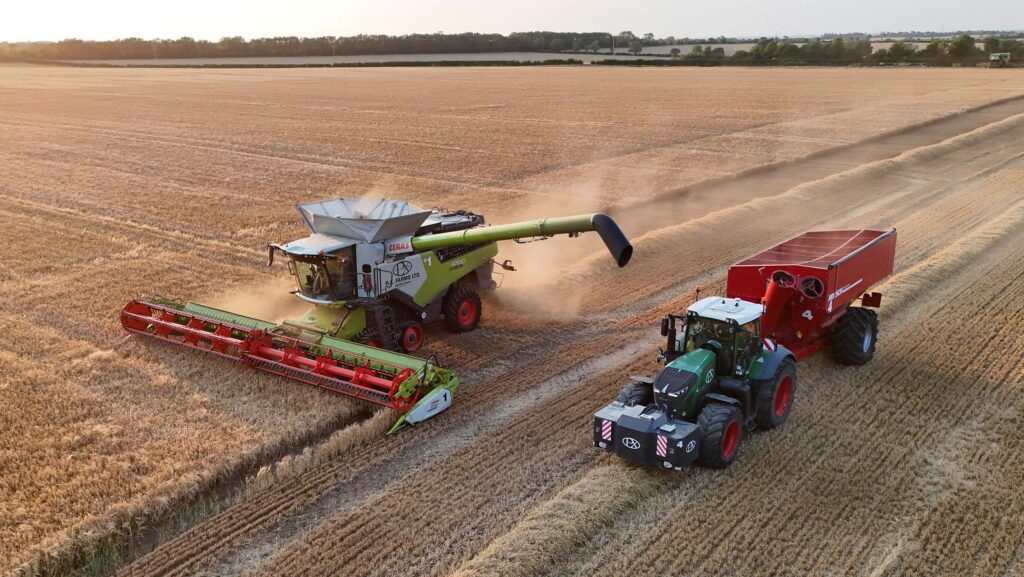 Barley harvest at PX Farms, Dry Drayton, Cambridgeshire © James Peck
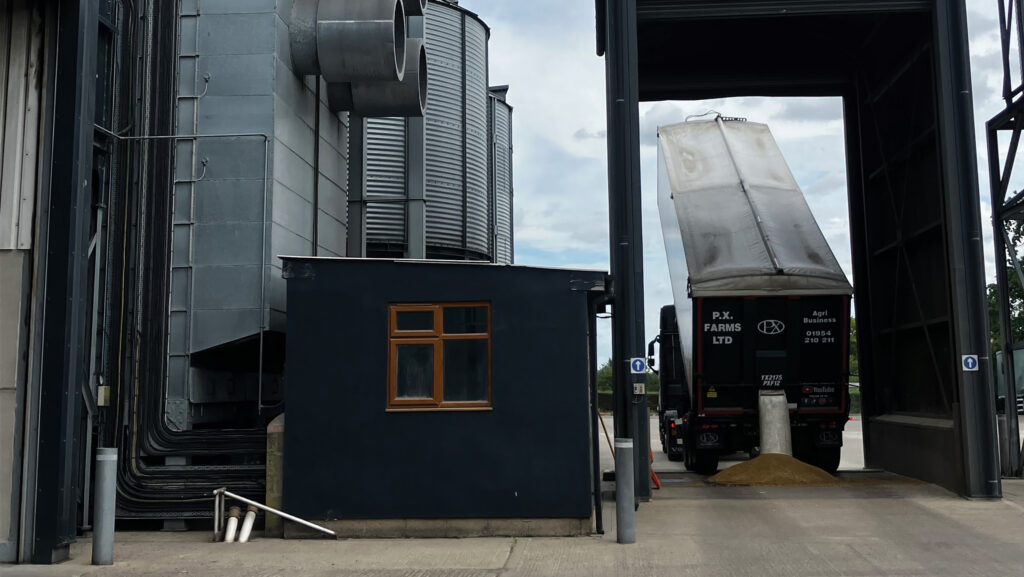
 Not many farms have a 100,000t grain storage facility on site, but for managing director James Peck of PX Farms, grain storage and processing is a key part of the business.
The mega-farming facility saw 150,000t of grain flow through the yard last year, of which 36,000t was the farm’s own grain. James expects a similar figure this year, as another drought year strikes.
On average, the grain store deals with 120 loads of grain coming into the yard each day. At busy times of harvest, this peaks at 3,000-4,000t/day.
See also: Harvest 2026: Light land crops struggle and some OSR wins
Typically, the farm stores:
- 50,000t of Group 1 milling wheat
- 26,500 feed wheat
- 8,000t barley
- 8,000t oats
- 4,000t mustard
- 1,500t peas
- 2,000t beans
- 2,000t oats
- 2,000t rice (imported and stored from overseas)
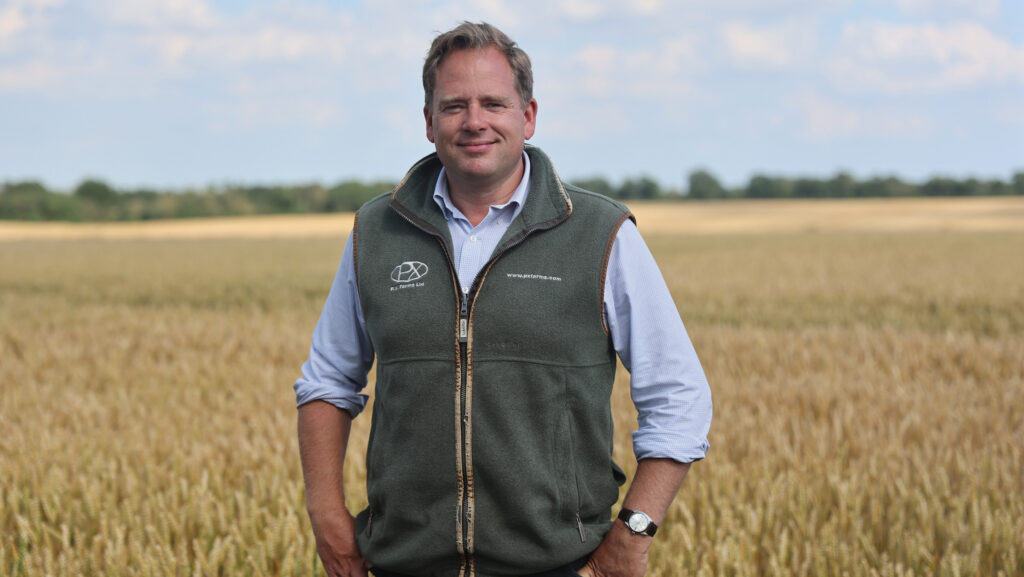
James Peck © PX Farm
Harvest this season
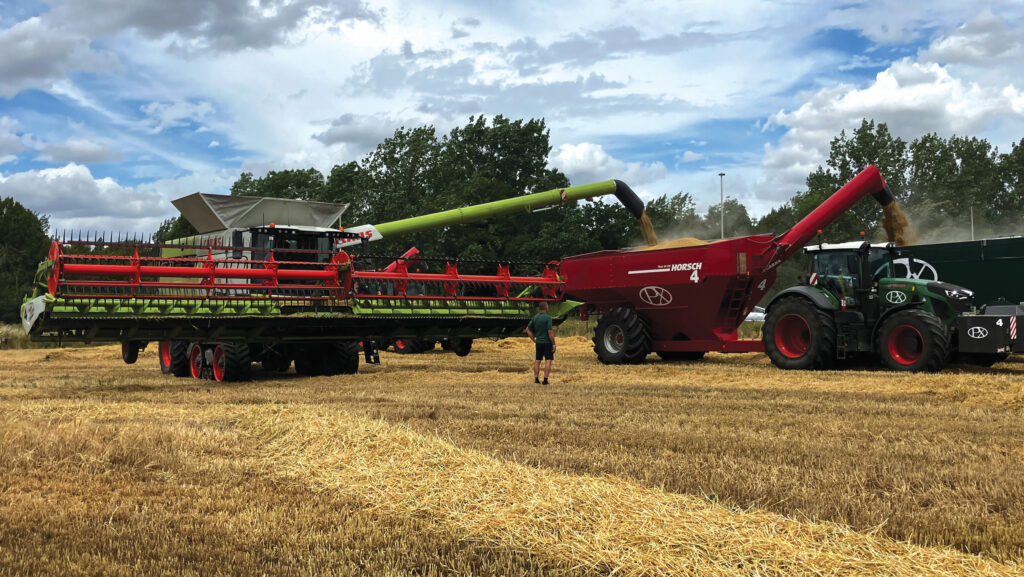
Four Claas Lexion 8700 combines with 12m headers are currently making their way through the farm’s 5,000ha of cropping. The team are now halfway through harvest.
The entire farming operation runs on 12m controlled-traffic farming across owned and rented land in Lincolnshire, Cambridgeshire, Hertfordshire and Bedfordshire.
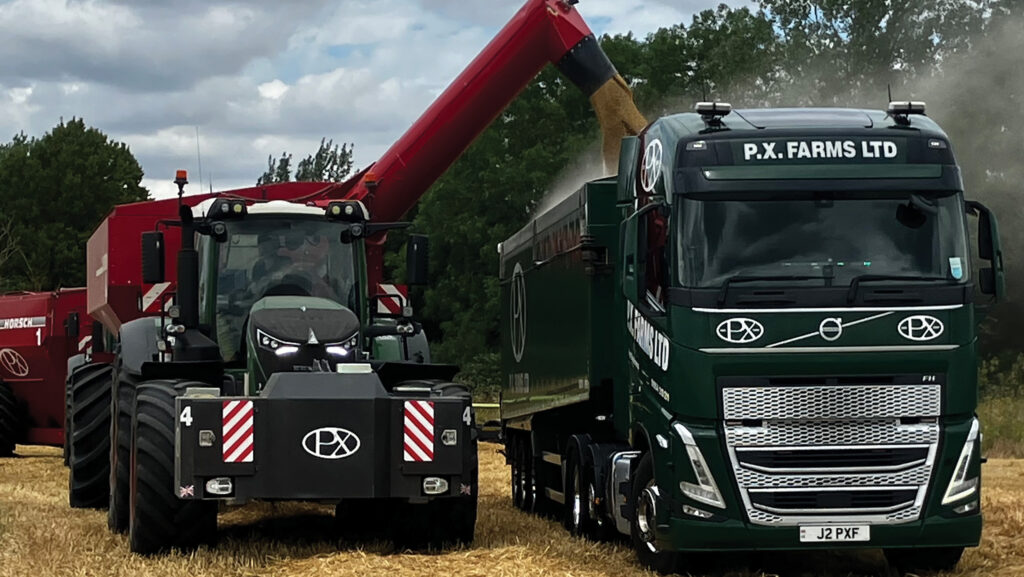
Grain is transferred off the combine into chaser bins before being loaded into lorries and into store. “We only transfer grain on the road via lorries. It significantly reduces road traffic and improves harvest efficiency,” says James.
PX Farms has grown substantially since James acquired the original 300ha family farm, with significant investment in grain-handling infrastructure.
© MAG/Emma Gillbard
Ambition to farm 10,000ha
Looking ahead, James remains ambitious, with a long-term goal of farming 10,000ha. However, he believes land availability, political uncertainty and government policy remain the biggest barriers to growth.
“We have all the gear now,” he says. “Another 1,000 acres [400ha] was a lot when we farmed 700 acres [280ha], but we’ve got the machinery to continue to grow. Land availability is our main limit now.”
James sees farming overseas as a major opportunity. “In three hours we can be in France, where they have the subsidy. Farming in the UK is not as affordable as it used to be, and we have to find other activities to make it pay.”
The business is investing in additional fuel and fertiliser storage, with the aim of holding about 60% of annual requirements on site to improve resilience against price volatility and supply chain disruption.
© MAG/Emma Gillbard
Largest grower of mustard
PX Farms plays a major role in the UK’s mustard industry, cleaning, storing and transporting all of Coleman’s mustard.
The business is the largest grower of mustard for the company, providing more than 50% of the company’s total crop. Mustard harvest is expected to begin in August.
Concerns for the future
James is concerned about the wider challenges facing British agriculture.
“The government need to stop interfering. It’s a dangerous time for the industry. If it carries on as it is, farmers will leave the land, and food security will become a real issue.
“There is no clear direction from government, but we have to continue to push on.”
Despite those concerns, optimism remains central to the business.
“Every year in farming we’re hit with a tough time and there is some sort of disaster, but we always find a way to overcome it. That’s the best bit about farming- you have to adapt.
“Our slogan here at PX Farms is ‘Adapt, innovate and overcome’. That’s the thrill of farming- solving problems and overcoming challenges.”
© MAG/Emma Gillbard
Machinery
Supporting the operation is an extensive machinery fleet, including:
- Four Fendt 942 tractors
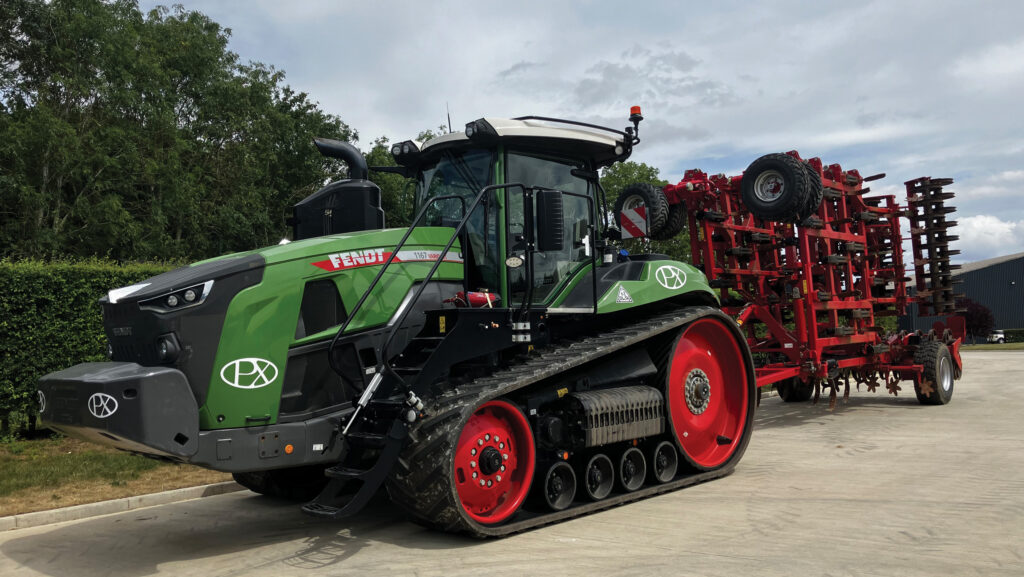
- Two Fendt 1165 crawlers
- One Fendt 1167 crawler
- Four Class 8700 combines
- Two 48m Horsch sprayers
- Three JCB 6t forklifts
- 12 grain trailers,
- Two 12m Horsch Terrano cultivation machines
- Four chaser bins
- Five drills, with plans to upgrade to two 18m Horsch Avatar drills with 25cm row spacing
- 12 Volvo lorries operating across the country, travelling as far north as York and south to Dover.
Fendt Crawler © MAG/Emma Gillbard
Machinery replacement is carefully managed, with combines and lorries typically replaced every four years, tractors every six years, and forklifts remaining in service for about a decade.
The lorry fleet covers significant distances, with each lorry travelling 110,000km every year.
The long-term ambition is to move to an 18m controlled traffic farming system, aligning drills, sprayers and combines on the same working widths.
James currently has two 18m 25cm Horsh Avartar drills on order. He plans to upgrade the combines to match this width next harvest.
© MAG/Emma Gillbard
Crop Hospital
PX Farms now cleans about 60,000t of grain annually. The grain cleaning facility, known as the ‘Crop Hospital’, operates 24 hours a day, seven days a week.
The business has installed a new artificial intelligence-powered colour sorter, which is expected to improve efficiency by about 20%.
The sorter separates grain based on colour, shape and quality, allowing wheat to be separated from barley while improving cleaning accuracy.
Charity fundraisers
Away from the farm, the business continues to engage with the wider industry through its growing online audience, well-known YouTube channel and charitable fundraising.
A current raffle to win a Land Rover is raising money for the Worshipful Company of Farmers, RABI and Nuffield Farming, following more than £15,000 raised for the charities last year.
Protecting grain in store
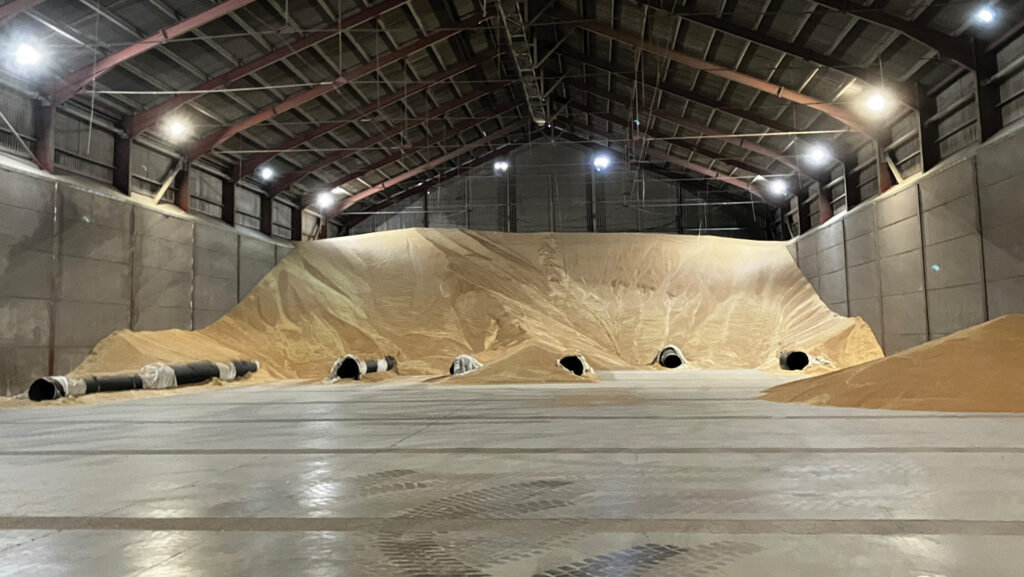
Due to the continual movement of grain all year round, grain stores have little rest time, which makes cleaning and management paramount.
Maintaining grain quality is vital and something the team take very seriously, explains grain store manager Gordan Carson.
“As soon as a store becomes empty, it is thoroughly cleaned to remove old debris, and left for 48 hours before any new crop is brought in,” he says.
Products like K-Obiol EC25 (containing deltamethrin) are sprayed onto walls and floors to kill grain insect pests.
Smoke generators also help to kill pests in crevices and voids. To protect the grain itself as it goes into store, an ultra-low-volume fogger is applied to grain to create a barrier that protects crops against beetles and weevils for up to 12 months.
MAG/Emma Gillbard
Personal best for lead spray operator Kieran Robinson
Lead spray operator Kieran Robinson recently achieved a personal best of spraying 368ha in a single day.
As the area farmed has grown, efficiency has had to evolve. That’s why the business replaced four 36m sprayers with two 48m Horsch machines, significantly improving efficiency and freeing up tractors for other work.
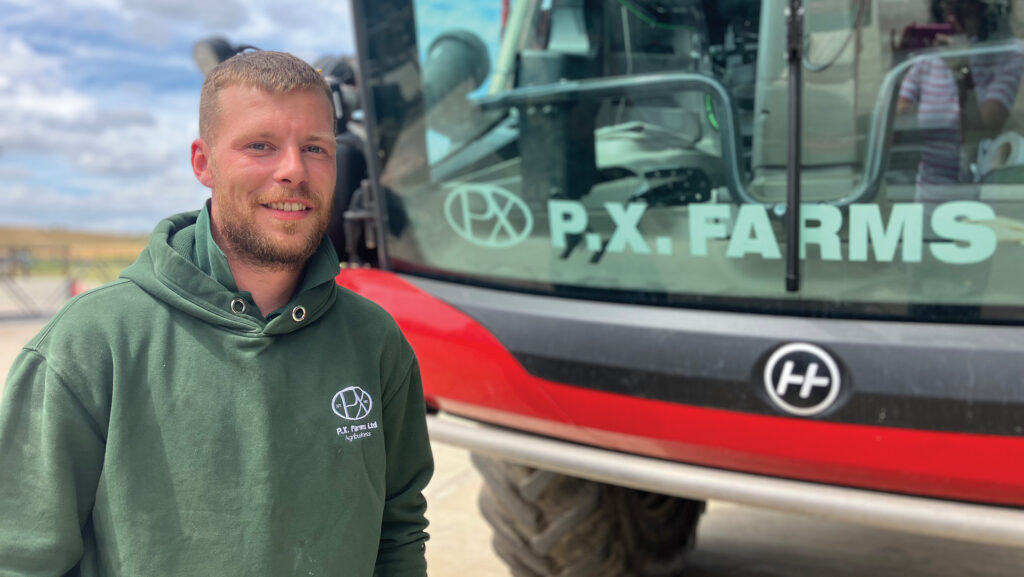
Kieran Robinson © MAG/Emma Gillbard
“Yellow rust pressure has been particularly high this season, so we adopted a four-spray fungicide programme, whereas three applications would normally suffice.
“Most of the spraying has been carried out overnight, with 2,700ha treated over seven days at a rate of 240-280ha/sprayer each day,” says Kieran.
Despite the size of the business, staff retention remains high, with most departures resulting from retirement. Employee turnover is about 8% across the whole business, falling to just 2.5% within the agricultural workforce.