Crop Watch: Potato harvest and BYDV aphid alert
 © GNP
© GNP The warm conditions continue and aphids are easy to find in establishing cereal crops, so barley yellow dwarf virus (BYDV) is firmly on the radar.
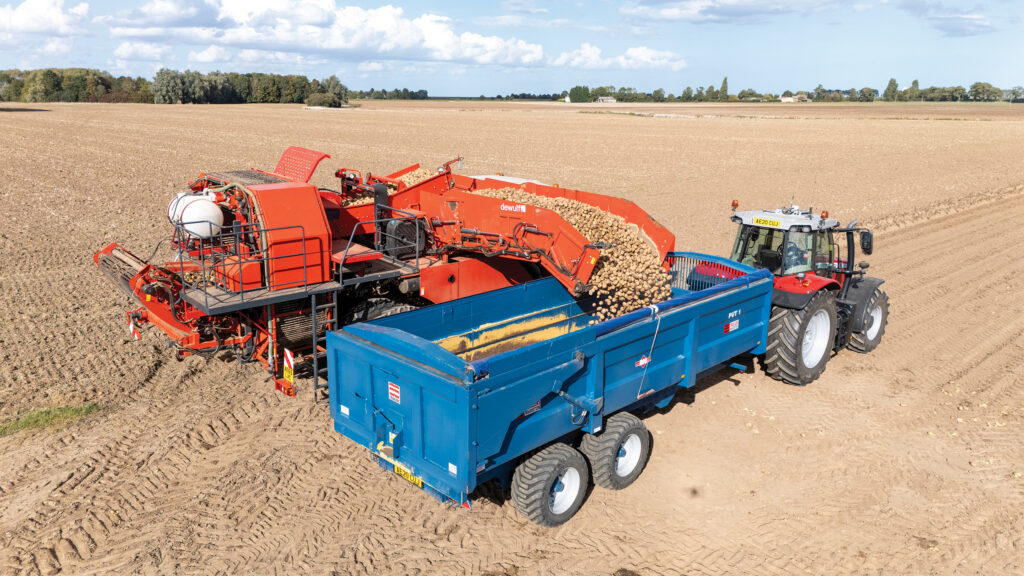
Potato crops in Northern Ireland have been desiccated ready for lifting, while in England harvest is in full swing with reports of lower yields and variable quality.
Other topics covered include weed control in recently drilled winter cereal crops.
See also: What could the future of crop protection look like?
North
Stephen Bell, Fane Valley (Northern Ireland)
An early harvest and the return of useful rainfall from mid-August have given autumn crops an excellent start, with cover crops and oilseed rape establishing well.
In the fields I’m walking, most oilseed rape crops are now around the four-leaf stage, helped by good seed-beds and good soil moisture following drilling.
Slug grazing, leaf miner and turnip sawfly larval damage can be found in some crops, so regular checking remains important while plants are still small and vulnerable.
Volunteer cereals, meanwhile, have been growing fast and furiously, with most crops now treated with a graminicide to remove this early competition.
As the season progresses, crops should be monitored for the first signs of phoma, particularly as wetter autumn conditions develop.
Top-up herbicide treatments may also be needed where difficult broad-leaved weeds, such as shepherd’s purse, have escaped the initial residual programme.
Final desiccation is under way in most potato crops, although late-season rain encouraged renewed canopy growth and made haulm destruction more challenging in some varieties.
Where canopies remain green and bulky, good spray coverage is critical. Pyraflufen and carfentrazone-based desiccants work best in bright conditions, with adequate water volumes helping sprays reach lower stems.
Blight protection should be maintained until the haulm is completely dead, using fungicides with tuber blight activity.
Once most of the leaf has been removed, follow-up desiccation is helping dry out remaining green stems and hasten skin set ahead of lifting.
Cereal drilling
Autumn cereal drilling is now well under way, with seed germinating quickly in the mild, damp soils.
Accurate and timely pre-emergence herbicide application has been a strong focus this autumn, particularly where difficult brome and Italian ryegrass populations are present.
Good soil moisture at drilling has also helped maximise residual activity.
The last of the flufenacet-based sprays are now being used up on farm, while attention is turning to life without it.
Greater emphasis is being placed on residual actives such as pendimethalin, chlorotoluron and aclonifen.
With some crops drilled early into relatively warm soils, prolonged weed emergence may outlast the activity of the initial residual programme.
Early post-emergence top-ups will, therefore, be important in some situations to extend control of later-emerging brome and ryegrass.
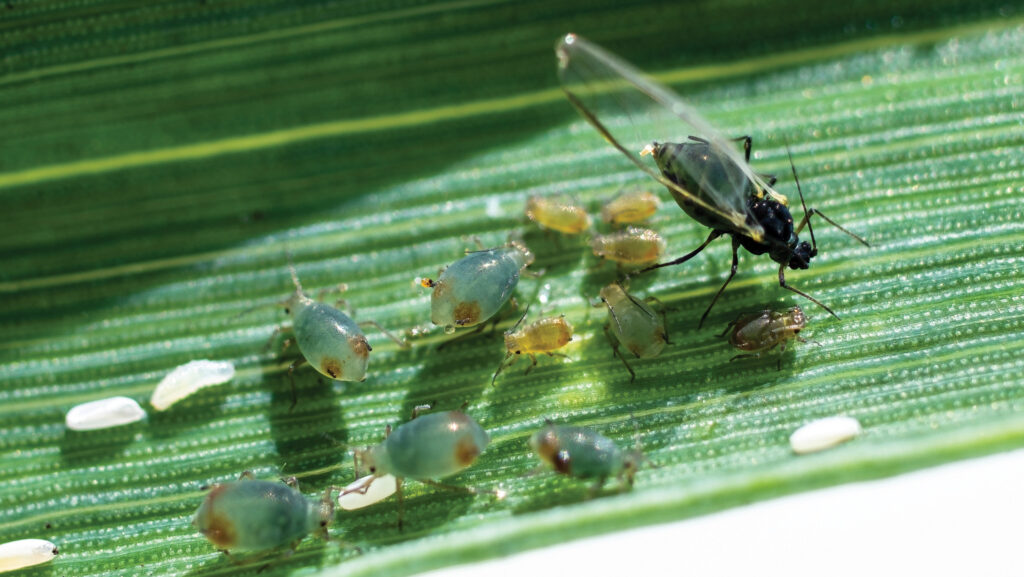
Bird cherry-oat aphid numbers have risen in recent weeks, although trap catches remain below the long-term average for the time of year.
Cooler conditions should help slow migration, while the early harvest allowed good stubble hygiene and reduced the green bridge ahead of drilling.
However, late silage cutting and maize harvesting can still encourage aphid movement into newly emerged cereals.
With many early-drilled crops now approaching the two-to-three-leaf stage, BYDV remains a key risk.
South
Anna Dunford, Hampshire Arable Systems/AICC (Hampshire, Surrey and Isle of Wight)
Autumn cereal drilling is now in full swing and with generally good seed-bed conditions, crops are taking only around seven days to emerge.
Residual herbicides require moisture for best performance, so in many cases application timing remains flexible to suit conditions at drilling.
With soil temperatures still unusually high, active ingredients with a short half-life will break down quickly. Prosulfocarb (Defy), for example, may be better saved as a top-up when temperatures have dropped.
It is going to be key to monitor emerging grassweeds in crops, particularly where dry conditions have limited stale seed-beds, and top up where necessary.
However, it is important to know that once weeds reach one to two leaves, residual herbicide activity will rapidly decline so timing of post-emergence sprays needs to be carefully executed.
Aphid alert
© Blackthorn Arable
With temperatures remaining unusually high for the time of year, we need to be particularly vigilant with aphid monitoring.
Record crop emergence dates and use these to work out the T-Sum for predicted insecticide spray dates.
The aim is to control aphids before the second generation begins to spread out from the initial infestation.
Complete BYDV control will never be achieved as the initial aphid flight can transmit the virus within 20 minutes of beginning to feed but at least, we should be able to prevent the spread from the first infected plant and avoid seeing large BYDV patches next spring.
Oilseed rape crops range from cotyledon to approaching six true leaves.
Unfortunately, a combination of lack of moisture and high cabbage stem flea beetle activity in some areas has caused crop failures, and alternative plans are being made for affected fields.
We are dealing with smaller crops than usual due to the enforced later drilling, meaning there will be less crop competition against weeds.
Weed control, therefore, shouldn’t be delayed, particularly for competitive weeds such as cleavers and cranesbill.
A few cases of turnip sawfly have appeared, these are usually easily controlled if caught early, so provided damage isn’t too severe, crops should recover well.
East
Harriet Bateman, Prime Agriculture/AICC (West Norfolk, Cambs, south Lincs)
This is the year that keeps on giving. It’s easy to get drawn down by the season we’ve had, but we must keep going – and we are getting the chance to start again.
It’s really hard not to start by talking about oilseed rape. Where the OSR is good, it’s good. Clethodim applications are going on for blackgrass control, which need to be applied by 15 October or the six-leaf stage.
Remember to observe tank-mix guidance and the required no-spray intervals either side of application.
Cabbage stem flea beetle (CSFB) feeding activity has generally slowed, and thoughts now turn to how affected crops will cope with larval pressure later in the season.
For the poorer, more affected crops, the decision “do we or don’t we keep it?” is being pushed down the road a little longer while cereal drilling takes place.
For now, we’re holding on in the hope that the skies might finally open and give these crops the rain they desperately need.
However, serious consideration must be given to how well they can survive the winter with the prospect of large numbers of larvae and pigeons to deal with.
Honest appraisals of crops’ chances of survival will have to be made. Where crops are well established, now is the time to start monitoring for phoma and light leaf spot.
The majority of winter barley is now drilled and wheat drilling has followed at pace in many areas, although growers are being encouraged to slow down as conditions get even drier.
Crops are emerging very quickly and aphids are easy to find, so BYDV risk is firmly on the radar.
Spray timings are being planned accordingly, using a combination of T-Sum 170C guidance and scouting for the presence of winged aphids – they are certainly not hard to find.
In true 2026 fashion, it is shaping up to be a challenging BYDV year.
Weed strategies
Pre-emergence strategies are tricky this autumn and, as conditions get drier, are becoming increasingly situation-dependent.
Weed pressure, moisture, drilling date and, of course, budget all need to come into the decision.
At the moment, unless we’re dealing with particularly high weed pressure, it feels right to save some of the better chemistry for a peri-/post-emergence situation, in the hope that we have some moisture by application.
At pre-emergence, a more straightforward generic flufenacet-type base alongside aclonifen or pendimethalin feels appropriate in many situations, knowing we will be coming back with a top-up.
There certainly isn’t a one-size-fits-all approach this year, and programmes need to be built field by field.
Potato harvest is now in full swing, or finished in some cases. Yields are generally down, with quality and size variable too.
The free-buy market price is at least making this slightly easier to swallow. Considering the severe lack of moisture crops have received this season, potatoes never fail to amaze me with what they can still produce.
Sugar beet lifting has also begun, with the campaign now under way. With the recent canopy recovery, it’s not surprising that sugars are down compared with some of the test digs we were seeing during the summer, and, as expected, yields also appear to be down.
However, it is still relatively early in the lifting campaign, so I wouldn’t necessarily be expecting the biggest crops to be coming through just yet.
West
Ben Allard, Pearce Seeds (Dorset, Wiltshire and Somerset)
As October comes around, it’s fair to say we’re still feeling the effects of the drought from the summer months.
Although we’ve had some much-needed rain, the ground remains very dry, and growth has slowed, particularly when it comes to grass reseeds and brassicas.
Whilst I should be saying that maize harvest has only just begun, this is far from the case. In my area, maize harvest was completed over three weeks ago!
As you would expect after the season we’ve just had, soil type really showed its hand. The earlier-drilled crops on better moisture retentive land held on well, with yields averaging between 15-18t/acre fresh weight.
However, across the board, it’s fair to say that average yields were more in the region of 10-12t/acre, with lighter land being the worst affected by the drought.
The extremes of this year shouldn’t put people off growing maize next season.
Instead, it highlights the importance of choosing the right variety and maturity for your soil type, while also considering ways to retain moisture on lighter land through the adoption of reduced tillage and strip-till systems.
Oilseed rape
OSR is now starting to move and is looking strong. The risk from flea beetle is still present, and an application of silicon/trace elements alongside a pyrethroid has been applied across around 20% of my area, targeting the worst-affected fields to help take the edge off the pressure.
OSR has been a tricky crop to establish this season in my area. With very limited rainfall, the crop has definitely been stop-start in its early stages.
However, following some welcome rain towards the end of September, crops are now starting to march on and are becoming relatively free from the early CSFB risk.
BYDV and gout fly risk remain high, and the damage caused last year is still very much on our minds.
Trapping data suggests that populations are currently high, so those who drilled later in September need to be watching for aphids and gout fly right from the start.
Populations are still building rapidly, helped by the unseasonably warm temperatures.
Winter wheat herbicide programmes have been a talking point due to the dry conditions, but I’m still taking the approach of starting strong and building the programme from there.
On some of the ground I look after, once the weather turns, we might not get another opportunity to travel.
Variety choice for the coming winter wheat season will mainly consist of Equipe, Bamford, Graham and some wheat blends as part of an on-farm trial aimed at helping to tackle soil-borne wheat mosaic virus.
With limited varieties on the market offering soil-borne wheat mosaic virus resistance, I’m looking at blends containing varieties that carry the resistance trait alongside some newer, higher-yielding varieties that do not.
The aim is to introduce greater diversity on farm while combining some of the key traits we need, including the improved yield potential offered by newer varieties.
Tip of the week
After the experiences of last year, leaf hopper activity and subsequent risk of wheat dwarf virus needs to be considered.
Anna Dunford