Crop Watch: Bank Holiday heatwave adds to crop stress
 © Tim Scrivener
 This week’s sunny spell is helping boost grain fill in winter barley crops, while counties in the South and East are in need of rain to revitalise crop growth.
Here’s the latest from Farmers Weekly’s Crop Watch agronomists.
See also: Young couple’s pasta start-up champions 100% British spelt
South
Neil Harper, Agrii (Kent)
We had between 1mm and 20mm of rain in May, depending on how lucky you were, and it has made it a complete lottery as to how stressed the crops look. I’d say we are currently drier than last year because of the easterly winds we have had.
Yellow rust has been our main wheat disease threat, but it’s likely brown rust will become more of an issue in the heat. We are seeing ear emergence at least seven days earlier than usual, which has got us thinking about T3s.
It’s likely this will focus on rust control, but if wet weather does appear, we will provide protection against fusarium, especially for the quality wheats.
Leaf tissue tests are showing low levels of magnesium and boron, which is typical when crops are suffering from drought stress.
We’re trying to top this up with foliar feeds and using amino acids before stress symptoms appear. This is all part of our approach of keeping positive, not bemoaning the weather.
Oilseed rape looks one of the best crops. It has flowered well and there looks to be a decent pod set.
There is a lot of positivity about oilseed rape again. We’ve had two good seasons for establishment, prices are good, and it needs less nitrogen than wheat. If we get a good harvest, we can expect quite a bit more to go into the ground in August and September.
If a variety has pod shatter resistance, we may choose not to spray a pod stick, but some farmers prefer a backup and have both.
Spring barley has its flag leaves and awns out. Crops are anything from 6in to 12in tall, depending on when they were drilled and their access to moisture. There’s very little disease, so most of our focus has been on nutrition to help them through the stress.
There are quite a few broad-leaved weeds and wild oats appearing in spring barley. There is a temptation when spring crops don’t look too good to leave them, but we’re always conscious of the following crop, and leaving them to set seed will cause issues.
We are approaching the finish line for this year, but there are still a few big decisions to make if we’re going to hit our end-market and yield targets.
The improving outlook for grain prices is positive. Hopefully, this will mean most farmers make a reasonable profit from this year’s crop, providing a bit of resilience as we prepare for new-season nitrogen prices.
West
Jamie Armstrong, AICC/Wessex Agronomy (Wiltshire, Gloucestershire and Hampshire)
Early May brought some very localised rain showers. Some farms have as much as 30mm in the rain gauge, while others only a few miles away had virtually nothing. The rainfall has certainly helped revitalise crops where it arrived.
Winter wheats are well into ear emergence, and carrying good yield potential. Where fungicide timings may have slipped slightly, and varieties are more susceptible, it is possible yellow rust has crept back into crops.
Disease pressure overall still feels relatively low, although brown rust remains something that needs close monitoring, given how quickly it can move under warmer conditions.
Late barley yellow dwarf virus (BYDV) infection is increasingly visible across some wheat fields, with patches of yellowing now easier to pick out as crops move through growth stages.
Aphids are still found within crops, highlighting just how mild and favourable conditions have been.
Septoria can still be found lower down within the canopy of certain varieties. However, many have stayed remarkably clean. Arnie, Skyfall, Crusoe and Extase have stood out positively in this respect.
Winter barley has largely finished flowering and is moving into grain fill. Awns and flag leaves are in very good condition, helped by fungicide programmes often being pushed slightly later to maximise protection of the upper canopy.
Winter oats are seeing panicles emerging, meaning a final (or in some cases first and only) fungicide should now be applied.
Spring crops have found conditions more challenging in places due to the prolonged dry spell. Flag leaves will soon be emerging on spring barley, particularly the earlier drilled fields. Disease pressure remains relatively low, although moisture stress is becoming evident on lighter land.
Maize is mostly sitting between the four- and six-leaf stage, depending largely on drilling date and how brave growers were with the colder overnight temperatures earlier in the season.
Many crops did not receive a pre-emergence herbicide. With recent rainfall flushing weeds through, plans for post-emergence herbicides will need to be put in place before weed competition starts to impact crop growth.
Rainfall over the coming weeks could make or break crops that have missed the recent showers.
East
Dan Ives, Agrovista (Herts, Beds, Cambs and Essex)
Much-needed forecast rain failed to materialise in our region. We’ve had just 10-15mm in the past two months. Stressed light-land wheat crops have responded by putting out ears a good two to three weeks sooner than normal.
Septoria pressure remains low without the rain splash, but fresh yellow rust is easy to find on both flag and leaf two in susceptible varieties. Infections in Bamford have caught the eye, but it’s also easy to find in Skyfall and Oxford, even where it has an appropriate T1.
Fungicide spend has continued to be cut back, even on the more disease-susceptible wheats, mostly through changes in product and, where appropriate, some rate reductions. Costs have been reduced by 25% in some cases.
On lighter land, flag and ear sprays have been combined, while on heavier soils where crops have hung on, a more standard approach has been taken. Where the ears are emerging, it’s important to keep intervals tight, particularly if flag leaf sprays were applied early. In some cases, a cheap tebuconazole might be required as a holding spray before a true flowering spray.
I’ve seen some frost damage on the earliest wheats, where the tips of ears were emerging from their boots when we had a couple of sharp frosts early this month.
BYDV in cereals is evident as a result of the mild winter and early spring. Hopefully, we’ll start to see some higher yielding wheat varieties with BYDV-resistance coming through the system.
The warm weather over the bank holiday weekend is likely to increase aphid pressure in sugar beet. I could find winged aphids before the weekend, so it’s likely a lot of beet crops will need a second insecticide spray, if one hasn’t already been applied.
Be careful if applying herbicides to beet in warm weather. Avoid spraying in the heat of the day, keep intervals between sprays extended to avoid de-waxing beet plants, and watch oil rates or omit altogether.
On lighter land, foliar nutrition could be worth applying, particularly manganese, magnesium and boron (once weed control sprays are complete), to perk up struggling crops.
If you have had spring crop failures, a summer cover crop might be worth considering to help soil structure and give a good entry into an autumn wheat. One of my customers has direct drilled a multispecies cover into a failed linseed – we just need some rain to help it emerge.
North
Conor Campbell, Hutchinsons (Northumberland)
© Tim Scrivener
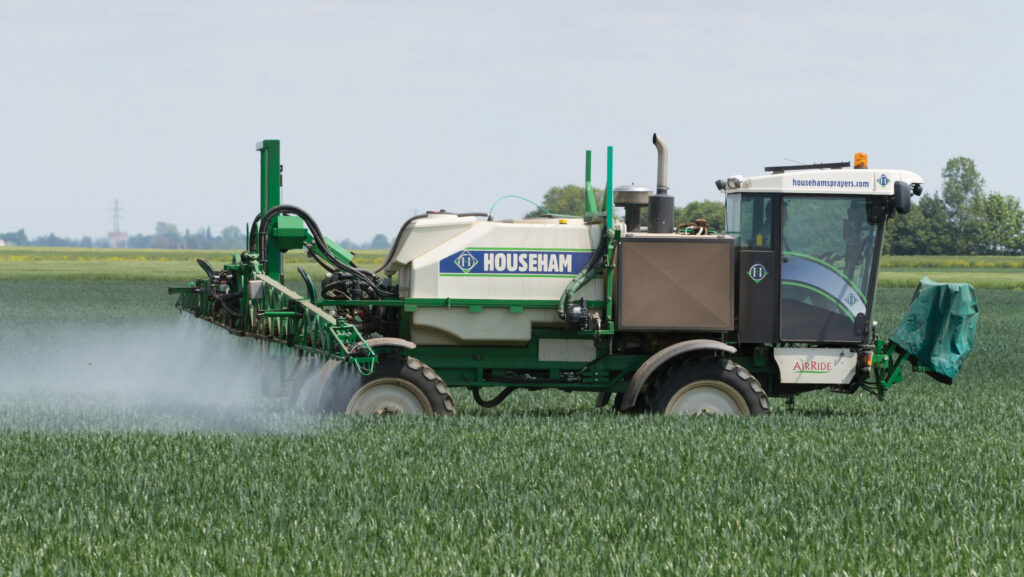
Spring crops are off to a good start, as generally these seem to start off either too wet or too dry. Spring barleys have tillered well and are receiving a herbicide to tidy up any weeds.
I’ve coupled this with some early nutrition and plant growth regulator to encourage good rooting and tillers. Maize will be delighted with the rain and now the heat.
Pea and bean weevils have been very active in both winter and spring beans so keep an eye out – the nodules are at risk from larvae damage.
Wheat T2s have started with an eye on both septoria and yellow rust. T1s have done a good job in keeping septoria in the base, aided by some dry weather in April. However, May has made up for this, but we can keep rates relatively sensible.
I still have an eye on yellow rust, as spray misses and our untreated plots are full, so some strobilurin at T2 might be a worthwhile addition if you’ve noticed high pressure.
Winter barleys look good and the early T1s have held disease down in the crops well. Final sprays will be on and we will keep an eye on these as we run towards harvest.
I’ve heard some more encouraging prices, so I’ll keep my fingers crossed these maintain for harvest.
I’ve finished flowering sprays on oilseed rape and these are just coming to an end. For a crop that struggled to get away in the autumn and has a big question mark over its future, they don’t half look good.
Plenty of sunshine now is needed to fill pods and produce good oils. I’ve started to see the impact of its removal from the rotation on farms with a history of brome. Beans have been a good alternative but an increase in winter oats has been problematic.
As we approach June, invites for variety open days will start to land and plans for next season will begin. Now is a good time to think about oilseed rape seed and possibly look at securing the best options.

Staying sharp shouldn't be a chore