Crop Watch: Post-code lottery of OSR establishment success
 © Tim Scrivener
 Oilseed rape crops are very variable, from triffids in the wetter South West to those just clinging on in drier parts of the UK, according to this week’s Crop Watch agronomists.
On a more positive note, conditions are proving ideal for late wheat drilling.
See also: Drought-hit early sugar beet yields not as bad as feared
South
Iain Richards, Agrii (Oxfordshire)
With large areas of our winter wheat averaging more than 11t/ha, OSR 4t/ha and spring barley 9t/ha, last season showed the value of good establishment, sufficient sunshine and effective disease control.
Despite the dry start, it’s very much a case of so far so good this time around too.
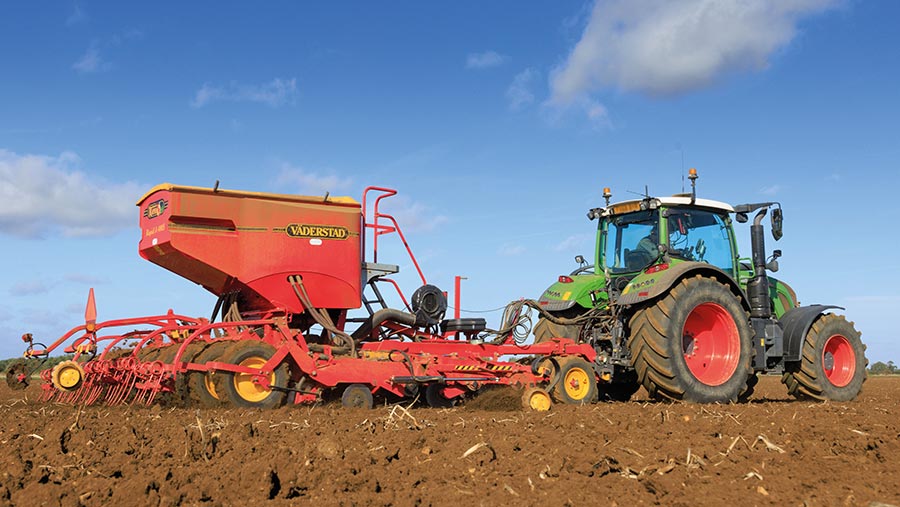
The early September drenching Hampshire received would almost have been too much for our OSR if we hadn’t direct-drilled most of it.
It was spot-on for vigorous hybrids sowed straight into well rain-proofed surfaces in late August, supported by starter fertiliser and buckwheat/fenugreek-based companions.
We’ve combatted a fair bit of flea beetle grazing with a combination of mineral oils for their anti-feeding properties, bio-stimulants for more rapid growth and, in extreme cases, insecticides.
Good slug control has also been particularly crucial. What’s more, with no pre-planting control opportunities in dry soils, we’ve had to use two cereal volunteer sprays in most cases.
Every hectare of our planned 1,000ha of OSR went in. We’ve had to re-drill less than 10ha. And, at 3-4 leaves, most crops are looking well set, although it’s very much wait-and-see as far as cabbage stem flea beetle larvae are concerned.
About 60% of our winter wheat is already in, and we’ll shortly be making a determined start on more problematic ground that is seeing decent flushes of grassweeds following the September rain.
However, we are having to be more patient north of the M4, where conditions have been much drier.
There’s no substitute for later drilling with bad blackgrass.
However, since we’re getting very good seed-beds with reasonable moisture levels and temperatures are cooling down noticeably, the balance of risk has definitely swung in favour of less delay than otherwise.
We are focusing on proven mixtures of picolinafen, flufenacet, diflufenican, metribuzin and prosulfocarb this season, for a strong combination of pre-emergence actives, saving the new cinmethylin chemistry for the worst fields.
In most cases, we’re following up with additional peri-emergence flufenacet.
While we are not starting to think about aphicides yet, cooling temperatures will help take the pressure off here, so most of our drillings are unlikely to need more than single spray.
Having said that, it’s easy to find aphids in cereal volunteers in our cover crops. So destroying this green bridge early enough ahead of spring barley will be a clear priority.
Not that there will be a lot of biomass to deal with, as the dry August meant decidedly patchy establishment.
Most covers did nothing until mid-September and several nights of less than 5C are already pegging their growth back.
East
Marion Self, Prime Agriculture (Suffolk)
Seed-beds and soil structure are good, land has been worked in dry conditions and is now becoming moist and very friable.
All drilling systems, including those based on minimum and direct tillage, have benefited from the good working conditions.
In some situations, this is despite the straw residues which have been slow to break down and occasionally cased a little frustration.
Most growers have seized the opportunity to drill in good conditions, leaving just the “dirtiest” fields with high grassweed populations to sow in late autumn.
Only recently have some areas had sufficient rain to trigger the emergence of volunteer crops and grassweeds, allowing their destruction before drilling.
This has been a frustration for many and some early-drilled crops are bound to become dirty.
Overall, despite some breezy days, sprayers have been able to keep up with the drills, enabling the application of glyphosate before drilling and prompt pre-emergence herbicides.
Increasing moisture and well-timed pre-emergences are both blessings.
We need maximum performance from these treatments in a season where the majority of drilling has occurred ahead of peak grassweed emergence.
Where required, growers have applied robust pre-emergence herbicide stacks. In the main, peri- or early post-em follow-ups are planned according to grassweed risk.
Better than reactive sprays applied to already emerged grassweeds which are largely less effective.
Few volunteer beans had emerged before drilling but these are now present in high populations and will need controlling this autumn.
Slug pressure has been relatively low, but monitor crops and treat as necessary.
We have seen a surprising amount of damage in some rapeseed crops and pressure will increase as the soils become wetter, especially in wheat after rapeseed or where there is a lot of surface trash.
Bean drilling
Many are now drilling beans; again, good conditions have encouraged some growers to drill direct into stubble or minimally cultivated situations.
Be sure to get enough seed depth and soil coverage; this will protect the germinating seed from herbicides and the long, stabbing beaks of rooks.
It will also regulate early growth until they are hardened by frosts.
Oilseed rape establishment has been a lottery, often reflecting rainfall patterns after drilling.
Crops that received sufficient rain at drilling with subsequent top-ups are now fully established and big enough to face the winter.
Very few crops require autumn plant growth regulator treatment, although I have heard rumour of triffid rape reaching the tops of wellies.
These crops are largely south or west of the region and have been well watered.
Viable stands will be ready for a phoma spray as soon as lesions appear, and some may need post-emergence weed control before Astrokerb (propyzamide + aminopyralid) or straight propyzamide is applied when cooler.
Growers of an optimistic persuasion who drilled into dry soils, or relatively late in early September, have been disappointed as an inordinate number of these crops have failed due to dry conditions and/or flea beetle attack.
The most appropriate replacement crop will depend on the individual situation, but suffice to say there will be more beans, spring barley and beet on many of these farms come spring.
West
Antony Wade, Hillhampton Technical Services (Herefordshire/Shropshire)
Following such an early harvest, even for us in the “wet” West, you have to remind yourself and check the calendar that we are still only in mid-October.
Luckily, we don’t have the grassweed pressure of some regions.
If only I could be remunerated as much as I’ve been reminded, “remember that autumn when, once it started raining it didn’t stop”.
But the scars of 2019, and further back for those with more years of experience than me, have resulted in the majority of my cereals being planted.
Early maize harvest and potato lifting in dry conditions have allowed wheat to be drilled into really good conditions, which is not always the case following these crops.
By the time you read this there will be just a few continuous wheat rotations left to complete.
Despite the dry conditions, early drilled cereals have established well with just enough moisture.
Pre-em herbicides of aclonifen/flufenacet/diflufenican were applied where grassweeds dictated, and so far weed control looks promising. These crops are now 2-3 leaf with first tillers developing.
Aphids
Winged aphids can easily be found, so crops will have had an aphicide to protect against barley yellow dwarf virus (BYDV) infection.
Crops with lower grassweed pressure will have a post-emergence strategy in combination with aphicide.
Many barley crops will get a similar strategy, along with some foliar nutrition as a starter against manganese deficiency.
I would like to say that we are learning strategies to get oilseed rape established and away before the flea beetles descend, but I think you might as well stroke your lucky rabbit’s foot or search for a four-leaf clover and have just as much success.
Early drilled crops, going into bone-dry conditions or on the assumption of rain that never materialised in early September, shouldn’t have germinated but got away well and are now, dare I say it, in need of some autumn plant growth regulator.
I just hope that flea beetle larvae or clubroot do not shatter the hope for these crops.
Those who waited for the rain to arrive before drilling have watched crops emerge just as the flea beetle arrived and then struggle to establish.
I am always very reluctant to give up on sparse OSR crops, as they have a phenomenal ability to compensate and always perform better than expected.
However, there are a few crops that we have decided are not going to be viable. Most crops have received some broad-leaved weed control recently, once we were convinced they were going to make it.
North
Conor Campbell, Hutchinsons (Northumberland)
This harvest turned out to be one of the kindest and quickest on record, as I’m sure it was for many, thanks to a long spell of dry and warm weather.
Having done my time as a harvest student in Northumberland, it was a rare sight to see combines cutting, with the dust flying, before 10am.
This dry weather continued right the way through July and August. We had roughly 80mm in September but the ground quickly took this in and you’d be forgiven for thinking we’d had no rain.
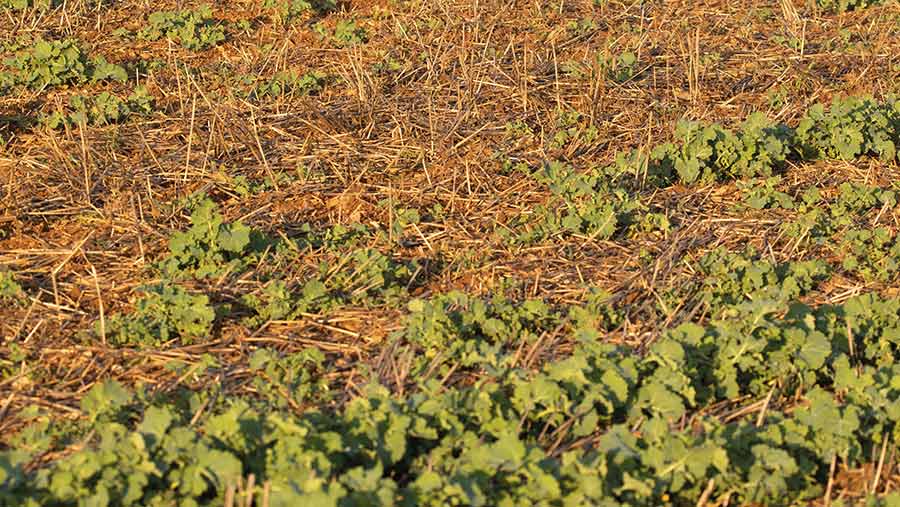
Unlike previous years, oilseed rape establishment has been very challenging, and I would say the majority of crops will be going into the winter with the least amount of biomass I have ever seen.
Extremely dry conditions led to slow establishment and no amount of begging to the gods would speed it up.
Heavier clay land has been particularly difficult, where cloddy seed-beds have led to patchy establishment because of the lack of soil around the seed.
© Tim Scrivener
High levels of cabbage stem flea beetle were also seen, which put crops under pressure – levels, I must admit, that we aren’t used to this far north, so my sympathies to my southern colleagues.
I’ve not lost any fields to the dreaded black beetle, but the battle continues on the later-sown crops. Thankfully, I have found slug pressure to be relatively low (silver linings!).
Winter cereals
Winter cereals have gone into fantastic conditions, right the way into October. Establishment has been great so far and we’ve had very little slug pressure on first wheats after OSR. Moisture levels have been adequate to get crops up and away quickly.
This has been a great time for those who have made a change to their cultivation or drilling systems. We’ve had kind conditions in which to experiment with other options, without having to battle the elements.
With warm temperatures still on the forecast, it’s important we keep an eye out for aphids. If conditions allow and thresholds are met, then the opportunity to treat crops should be considered.

Staying sharp shouldn't be a chore