Crop Watch: South lacks rain as disease bites in Scotland
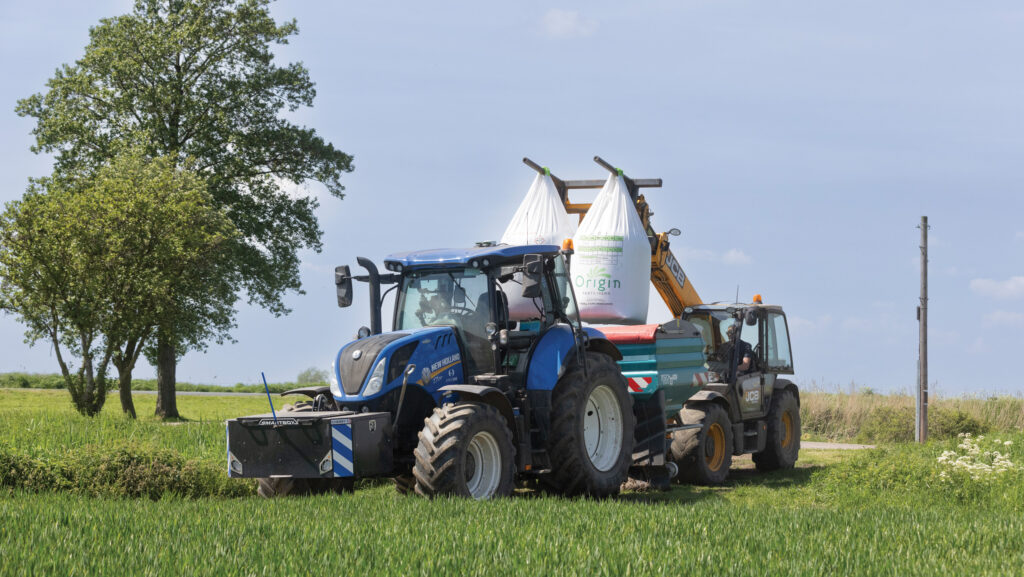 © GNP
© GNP Farmers across the UK are seeing huge contrasts this spring.
Concerns are growing in the South and East, where some rain is needed, while in Scotland, it’s the opposite problem with wet weather diseases enjoying the showery conditions.
See also: How tech approach lifted ‘field of the future’ margins by 26%
West
Dominic Edmond, Matford Arable (Devon/Cornwall)
The weather since the last Crop Watch report has been helpful, with a combination of prolonged dry periods and sporadic showers, which has allowed fertiliser and spray timings to be pretty much on time.
T0 fungicide applications on winter barley crops were needed for the relatively high levels of rhynchosporium, with growth regulators applied to even up tillers.
High diurnal temperature ranges contributed to most barley crops looking a bit stressed after being sprayed, but recovered in time for the T1 applications which have been applied in the past 10 days.
Barley yellow dwarf virus (BYDV) is a lot more evident now, with some crops that didn’t get an aphicide showing some quite significant levels, while even those that received one aphicide showing some signs of infection.
Wheats are showing signs of BYDV infection too, but nothing too alarming. They have had their T0 sprays, which were needed with high levels of septoria evident in several varieties, and particularly in the earlier-drilled crops.
The difference in septoria levels between the September drilled and the second week of October drillings is significant.
Growth regulation
Some quite hefty growth regulators were used at T0 to try to calm down some of the wheat, particularly Bamford which came out the winter very leggy.
Yellow rust in Devon and Cornwall is mainly absent, with Typhoon being the only variety I’ve seen with any, although I know Somerset is seeing quite a bit.
Applications of prothiconazole/tebuconazole fungicides were the go-to T0 fungicide, so hopefully, the tebuconazole will keep the rust at bay.
T1 applications are happening now, again with septoria being the number one target, using fenpoximid where possible.
The dry weather is also helping to keep the septoria under control, although there are plenty of heavy dews most mornings, so we can’t afford to be complacent.
Spring barley drillings have only really got going in the past few weeks, with seed rates increased to reflect drilling date, overall, the acreage this year will be down on previous years.
Maize will start to be planted next week, with soil temperatures between 10 and 14C at the end of last week indicating that, with a dry forecast, it’s time to have a go.
Nearly all the crops will get pre-emergence herbicides of pendimethalin, before getting walked at the three-to four-leaf stage for any post emergence weed requirements.
With most areas getting about 10mm of rain in the past week and a reasonable weather forecast in store, the next few weeks will be an important period in defining the outcome of winter and spring crops.
East
Ryan Baker, Frontier (Suffolk/Norfolk)
Somewhat frustratingly, the weather has turned dry again very quickly. Fortunately, the winter crops are still rooting into moisture.
Earlier-drilled spring cereals, legumes and sugar beet have emerged well and evenly. However, those drilled towards the middle of April are emerging unevenly.
Oilseed rape has been flowering for a long period this spring. In terms of precipitation, the risk of sclerotinia is low; however heavy night dews will increase the risk.
Monitoring the AHDB’s sclerotinia forecast is highly recommended.
Sclerotinia infection requires 23 hours of air temperatures above 7C and 80% relative humidity. A preventative approach, before significant petal fall, is best.
With the loss of tau-fluvalinate, the decision on whether to include an insecticide for the control of cabbage seed weevil and pod midge is much more challenging. The alternatives are much less safe on beneficials.
Wheat T0s have dried up early yellow rust infections very well, although in certain varieties septoria is still spreading up the plant, mainly due to leaf contact.
Yellow rust is now starting to reappear in varieties reliant on the Yr15 gene rather than traditionally poor yellow rust varieties such as Skyfall, Zyatt and Insitor.
As in spring 2025, we still have a broad list of potential fungicide options to utilise at T1.
Depending on crop potential, grower attitude and disease presence; Iblon (isoflucypram), Revysol (mefentrifluconazole) and Inatreq (fenpicoxamid) could all feature.
Rye
Hybrid rye has received a T2 fungicide this week, along with a strong top up of plant growth regulator.
In terms of growth stage, they are already a week ahead of last year. Brown rust appeared early, but has been controlled successfully with azoles and strobilurins.
Hybrid barleys will receive a flag leaf application of plant growth regulator, but the decision with conventionals will depend on crop condition and what was applied at T0 and T1.
Towards the end of this month, awns will start to appear, and thoughts will turn towards T2 fungicides.
Over the past two seasons Miravis (pydiflumetofen) has proved its place as the T2 fungicide option of choice.
Pre-emergence residuals in sugar beet have done a good job in allowing flexibility of the timing of the first post-emergence herbicide.
There has not been a big flush of broad-leaved weeds, allowing a true leaf to emerge before the first post-emergence herbicide.
South
Oli Pilbeam, CCC and CLM (Kent and Sussex)
A lack of rain is causing concern, which feels strange considering we spent most of the winter complaining how wet it was.
All the crops need a drink, particularly spring-sown ones. We planted them early – all in March – so they went into moisture, but there’ll be a yield hit if they don’t get rain in the next few weeks.
The third dose of nitrogen has gone on. Wheat has now had 220-240kg N/ha. Oilseed rape has had about 200kg/ha, having pulled back a little due to its high green area index early on.
Tip of the week
With milling premiums for 2026 crop currently at a minimum of £30/t, cutting back on nitrogen fertiliser to save some for next year could be the difference between profit and loss.
Oli Pilbeam
It was applied only two weeks after the second dose and a week or so earlier than usual because it was looking like a dry forecast.
We timed it in response to conditions rather than calendar dates – an ever-more sensible approach considering no two seasons are the same.
Fertiliser prices
Given the Middle East conflict, there is an argument to reduce nitrogen rates and keep some in the shed for next year when it could be horrendously expensive.
But given we have high yield potential this year and, therefore, a high chance of protein dilution, I’ve been nervous about cutting back on milling wheats for fear it could compromise protein levels.
With milling premiums for 2026 crop currently at a minimum of £30/t, it could be the difference between profit and loss.
On farms where cashflow allows it – which isn’t that many – we have bought a little nitrogen forward for next year.
It’s expensive, but at least it’s mitigating some of the risk. It’s buying some peace of mind, rather than leaving yourself entirely at the mercy of global events – rightly or wrongly, time will tell.
T1 applications in wheat started around 15 April. With the dry weather, I’m looking to pull back a little where we can, as septoria pressure has reduced, although brown rust and yellow rust are still concerns.
As ever, I’m making most of a number of box sets that distributors are offering in various forms. Shopping around and splitting boxes between crops is easily saving my clients £20-£30/ha.
Some farms have had a good 2025-26, so were tempted to spend money in February and March to reduce tax bills.
I’ve been urging caution with this approach as it could cause cashflow problems in six months’ time. It’s wise to keep cash reserves higher than is traditional because, come October, it’s likely you might need it.
We don’t know if we’re going to be paying £300/t or £800/t for fertiliser this season, against a backdrop of sub-£200/t wheat prices.
North
Greg Dawson, Scottish Agronomy (East Scotland)
© Tomasz Klejdysz/Alamy Stock Photo
The spring sowing campaign has been a stop-start affair for some. There are significant regional differences, but growers in the more rain-affected areas away from the east coast are reporting breaks in sowing of over two weeks.
Cereal drilling is now running into potato planting in improving soil conditions.
Except for very early-drilled wheat, autumn-sown crop development is not quite as advanced as last spring.
There was a perception that crops were slow, given the great start most experienced in autumn 2025, but they are following the typical pattern dictated by day length and rising temperatures.
Winter barley flag leaves were emerging in southern and central Scotland by mid-April and most wheat will be at growth stage 32 by the beginning of May.
Showery weather (or persistent rain for some) is promoting the normal wet weather diseases.
In winter wheat, septoria symptoms are obvious on older leaves. As temperatures rise, we expect to see crops coming under pressure, particularly if leaves continue to be wet.
Yellow rust is mostly being contained by the T0 fungicide treatments, but with symptoms observed as far north as Aberdeenshire, it’s being treated with a healthy level of respect.
Winter barley
Rhynchosporium is being monitored carefully in winter barley, but fungicide treatments and plant resistance are holding it in check.
In recent seasons dry weather during oilseed rape stem extension has largely stopped light leaf spot from climbing the plant.
Wet weather is highlighting differences in varietal susceptibility as symptoms continue to be visible during the early part of flowering in varieties with lower resistance.
Information generated in variety trials and collaborative industry projects such as LLS-ERASED will be invaluable as genetics provide the key line of defence from this damaging disease.
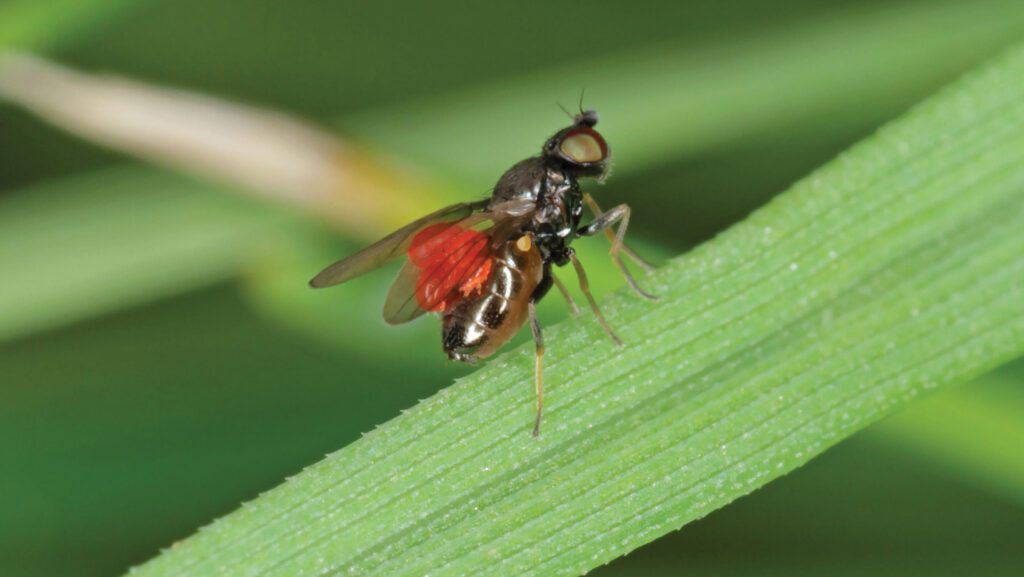
Another feature of the season is the incidence of pest damage in early-drilled winter cereals following a mild autumn.
Larvae of yellow cereal fly and gout fly are relatively common, but most crops are well enough tillered to compensate for all, but the most severe attacks.
Frit fly can cause more widespread damage in affected fields. It is another factor to consider at drilling time when racing to use ever narrower weather windows.