Farmer Focus: Cattle return and major cropping changes
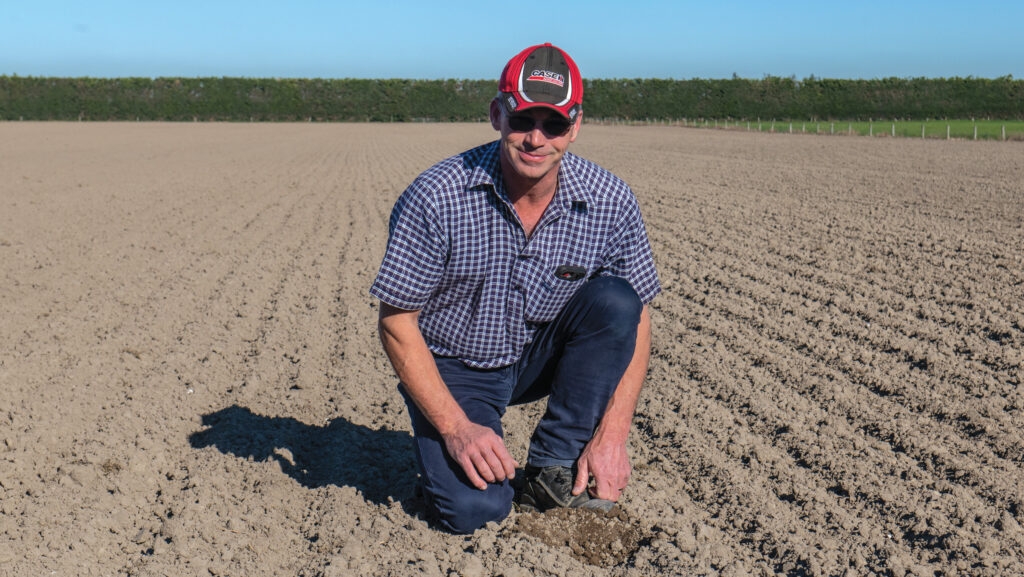 David Clark © Emmily Harmer
 Times are a-changing here, and we have cattle back at Valetta for the first time since the mid-1990s.
When we first moved to this farm, we ran some cattle alongside our breeding ewes, but as we started to develop irrigation and expand our arable area, the cattle no longer fitted the farm system.
See also: What farmers can do to minimise rising alternaria threat in potato crops
About the author
It has always been a regret of mine, having grown up on a dairy farm, and I really enjoyed working with cattle when I was a young shepherd in the North Island when I left school.
As part of our changes here, we have sold our breeding ewe flock, in part to help manage the worm burden in our bought-in finishing lambs.
Our logic is that rotating cattle behind the lambs will be complementary to the feed conversion rates of both species and increase our overall pasture production, as well as spreading risk and reducing workload.
This is all part of our wider review of all that we do, the potential land uses for this property and how can we modify our system to improve long-term profitability.
The sword hangs over all parts of our arable business currently.
As we all know, particularly since Covid, our costs have risen much faster than our product prices, dramatically reducing profitability, and the cost of machinery has doubled. It is simply not sustainable.
So, for us, vegetable seeds bar carrots are gone and we will wait to see spring contracts before deciding on the peas and radish.
Cereals and clover remain, as does grass seed at this stage.
The grass seed pays its way because of the lamb finishing and straw sales to our own customers in the North Island, but only just. It may be that we still grow grass in our rotation, but we harvest it with animals instead of a combine.
The ultimate decision would be conversion to dairy. We are not there yet, but many around us have made the leap.
For now, we are very focused on refining the arable and livestock system. We see all this as positive steps forward.
And the bonus is we now have some lovely Hereford and Charolais heifers to stop and talk to.
Staying sharp shouldn't be a chore