Farmer Focus: Continuing the experiment with AI
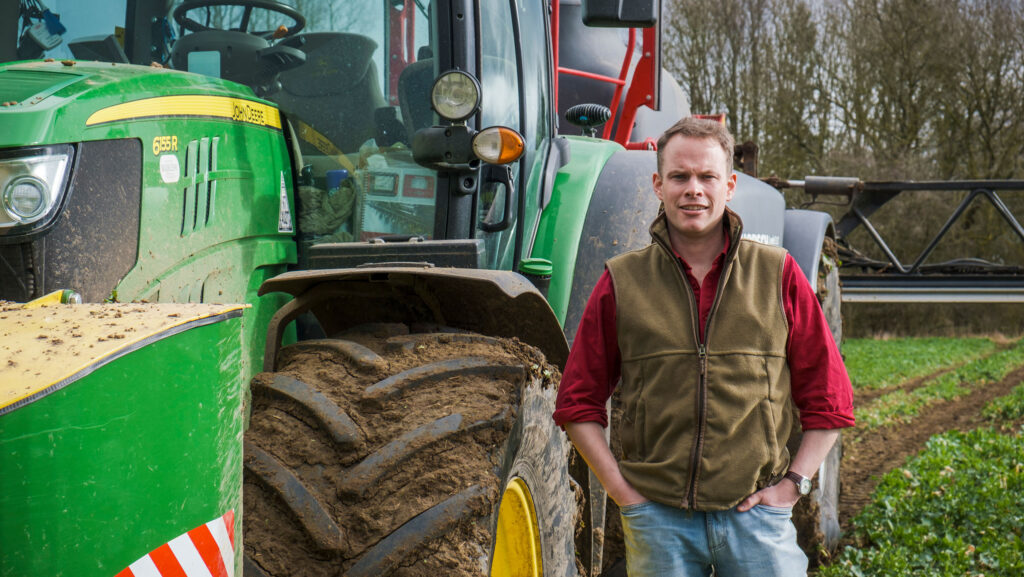 Robert Scott © Jason Bye
 Autumn cereal drilling is in full swing in mid-west Norfolk. Unseasonably dry weather is allowing swift progress and a healthier work-life balance.
This year, we have cultivated some brilliant seed-beds – level and clod-free – which should ensure excellent contact for autumn herbicides.
See also: Can probability weather forecasting improve farm decisions?
About the author

While the weather played a part, these are attributable to using appropriate equipment, and our skilled operators who took the time to set up and adjust the machinery properly.
My thanks go to the team for their efforts as I follow along behind with the sprayer.
This month, I continue to experiment with artificial intelligence (AI). In my latest foray, I sent field maps showing soil pH samples as a PDF via WhatsApp to Meta AI.
I asked it to provide a LimeX70 recommendation to correct the pH in select fields, summarise the total volume to order and create a variable-rate application plan for our spreading contractor.
The AI then offered to email this directly to the contractor in the correct file format.
This entire process took just a couple of minutes while I was in my tractor cab enjoying some rare mobile phone signal.
The takeaway for me, is that this technology can drive practical efficiency by significantly reducing administrative time and cost.
However, management efficiency only goes so far against broader economic pressures.
The Andersons Centre recently reported that “Agflation” is running at double headline Consumer Price Inflation.
I am certainly feeling this through rising diesel, wage, and fertiliser costs. Yet, the most noticeable inflation this autumn is the price of spare parts.
I have been absolutely astounded by the cost of replacement components during minor breakdowns, leaving me in polite disbelief at the parts counter.
This continuous erosion of profit margins makes the long-term feasibility of arable farming in the East look increasingly questionable.
On that note, the 2027-28 beet contract price announcement from NFU Sugar and British Sugar was underwhelming.
If British Sugar wants to secure its grower base, its pricing models cannot assume agricultural inputs have dropped back to pre-2022 levels.
This crop must be priced significantly higher to keep up with inflation and increasing agronomic risk.
Perhaps the NFU Sugar Board should consider using AI to manage next year’s negotiations against British Sugar.