Farmer Focus: My view of land use is changing
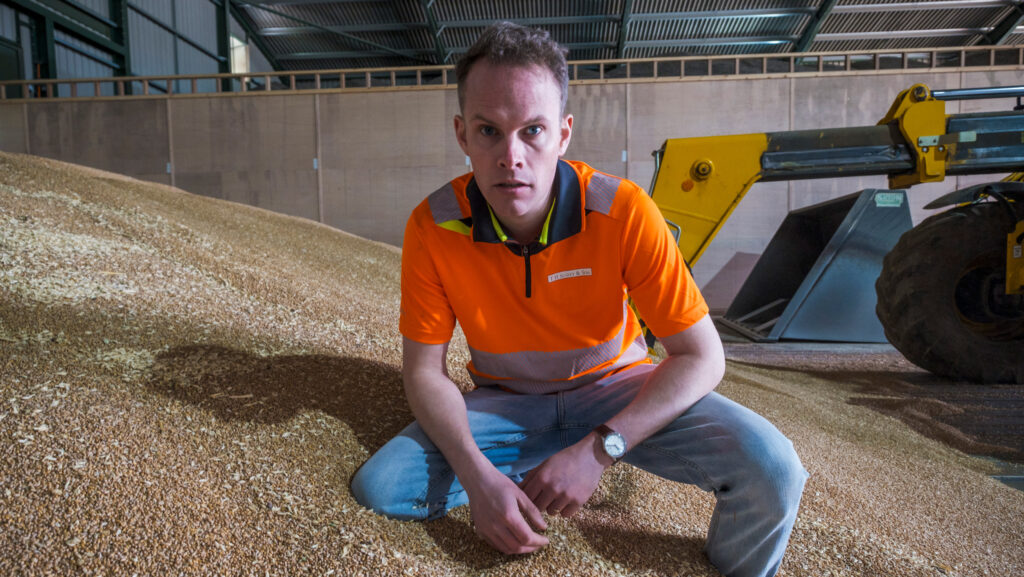 Robert Scott © Jason Bye
 Spring is a wonderful time to be on a farm. Hedges burst into life, oilseed rape is in flower and we have enjoyed welcoming new lambs into the world.
This year we are having a holiday from sugar beet in our rotation, in favour of increased livestock numbers and, hopefully, a better return.
As I become more of a mixed farmer, my view of land use is changing.
With our Mid Tier Countryside Stewardship scheme ending in December, I am starting to consider legume fallow as a wasted land use and forage.
See also: Why SFI26 doesn’t stack up for Herefordshire farmer
About the author

Our livestock gross margin looks competitive in comparison with the Sustainable Farming Incentive. The next scheme, if there is one, will be scaled down.
Just like in spring 2025, the ground is hard and dry and there is no rain forecast. It has been cold too, with strong winds limiting spray days.
Like many of my peers, I have crops that have been “tipped” by liquid nitrogen in a breeze. Thankfully, it is still early in spring, and most crops are growing away well.
As plant stems extend and we apply our T1 sprays, my “fungicide-free” wheat trial is looking ace.
This is a 50/50 blend of Goldfinch (for barley yellow dwarf virus tolerance) and Palladium (for robust disease resistance).
It was direct-drilled into a summer catch crop following vining peas. Nitrogen has been applied via two even splits of liquid urea ammonium nitrate, along with fulvic and humic extracts.
We have applied a total of 150kg/ha of N. At T0 it had silicon, nutrition, NPK, sulphur, magnesium and more fulvic acid and humic extracts.
Two biostimulants were applied at T0.5 to aide nitrogen use efficiency and drought stress tolerance.
A SAP test showed that the calcium and potash ratio is out of sync, which will be addressed at T1.
It will be interesting to see how the total spend compares to my neighbouring block of “farm standard” fungicides. Time will tell.