Farmer Focus: Should we plant wheat at higher seed rates?
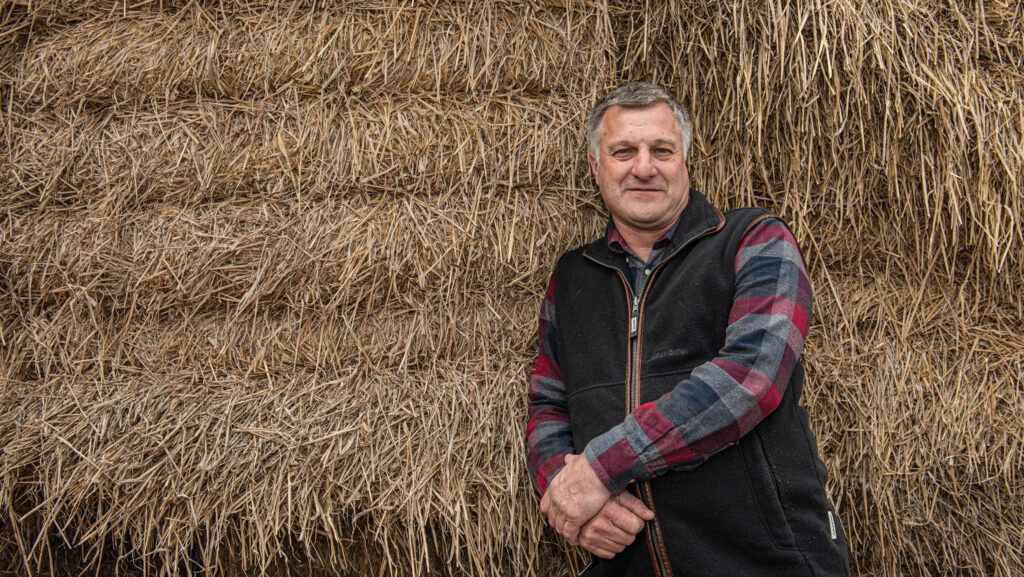 © Phil Weedon
 June has been a busy month, starting with a visit from 30 American and Canadian farmers on a study tour of various farmers and wheat breeders.
The group visited both my farm and that of my neighbour Tim Lamyman, to discuss high-yielding wheat agronomy practice.
We showed them our soil and explained how the chalk bed it sits on helps with bringing moisture up from deep below during these dry periods.
Tim explained how he uses micronutrients to help with yield and I explained how I use poultry manures to do a similar thing.
About the author

See also: How crop nutrition and structure can boost yield potential
One key factor I`ve noticed from this visit was plant numbers.
Tim and many other farmers have drilled wheat this year at 400 seeds/sq m, where I drilled at 550 seeds/sq m.
This has been significant in achieving ear numbers, as although everything tillered well during the eight week drought in April and May, more than 50% of tillers died off, leaving only one or two per plant.
So for 400 seeds you will only get a maximum of 800 ears/sq m, whereas 550 seeds will give a maximum of 1,100/sq m which will equate to more yield.
The rest of June saw me visit crop trials, starting with Cereals.
This gave me a great opportunity to look at new wheat varieties. I look to see how many spikelets are on the head of the plant, how tall and strong it is.
After all, high biomass equals high yield and disease tolerance. I also take note of the flag leaf to make sure it can soak up the sun well.
Since Cereals I have visited at least five other crop trials.
The varieties which have caught my eye are Group 4 hard wheat Scope, Group 2 Arnie, Bamford, a high yielding Group 3, and Beowulf, a Group 4 hard.
I will also be keeping Dawson and Champion, although they have broken down with the new strain of yellow rust, but they will still yield high.
Skyscraper will also be kept, as it too will yield well in a dry time.

Staying sharp shouldn't be a chore