Farmer Focus: Yields vary by up to 5t/ha in the same field
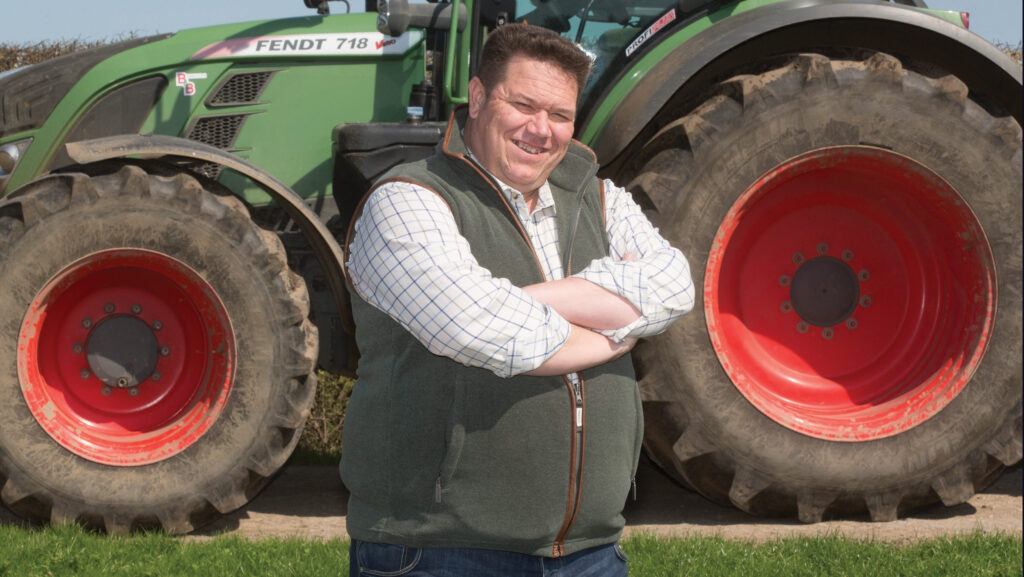 Keith Challen © Tim Scrivener
 The wheat harvest started on 13 July, which is the earliest by far since I’ve been at Belvoir. Even the heaviest of the clay soils couldn’t hold up to the relentless wind and heat.
Yields have been more variable than I’ve seen for a lot of years with up to 5t/ha variation in some fields.
As you’d expect, bushel weights and protein levels are high with moistures down to 11% at times.
See also: Regen premium helps West Midlands family battle blackgrass
About the author

With little or no dews, cutting early in the mornings and late nights didn’t increase moistures at all, resulting in significant weight loss from moisture alone.
With all the straw being completely dead, balers have been able to chase the combine round and allowed for early cultivation.
Back in early April when we measured soils for compaction before it got too dry, the shallow compaction and slumping was found mainly due to the winter’s excessive rainfall.
So the plan is to low disturbance subsoil pretty much all of the cropped land.
I’m begining to wonder if keeping the combine for a sixth season was a false economy, as for a leased machine, we are only liable for the cost of wearing parts and up to now the cost has been minimal.
However, we are halfway through the season and I’ve had £5,000 worth of bills for wearing parts already.
Overall the combine is performing well and the Redekop seed control unit hasn’t missed a beat other than replacing a belt.
It seems invaluable as it is not only damaging weed seeds, but also any combine grain losses keeping cereal volunteers to a minimal, which is ideal for our direct drilling system.
SFI crops of winter bird feed and legume fallows have really suffered from the drought and although initial germination was just about average, growth has been poor compared to previous years with only half the biomass.
However, the skylarks seam to love the thinner crop with record sightings – so at least something is benefiting from the drought.