FW Awards: Meet the 2026 Arable Adviser of the year finalists
 Joe Cluley, Steven Mears and Gabe Mellor © Oli Lees, Hugh Nutt, Tim Scrivener
 This year’s finalists help clients farm sustainably and profitably through data-driven decisions, efficient inputs, and healthier soils and crops.
The finalists
- Joe Cluley, Indigro, Broadway, Worcestershire
- Steven Mears, Crop Management Partners, Sherborne, Dorset
- Gabe Mellor, Huntapac, Barrow upon Humber, Lincolnshire
The judges
- Edward Vipond – Suffolk farm manager and 2021 Farmers Weekly Farmer of the Year, serves as the independent judge for the Arable Adviser category.
- John Sarup – of Spud Agronomy and Consultancy, Yorkshire, joins the judging panel after taking the 2025 Arable Adviser title.
- Philip Case – Farmers Weekly chief reporter and former arable reporter, has judged the Arable Adviser category for the past five years.
Joe Cluley, Indigro, Broadway, Worcestershire
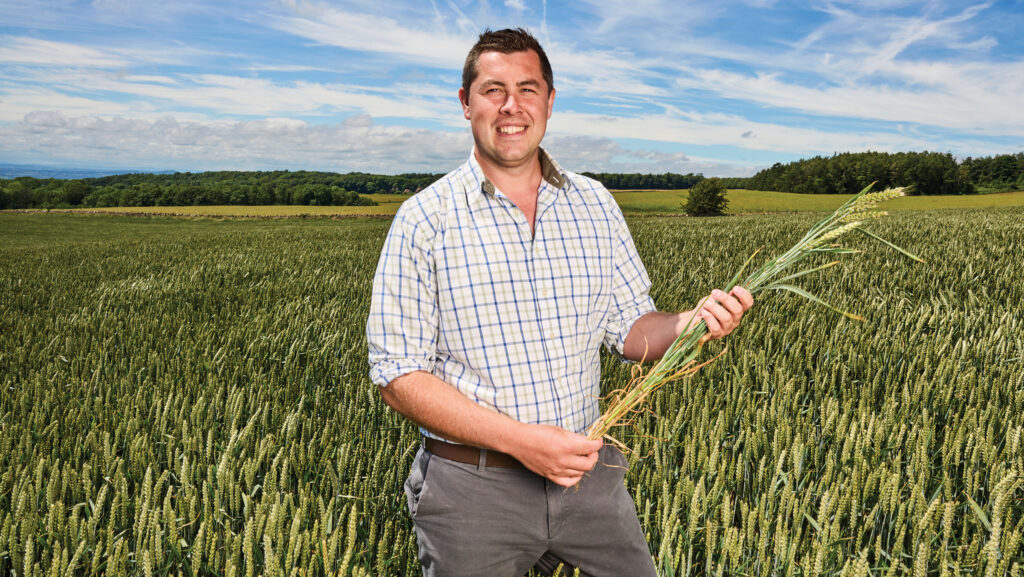
Joe Cluley © Oli Lees
Independent agronomist Joe Cluley is challenging conventional crop management by putting plant physiology, nutrition and whole-farm systems at the centre of his advice.
Working across around 8,100ha, with a further 2,000ha or so receiving strategic advice, Joe supports 26 farming businesses across central, southern and eastern England.
His clients farm conventional, organic and regenerative systems, with 71% of the area under his management farmed regeneratively.
Technical leadership
As head of soils, systems and nutrition at Indigro, Joe’s influence extends beyond his own clients, helping shape technical direction and supporting the company’s team of 10 agronomists through training, field days and technical advice.
His agronomy has evolved from a traditional crop management role towards what he describes as “plant physiology and nutrition-led management”.
A key tool in helping deliver that advice is plant sap analysis. Over three years, Joe has developed Indigro’s inhouse dataset from repeated sampling across different soils, crops, systems and growing seasons.
He combines this with crop observations, soil data and on-farm investigations to identify nutritional constraints and develop farm-specific programmes.
Demand for Joe’s expertise has grown rapidly in recent years as more farming businesses seek support on plant nutrition, crop physiology and regenerative and organic farming systems.
That growing influence is reflected both in the area he advises and in his wider technical leadership role within Indigro.
Joe’s work is centred on aphid and caterpillar control, which has seen him directly replacing insecticide applications with nutrition applications across 400ha.
Tailored nutrition applications have resulted in aphid and caterpillar desiccation within 24-36 hours. Trial work is ongoing to apply the same logic to autumn aphids.
His relationship with regenerative farming business Overbury Farms, in Gloucestershire, has provided an important platform for developing and testing ideas around nutrition, plant physiology and system design.
“Joe has brought a completely different perspective to the way we think about plant performance,” says Overbury Farms manager Jake Freestone.
“A lot of people focus on regenerative farming through soil health principles alone, but Joe has added a much deeper understanding of plant nutrition and physiology.
“He’s constantly looking at how we can push systems further and make them perform better.”
At CF Morris Farming in Buckinghamshire, Joe has introduced diverse summer cover crops and plant sap analysis of wheat which highlighted a magnesium supply issue linked to high soil potassium levels.
Taking account of sap analysis findings, Joe developed a more cost-effective magnesium strategy and designed a bespoke foliar nitrogen programme for the farm’s milling wheat.
The last two harvests have centred on refined crop physiology and nutrition management, which is delivering stabilised crop yields and milling quality across the farm.
Joe describes the work as a combination of practical problem-solving and data-led decision making.
“I’m not chasing sap figures, I’m chasing outcomes,” he says. “The objective is to understand why a crop is performing as it is, identify what is limiting it and then remove those constraints.”
Knowledge sharing
His influence extends well beyond his own client base. He created Indigro’s plant sap interpretation guide, leads technical training, supports colleagues with client-specific nutrition strategies and runs an Indigro-wide sap benchmarking initiative.
He has presented to farming teams at Bidwells and Fisher German, spoken at Indigro’s client conference and shared practical insights through social media, with individual posts reaching almost 20,000 people.
Rather than simply reacting to problems in crops, Joe is seeking to understand how the plant and wider farming system function.
By combining plant data, soil health, nutrition, crop protection and systems design, he is helping farmers improve efficiency, resilience and profitability while pushing agronomy in a new direction.
The numbers
- 8,100ha Under agronomy management, plus 2,000ha of strategic advice
- 71% Of area under his management is farmed regeneratively
- 10 Number of colleagues supported as Indigro’s head of soils, systems and nutrition
- 4 Years of plant sap data underpinning Indigro’s inhouse benchmarking database
- 200% Increase in phosphate and nitrogen supply in organic herbal leys, as determined by sap analysis
Fact file
- Advises growers across 26 farms in central, southern and eastern England
- Started in agriculture as a farmhand on an arable farm, earning £5 an hour during summer holidays
- Worked on tomato, celery, cotton and broadacre farms during a gap year in Australia
- Built Indigro’s plant sap analysis interpretation guide from scratch
- Developed nutrition-led strategies that helped growers manage 400ha of oilseed rape and beans without insecticides.
What the judges liked
- Innovative approach to agronomy using SAP based programmes to analyse plant deficiencies
- Embracing non-chemical control methods to fit a non-insecticide methodology
- Assisting clients with a transition away from conventional chemistry
What the judges say
“Joe is transforming crop management by placing plant physiology and nutrition at the heart of whole-farm systems, expertly utilising sap analysis and regenerative practices to slash insecticide use, boost resilience and drive grower profitability.”
Steven Mears, Crop Management Partners, Sherborne, Dorset
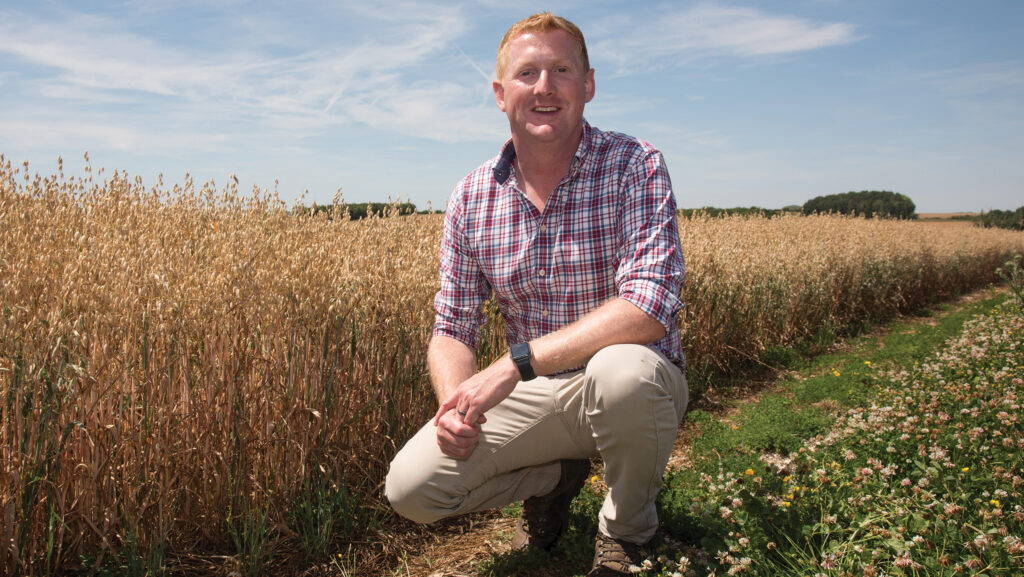
Steven Mears © Hugh Nutt
Independent agronomist Steven Mears advises on more than 9,000ha across Dorset, Wiltshire and Somerset, almost trebling the area under his guidance since joining Crop Management Partners (CMP) in 2019.
Now a partner at the Hampshire-based firm, he focuses on delivering practical, down-to-earth agronomy tailored to each individual farm.
Steven started in agronomy in 2016 with a distributor-based business before moving into the independent sector in 2019.
“I became a bit disillusioned with the trade side of agronomy,” he says. “I wanted to focus on giving practical agronomic advice and helping clients make better decisions for their businesses.”
Client growth
That philosophy has driven steady growth. Having inherited around 3,200ha of crop walking when he joined CMP, he now advises approximately 9,300ha across 24 farming businesses, covering cereals, oilseeds, pulses, forage maize and a small area of potatoes.
Clients appreciate his collaborative approach and focus on detail.
“Steven is always looking at how we can improve,” says Josh Stratton, managing partner of JM Stratton & Co in Wiltshire. “He’s heavily involved in the management decisions here and brings a lot of energy and technical knowledge.”
Steven bases his advice on independent data and evidence-based decision-making.
A Basis Diploma holder and member of the Association of Independent Crop Consultants (AICC), he combines information from NIAB, Adas, PGRO and on-farm trials with the insights gained from CMP’s team of 11 agronomists operating across southern England.
“Having 11 pairs of boots on the ground within the CMP team across the South helps us keep ahead of pest and disease risks before they develop,” he explains.
That technical focus is evident at JM Stratton, a diversified 1,872ha farming business including combinable crops, grassland, solar and environmental stewardship alongside a 3.7MW anaerobic digestion plant.
Here, Steven has spent several years refining nutrient management, using soil mineral nitrogen testing, digestate analysis, leaf tissue testing, grain analysis and yield mapping to improve nutrient-use efficiency to maximise crop yields.
Following fertiliser hikes since the Ukraine War, Steven has focused on getting the best out of digestate applications. Now, every field application is analysed and run through software to fine-tune nutrient contributions.
To counter extreme weather, Steven has shifted to earlier targeted nutrient applications and a focus on avoiding stressing crops with high later season PGR inputs.
He has also tackled specific micro-nutrient trends, utilising regular leaf tissue and sap testing data to address mid-season nutrient deficiencies.
On crop protection, Steven takes an integrated approach to pest, disease and weed control. While managing resistant grassweeds with targeted pre-emergence chemistry, he reviews variety selection considering disease resistance.
Furthermore, his involvement in on-farm trials includes navigating complex disease management paths.
Steven takes a pragmatic approach to growers trialling new varieties with several clients growing cereals under the Wildfarmed system. But he is equally realistic that yield is king and net margins must stack up for his clients.
Flexible thinking
While open to innovation, he remains grounded in practical results. One notable shift has been encouraging some growers to move away from an entirely direct-drill approach when seasonal conditions demand greater flexibility. “The key is being flexible rather than following a system for the sake of it,” he says.
His willingness to challenge accepted thinking is welcomed by clients. Tom Frampton, arable manager at JM Stratton, values Steven’s collaborative style and ability to integrate new ideas into commercial farming systems.
“He challenges us, which is good,” says Tom. “We’re always changing things and testing new approaches here, and Steven is heavily involved in steering those discussions.”
For Steven, success comes down to providing independent advice and treating every client’s farm as if it were his own. “I take pride in working with clients to grow crops sustainably and profitably,” he says.
The numbers
- 9,300ha Currently under Steven’s agronomic advice
- 24 Farming businesses advised across three counties
- 11 Agronomists in the Crop Management Partners team
- 60ha Of Wildfarmed wheat managed at JM Stratton
- 2024 Basis Diploma in Agronomy achieved
Fact file
- Advises farming businesses in Dorset, Wiltshire and Somerset
- Became a partner at Crop Management Partners in October 2022
- Basis Diploma holder and AICC member
- Independent agronomist focused on delivering profitable crops
- Expertise in crop nutrient management, soil health and sustainability
What the judges liked
- Utilising large quantities of digestate within a high yielding rotation
- Relishes the independent agronomic approach and interacts the AICC and other organisations along with in house trials to base recommendations
- A very pragmatic approach to agronomy with flexibility within cropping systems and cultivation techniques
What the judges say
“Expertly integrating large volumes of digestate into high-yielding rotations, Steven delivers pragmatic, results-driven agronomy grounded in independent data, collaborative trials, and an unwavering commitment to grower profitability.”
Gabe Mellor, Huntapac, Barrow upon Humber, Lincolnshire
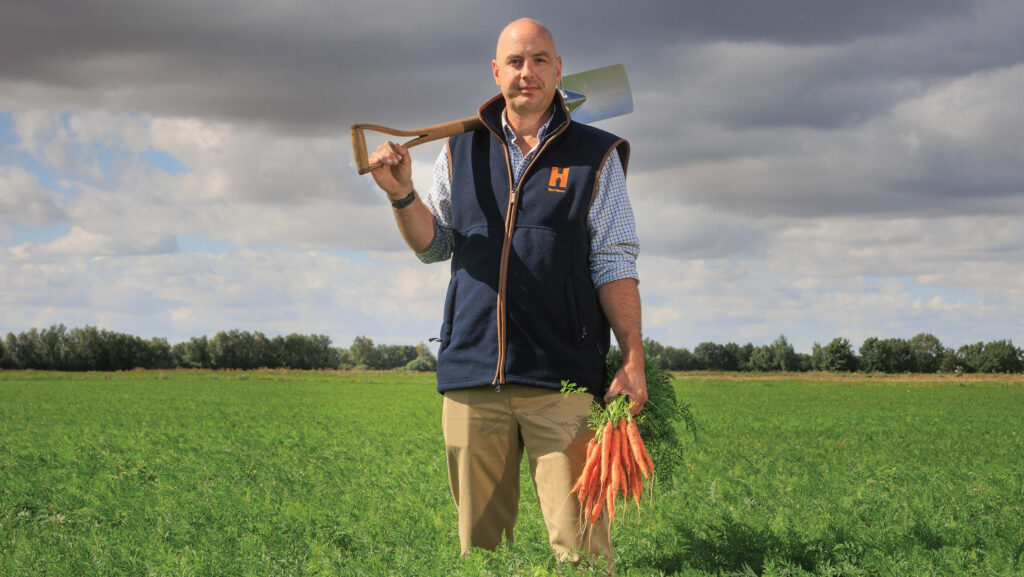
Gabe Mellor © Tim Scrivener
From robotic tractors and AI-powered weed control to managing agronomy on up to 1,400ha of carrots and parsnips, Gabe Mellor is helping shape the future of UK vegetable production.
As company agronomist for Huntapac Produce, Gabe oversees crops stretching from Norfolk to Inverness, helping drive production, profitability and sustainability, supplying major retailers including Tesco and M&S.
His work supports production across more than 100 grower and landlord relationships, ensuring a reliable supply of high-quality carrots and parsnips to some of the UK’s biggest retailers.
Hands-on expertise
Gabe’s route into agronomy was far from conventional. After joining Huntapac in 2015, he gained his Basis qualification in 2021 and progressed from sprayer operator and field technician to become the company’s head of agronomy.
“Coming through from sprayman gives me an understanding of what’s practical as well as what’s desirable,” he says.
That practical experience now underpins a role extending well beyond crop walking. Huntapac rents all the land it farms, requiring close collaboration with growers, landlords, contractors and farm managers across a geographically diverse operation.
Gabe works with more than 25 contractors and 15 growers while coordinating agronomy, crop protection, nutrition programmes, technical compliance and operational planning.
Alongside agronomic advice, he supports assurance schemes including Red Tractor and Leaf, assists with purchasing decisions and works directly with retailer representatives. Field walks with customers provide reassurance on crop quality, availability and security of supply.
Retailer requirements increasingly shape on-farm decisions. Tesco, M&S and other customers demand high standards for sustainability, pesticide stewardship, traceability and carbon reduction.
Gabe plays a central role in ensuring Huntapac meets those expectations while maintaining profitability and productivity.
Through precision application technology, tailored nutrition programmes and close attention to crop performance, he has helped reduce input costs while maintaining output and quality.
Huntapac Farms director Richard Price says Gabe’s influence is felt throughout the business.
“Gabe is dynamic in his approach and is always looking to move the business forward, while adopting a high understanding of the risks. He’s the ‘go-to man’ if there is a problem,” he explains.
“His advice not only helps maximise yield and profitability but also ensures Huntapac continues to meet the exacting standards required by major retail customers.”
Innovation has become a key focus of Gabe’s work. Faced with labour shortages, climate pressures and the continued loss of crop protection actives, he has championed technologies that improve efficiency while protecting yields.
Autonomous farm trial
One of his most notable achievements was helping produce a commercial crop of parsnips almost entirely autonomously.
Using robotic tractors, drones and precision equipment, the crop was established and managed without conventional machinery, reducing carbon emissions by almost 50% while maintaining yield and quality.
“It proved it’s possible to do,” says Gabe. “With increasing skilled labour shortages and the push towards net zero, it showed options exist for future farming.”
He has also led the adoption of camera-guided spot sprayers and band-spraying systems that target weeds more accurately, reducing chemical use and helping preserve valuable crop protection tools.
Bespoke nutrition programmes and tissue-analysis-led recommendations have delivered significant savings on fertiliser without compromising crop performance, while targeted agronomy has helped maintain production from fewer acres.
Alongside this work, Gabe tackles challenges including aphid pressure, cavity spot, free-living nematodes and water security. Long-term irrigation planning has become increasingly important as climate pressures intensify across key growing regions.
Despite embracing cutting-edge technology, Gabe believes successful agronomy still depends on spending time in the field.
“I think it’s easy to do agronomy from the office if you’re not careful,” he says. “But you need to be out in the field and react.”
That blend of practical experience, technical expertise and innovation has made Gabe a trusted adviser to growers, directors and customers, helping secure a profitable and sustainable future for Huntapac and the retailers who depend on it.
The numbers
- 11 Years working with Huntapac Produce
- 100+ Farmers supported through Huntapac’s rented land network
- 4,000+ Acres of carrots and parsnips managed under Huntapac
- 60,000 Miles travelled annually to support UK growing sites
- 50% Reduction in carbon emissions from autonomous parsnip trial
Fact file
- Leads agronomy for Huntapac’s fresh produce business
- Progressed from sprayer operator to company agronomist
- Supports Tesco and M&S supply chain requirements
- Delivers Red Tractor and Leaf compliance support
- Combines technical expertise with practical field experience
What the judges liked
- Overseeing a high crop value agronomic programme across a wide geographic area
- Skilled at building relationships with growers to fulfil expectation
- Innovation is at the heart of trials and research in a sector that has the intense focus of Huntapac’s customers
What the judges say
“Gabe’s journey from sprayer operator to overseeing the agronomic programme of a major supplier of fresh produce to supermarkets is a testament to the drive and enthusiasm that he demonstrates on a day-to-day basis with colleagues and clients.”
A word from our sponsor
“The quality of this year’s finalists has been exceptional. Their expertise, resilience and commitment to helping arable farmers succeed through changing conditions exemplify the very best of UK agronomy. Congratulations to all three finalists.”
Oliver Johnson, commercial technical manager, Nichino Europe