Growers urged to check oilseed rape for phoma
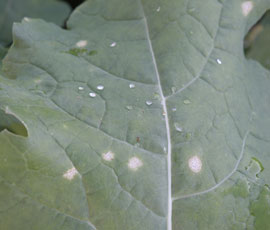
Oilseed rape growers are being advised to start checking crops in the next 10 days for the first signs of phoma.
Near perfect conditions for spore development on stubbles, especially in the east of the country, mean that the disease can be seen coming, warns Peter Gladders of ADAS Boxworth.
“Over here, we’ve reached the rough threshold of 20 rain events since 1 August, which is required for the spores to be maturing on stubbles,” he reports. “It’s rainfall from now on that will dictate when they are released.”
Once spores have been released, it takes 120 day degrees before symptoms are seen on small oilseed rape plants, he continues. “So, with some rain, and if the average temperature is 12C, it will take just 10 days for the classic leaf spotting symptoms to appear.”
Dr Gladders believes that some crops will be showing signs of the disease by the end of the month. “Forward crops are at two leaves already, so they will be the first to show early leaf spotting. But of greater concern are later drilled fields, as they will be at the very vulnerable cotyledon stage when infection takes place.”
Crops in the West are not at such early risk, he remarks. “It’s been drier there. Local conditions are important in determining risk. What matters most is that growers are checking and monitoring crops.”
Jon West of Rothamsted Research agrees that the wet conditions experienced this summer will promote the early release of phoma spores.
But he points out that two consecutive very cold winters will have delayed canker development in crops and restricted the production of inoculum, which should prevent a very early epidemic in many areas.
“The last two seasons have both been low severity,” he says. “The very cold winter temperatures helped to delay the disease’s onset and have meant that it took longer for the pathogen to develop fruiting bodies.”
Together, these factors mean that spore release could be more sporadic than usual. “It’s a trade off between the wet summer and the cold winter. Inoculum production will be patchy, meaning that some fields will escape while others will have an early epidemic.”
That’s why vigilance will be required, advises Dr West. “Regardless of when the disease is seen, the advice is the same. Spray when 10-20% of plants are infected and then again a month later.”
Crops which have established well and achieved a good plant density shouldn’t be badly affected, he adds. “The lower leaves often get shaded out and drop off before the fungus makes it to the stem.”
Most crops in the South and East will benefit from two autumn sprays, he recommends. “It’s not necessary to treat any new infections after Christmas, as they don’t have enough time to develop.”
Suffolk-based independent agronomist and AICC chairman Mike Warner describes conditions as fantastic for phoma inoculation and spread.
But he agrees that the overall burden has been reduced by the hard winter, with just one lesion being noticed in his clients’ fields so far this year.
“Given the weather, I will be applying metconazole to the early drilled crops,” he reveals.
Of more immediate concern is the marked difference in plant establishment and vigour between conventional oilseed rape varieties. “It’s very noticeable in this part of the country and it’s not a home-saved seed problem. Vision and Fashion are looking great, but Sesame is struggling to get going.”

Staying sharp shouldn't be a chore