Easy harvest mostly disappointing for Arable Insights farmers
 © GNP
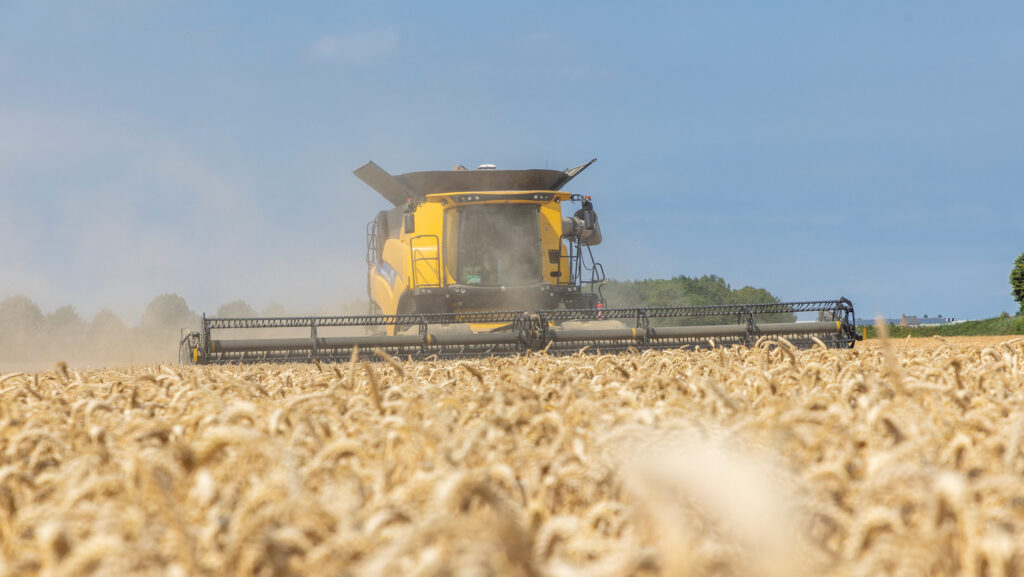
© GNP An early harvest in most parts of the country has brought mixed, but generally disappointing results for our Arable Insights farmer panel.
See also: No-till farm evolves to combat frequent flooding
North
Richard Bramley, Manor Farm, Kelfield, Yorkshire
Barring a little bit of contracting and a crop of spring beans harvested on 14 August at just 12% moisture, Richard Bramley finished harvest in July – the earliest finish he’s recorded.
“I think I’ve only harvested spring beans in August once before, it’s normally September and late September at that. Combining them at 12% in August is just unheard levels of ridiculousness.”
Yields, generally, have held up reasonably well.
“I think we’ve been in a relatively fortunate part of the country. We didn’t hit a moisture deficit until around 20 June.”
© Tim Scrivener
That’s led to average winter barley yields of 8.2t/ha, Crusoe and Skyfall winter wheat at 8.7t/ha and one good field of spring barley at 8.2t/ha and one poorer field of 6t/ha.
Even so, he thinks without the intense heat, yields could easily have been 10-15% higher.
The common thread he’s finding is that only tiny premiums are on offer for making malting or milling quality, unless on contract.
“I was offered £7.50/t for milling wheat not on contract,” he reports. “That’s a little disappointing.”
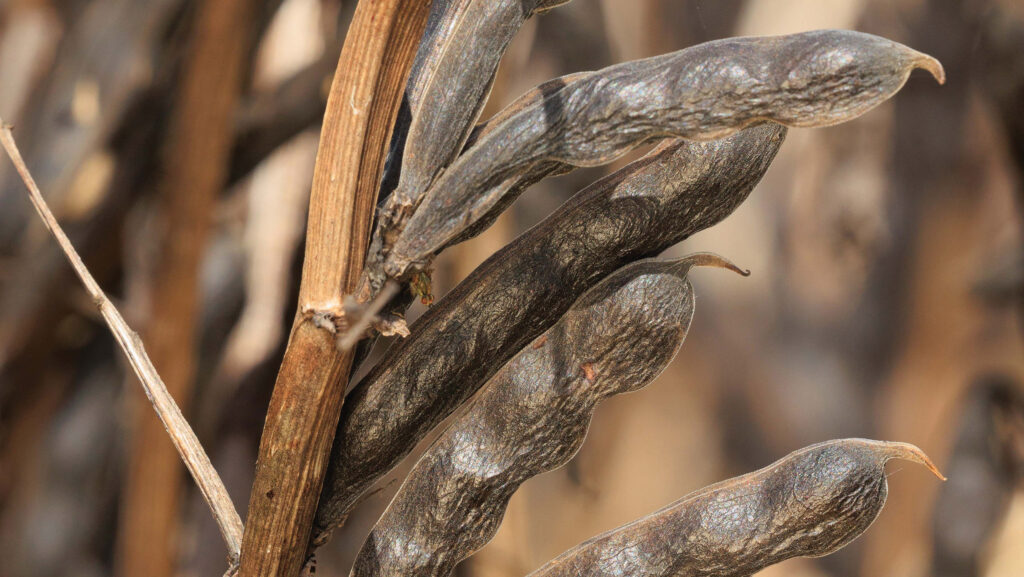
The same applies to spring beans that yielded “a reasonable” 4.6t/ha.
“They’re very good quality for human consumption, but I can make more money selling for animal feed.
“Given the global situation, nothing seems to be matching what us farmers are seeing on the ground,” he says.
While his diverse cropping – he also grows potatoes and sugar beet, along with oilseed rape – is helping to provide some resilience, he’s conscious that “a reckoning” is coming for food production in the country.
“We’ve been pared to the bone, with too many other people relying on us just to keep going. But with extra costs put on during the season and next year’s crops looking similarly expensive to grow, the penny has to drop.
“If we want food resilience here, where the average support for a farm is £600, compared with £85,000-90,000 in the EU or US, there needs to be a pretty stark rethink,” he says.
North West
Martin Caunce, Brow Farm, Ormskirk, Lancashire
Not many farmers in England, at least, will have dried grain this harvest, but Martin Caunce is one of the few to have turned on the grain dryer. But it’s more a by-product of his low-input system.
“When we harvest we try not to leave seed of any kind in the field, so this bit of barley came with some weed seed that passed on the moisture, so it’s had an hour in the dryer to get it down to 14%.”
Like all his crops, it’s headed for a specialist market. “This is mainly going for sprouting, so I want good germination.”
Most crops had been harvested before the August bank holiday, with just spelt and emmer wheat left to cut as the weekend approached.
“It’s been a good year,” he says. “We’ve had more rain than most.”
Intercrops of small blue peas and wheat have been particularly pleasing.
“The wheat came off at 3.34t/ha, with 0.33t/ha of peas on top. The bonus is that growing the peas doesn’t seem to have knocked the wheat yield down, so we’ve gained the pea crop on top.”
The crops will be separated and cleaned on farm, with the milling wheat sold direct to customers, and the peas sold for sprouting or pigeon feed.
“But only when I can’t sell it anywhere else,” Martin says.
Initially Martin was disappointed with naked oats on the farm, harvesting about 2t/ha. But conversations with seed supplier Premium Crops subsequently suggested that good crops only yielded 3.75t/ha made him feel more positive.
“We literally sowed it and harvested without going into the field in between, so we will soon make back that lost 0.5t/ac in what we didn’t do in the growing season,” he points out.
About 2-3t will be sold to customers who roll for home use, while he has another potential customer producing granola looking to replace oat groats with naked oats. “That could be 25t/year.”
South
Andy Meecham, St Giles Farm, Shaftesbury Estate, Wimborne St Giles, Dorset
Harvest finished for Dorset grower Andy Meecham on 4 August, a week before the record set the previous season.
“All yields are well below average, ranging from 15% to 40% down depending on the crop,” he reports.
The best of a disappointing bunch was milling wheat and winter barley at 15% lower than the five-year average, with peas down 20%, feed wheat 24%, spring barley 28%, winter beans 34% and spring oats at 40%.
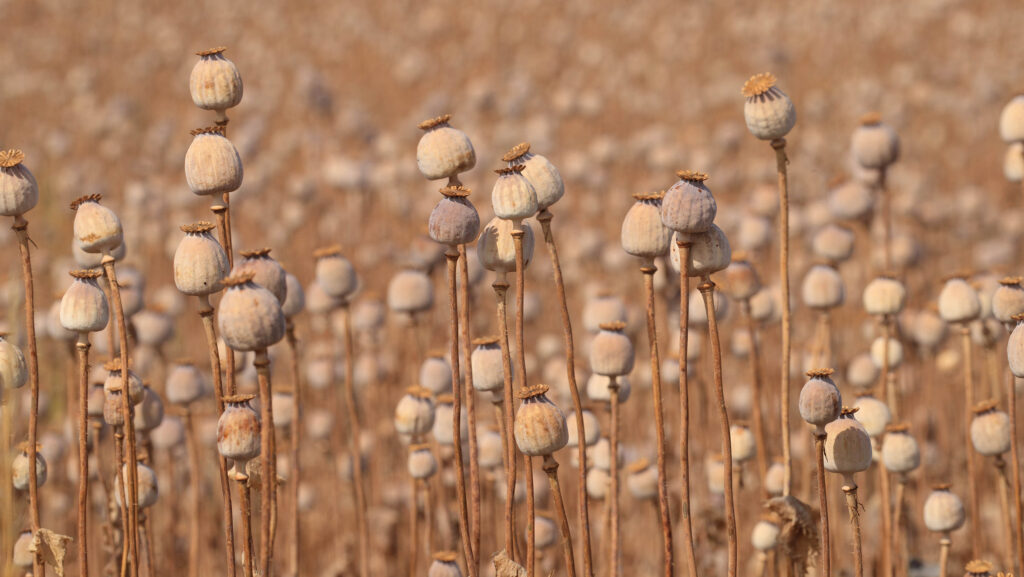
The only small positive have been poppies, which in the second year on the farm, had yielded 25% more than last year.
“We had 50mm of rain in June, which didn’t help anything else, but helped them along with good sunlight.”
© Tim Scrivener
For other crops, temperatures above 30C in the middle of May through to some days of 38C in June, plus high evening temperatures destroyed crop potential.
“Our winter beans were looking good in April with pods all the way up the plant, but once those hot temperatures came in May, the top third aborted pods.”
And while the 50mm of rain came earlier in June, it was still too late to save wheat crops.
“The damage was already done, with crops being so far forward. There just weren’t the tillers, with the secondary tillers aborting and taking the energy back into the main stem.”
Milling wheat quality has been no problem with proteins ranging from 12.8% up to 15%. Some will be sold at a decent premium of £25-£30/t having been contracted back at last harvest.
“Unfortunately, that’s only 60% so we won’t get good premiums on the rest.”
Cashflow has taken a hit with a difficult harvest. Nitrogen is yet to be fully purchased for next year’s crops, he says, with the farm’s performance being scrutinised.
“But it is hard to take one year in isolation,” he stresses.
“I hate the word ‘diversification’. But we are lucky that on the estate we have lots of entities. Historically as an estate, farming would probably have supported all the other ventures.
“But it is looking now that the other ventures that are making money might need to support the farm for a change to see us through some tough times.
“Unfortunately, those tough times might last for another two or three years.”
East Anglia
James Porter, Porters Farms (Walpole), Halesworth, Suffolk
The positive, if there was one for James Porter, was that the harvest process was easy in the dry weather. “It’s just a shame there wasn’t a little bit more to put in the shed,” he says.
Wheat yields averaged 9.54t/ha, at least 1t/ha down on a typical average for the Suffolk farm.
“The temperatures definitely had a big effect, along with the lack of rain. Our crops were green on the Friday of the week when it hit high 30C, by the Monday, they were literally semi-dead.
“They changed so much in just three days,” he recalls.
Grains fill was actually good, with specific weights up to 85kg/hl, which probably saved the crop to some extent, he suggests.
“In the combine it felt like yields were going to be 7-8t/ha, not nine plus, but I was quite surprised when we got the results from the weighbridge.”
Aintree grown for seed had produced yields similar to Dawsum. “It was quite an easy year for spraying. I know some people worry about yellow rust, but we use a good programme. As long you keep on top of timings, you can keep it at bay.”
Whether it will reappear on the farm next season though, will depend on whether KWS want more grown for seed.
“We’ll grow Dawsum and Scope again [as non-seed crops] but the seed crop variety is yet to be decided.”
© Tim Scrivener
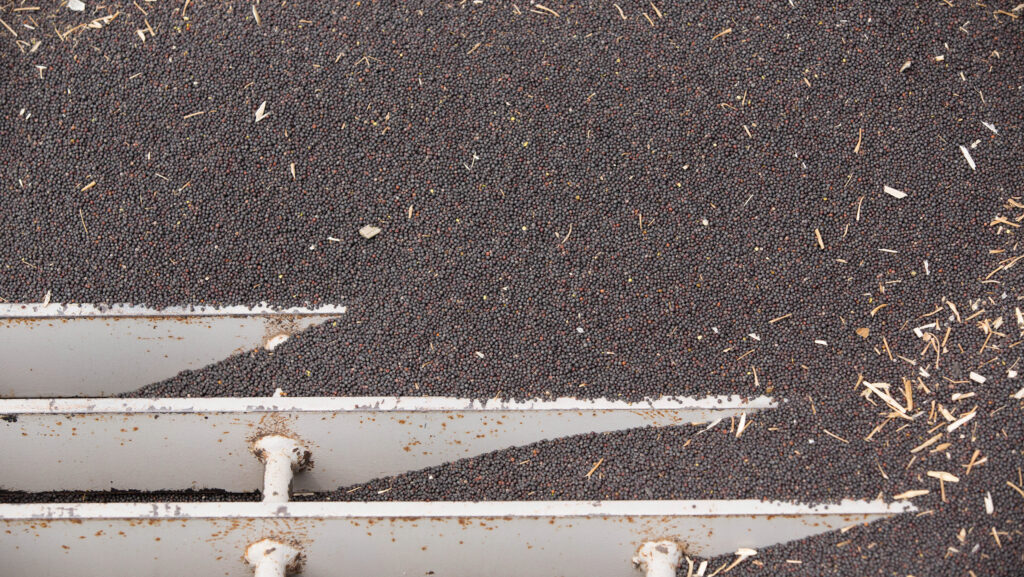
Oilseed rape performed well, given the season, coming in at 4.23t/ha. “Years ago, we could get 4.8t/ha, but recently it’s been down to anything from 3.5 to 4t/ha.”
But spring linseed, unfortunately, justified the decision to move on from it, only reaching just over 1t/ha, he says. “We’re definitely dropping it.”
That will be replaced by either oilseed rape or winter wheat, depending on rotational needs.
James hadn’t started drilling oilseed rape as the August bank holiday neared, but with rain forecast as it approached, he was likely to begin imminently with the same LG Adapt variety as last year.
“We’ll drill it with buckwheat and slug pellets, if needed, with our Horsch Sprinter.”
East Midlands
Tess Lincoln, Burton Lazars Farms, Little Dalby Estate, Leicestershire
A first season using a contractor to harvest arable crops has gone smoothly at Tess Lincoln’s farm on the Little Dalby Estate in Leicestershire, finishing in early August.
But like many the output has been cut by a combination of hot and dry weather.
“I think we’re short of 250-300t of wheat overall. Quality is not too bad, and it’s all sold and been delivered without any complaints, and obviously no drying charges,” Tess says.
“But it is disappointing. Before harvest we took the contractor around the farm, and at the time, he was budgeting on the crop doing at least 9t/ha, so we were expecting a better harvest.
“It just seems that the secondary tillers were empty, although the main stem was good.”
That’s brought average yields down from the usual average of around 8t/ha to 7t/ha, she says.
“The only positive to take is that management-wise, I think we made good decisions this season. It was literally the weather that scuppered it.”
The other crops on the farm, spring barley and spring beans have been similarly disappointing.
“Everything just died in the heat rather than ripen. Normally in a dry year we do alright because our heavy clay soils keep hold of a bit more moisture, so I think it was the intensity of the heat.”
With the contractor partnership extended into a contract-farming agreement for the coming season, a decision has been made to use a low-disturbance subsoiler on any fields planned to be drilled with winter wheat this autumn.
“We think we’re having lock up issues with some of the nutrients, so we want to see if that wakes up the soil.
“The extreme weather has hit the soil hard, and it just needs something more than just no-till to help it out,” Tess says.
“It does feel a bit extreme to turn our backs on no-till, but the conditions are so extreme, we feel we need to do something else to mediate it.”
Scotland
David Aglen, Inverarity Farms, Cransley, Fowlis, Angus
Rain has caused some temporary stoppages during harvest for David Aglen in Angus, but with only two days of combining of spring oats left to do as the last days of August approached, it’s still been a relatively quick harvest, having started combining in the first week of August.
After last year’s exceptional yields, he says it would have been naive to have expected the same again this season. “It’s not been as shiny as last year,” he reports.
Winter wheat yields have been mixed. Growing various blends, his experiment to see if he could make milling wheat grade has failed with proteins of just 9%.
But it wasn’t a surprise, given he didn’t put much fertiliser on after the field was ravaged by geese over winter, and then hit by wheat bulb fly in the spring.
“It was a thin plant population, but there still wasn’t enough nitrogen to get it to milling. But considering that, it actually yielded enough to make me grow a bit more next year.”
Overall, wheat yields are down 10% from last year, averaging nearer 9t/ha than the over 10t/ha achieved last year, he says.
“We’ve tried lots of different things this season – grazing with sheep, drilling some with the Claydon, and so on, but when you look at yield maps and the results, nothing stands out as being better or worse than anything else.
“I’ll need to have a better look when we finish, but overall, I think differences will come down to organic matter, moisture retention and soil structure.”
With more weather extremes that even Scotland won’t be immune to, he’s concentrating on making sure soils are in tip-top condition to store water that lands in fields and then release it in the summer to keep growing profitable crops.
On his farm that will mean drilling cover crops to overwinter before spring crops and putting more break crops into the rotation, including oilseed rape which has already been drilled and beginning to emerge.
“That will give us more opportunities to no-till with the Claydon. We will help soil structure where we need to, but leave it alone as much as possible to let nature do its thing,” he concludes.