Rain delays early end to Northern Ireland and Scottish harvest
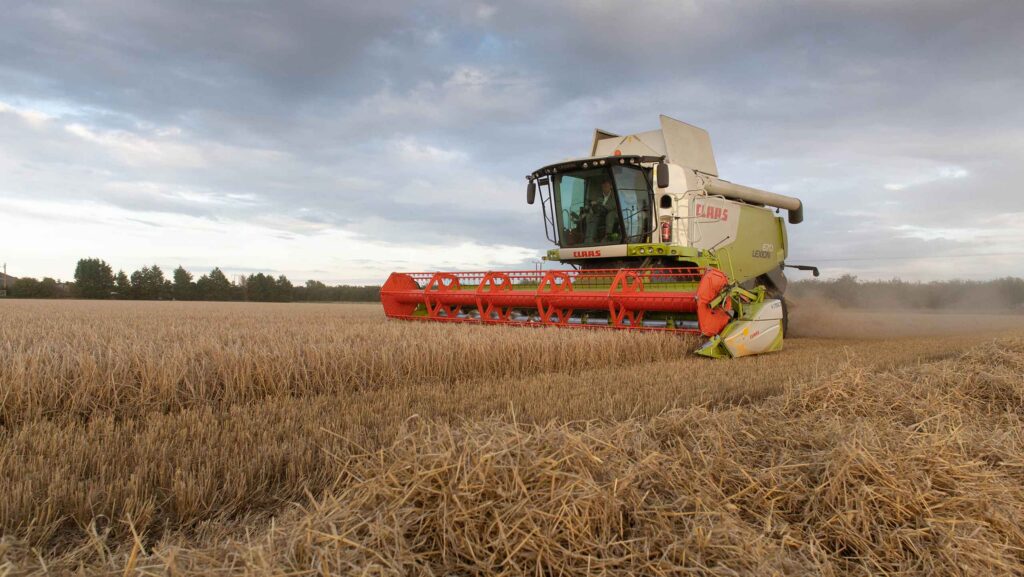 © Tim Scrivener
 Average yields and weather windows are the main topics of conversations with farmers this week.
As the wet weather presses pause, we spoke to growers around the country who are waiting for a dry window to complete harvest.
See also: Later-drilled oilseed rape requires tailored agronomy
North Wales
Glynn Jones, farmer and contractor in north Wales, finished harvesting his main crops about two weeks ago, leaving just maize, which he hopes to start next week.
“We had 10ha of winter barley. We ended up wholecropping half of it due to ryegrass, he says. “What we harvested was not great – we usually average 7.4t/ha, but this time only got about 5t/ha.”
Glynn cut the 18ha of oilseed rape either very early or late in the day to obtain the best moisture. “It got below 6% moisture at one point. Unfortunately, it didn’t do so well and only yielded 3.9t/ha.”
He cut half of the 48ha of winter wheat, as wholecrop, while the remainder yielded 6t/ha against a usual range of 8.6-9.8t/ha.
“The heat arrived a month too early and it certainly affected yields,” he says. “We are never usually finished before our local show on 18 August, but we have been for the past two years. The last time before that was 1976.”
Northumberland
In Northumberland, Rod Smith had the earliest start to harvest ever at Beal Farm, near Berwick-upon-Tweed, starting on 31 July.
“Normally we don’t start until about 17 August; as it was, we were finished on 24 August – with the majority done by 8 August,” he says.
“Harvest here has been nothing to write home about, but better than average; we are on heavy clay land here.”
The 120ha of Bamford winter wheat averaged about 7t/ha – in some places up to 9t/ha.
“However, we had to cut some headlands as wholecrop due to grassweed issues, which dropped the average a bit from the usual 10t/ha,” he says.
“Our 24ha of Hexton winter wheat grown for seed did much better, averaging 12t/ha. When we started cutting it was at about 18% moisture; later cuts came in at 14-15% – so there were large savings on drying this year.”
The 40ha of Ptarmigan spring barley averaged 7t/ha at 14-16% moisture, and has met malting specifications.
The 12ha of Crusoe oilseed rape averaged 5t/ha at 8.5-9% moisture.
“We’ve not suffered so badly,” says Rod. “Grains are normally fuller, but the lack of moisture was an added stress on crops. We’ve been lucky, really; we’ve been practising regenerative agriculture for a few years, so that may be a contributing factor.”
Scotland
In Aberdeenshire, Doug Fowlie had 647ha to harvest at Millhill Farm, Longside. “We are two-thirds of the way through now; we need five good days and we’ll be done – it’s just a case of waiting on the weather now.”
His oilseed rape harvest was average, yielding about 4.6t/ha, while winter barley came off at 8.5t/ha.
“We have about 160ha of spring barley yet to cut,” he says. “What’s come off so far has been at 15-19% moisture, yielding 7.4t/ha.”
The wheat (he has 24ha left to cut) has so far yielded quite well at 9.5t/ha.
“On the whole, things were not looking great ahead of harvest because of the high input costs, but yields have been better than we thought.”
Northern Ireland
Over the Irish Sea, in County Down, Graham Furey farms 140ha at Castleview, Killyleagh. “The harvest here has not been too bad; we’re the driest county in Northern Ireland,” he explains.
However, harvest has paused in the past fortnight due to rain, which has given Graham the chance to sow his oilseed rape, stubble turnips and cover crops.
“We finished harvesting wheat about two weeks ago; some of the wetter bits were disappointing due to the exceptionally wet winter.
“We were hoping for 8.6t/ha, which Graham achieved, but the overall average, including Palladium and Bamford, was slightly less at 8t/ha.
“Yellow rust and septoria have been a problem here in the past two years because of the wet, but we didn’t have as much as normal this time.”
Most of the wheat came off at 16-17% moisture, with nothing cut above 19%.
Exsteel oilseed rape yielded 4t/ha, while Maverick, which looked thin, defied expectations at 5t/ha.
Meanwhile, Adelphi, Tardis and Caravelle winter barley brought in average yields of 7.5t/ha.
“We still have about 16ha of spring barley and oilseed rape to go, which we hope to finish next week,” says Graham.
“Usually we don’t finish until September – three times in the past 10 years we’ve been done by 20 August – that happened once in the previous 30 years.”