Second wheats struggle in rain-affected Scots harvest
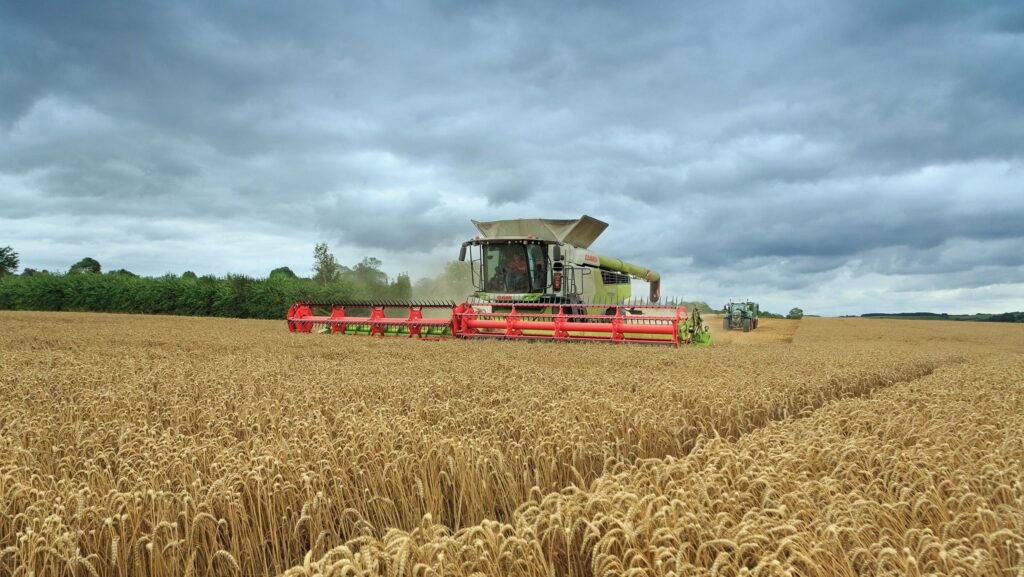 © Tim Scrivener
 Harvest is wrapping up in much of the North East, with Scotland making good progress.
Second wheats have struggled where first wheats have excelled, as attention turns to drilling.
See also: Drought threatens sugar beet harvest prospects
Inverness
Some 1,500t of malting barley out of an expected 27,000t have been received into Highland Grain near Black Isle.
“We only got into the bulk of the malting barley last week,” says the store’s Calum Barker.
And results are promising. “Quality is really good; average nitrogen is 1.4%, screenings are relatively low – under 3% on average, no skinning issues and good density, too.
“We’re seeing some good yields for this area; one farmer got 8.9t/ha, which is pretty impressive.”
Conditions have been quite different to the rest of the UK, he adds.
“We’ve had lots of precipitation and there’s more in the forecast; we could do with a little bit of wind to dry up the crop.”
Average moisture levels have been 18% – slightly above the usual average of 17.5%. And Calum is keeping a close eye on the forecast ahead.
“It’s looking a bit wetter towards the end of August. We’re all quietly keeping an eye on the El Nino event, and whether that’s going to disrupt autumn planting.”
Aberdeen
Further east, Aberdeen Grain has only taken in 40t of wheat so far.
“It looks OK for the time being. It’s a bit wet at around 18-19%, but that should come down a bit,” says Nick Canning.
The store has also seen 400t of oats and 3,000t of oilseed rape, with good moisture contents and quality.
It’s a similar story on the 9,000t of Firefox and Laureate malting barley, which has achieved 61.5-63kg/hl specific weight.
“It’s all in good order, a few rejections on screenings, but not a huge amount.
“It’s coming off the field at 15-17% moisture, but we have seen some sub 15%.
“It’s early days, I would expect to see another 18,000-19,000t more.”
Northumberland
Harvest is complete ahead of schedule for Carl Tuer at Rock Farms near Alnwick, with mixed results on wheat.
“The second wheats were shocking, but the first wheats were excellent,” he says.
The 202ha of Zealum and Dawsum second wheats did 6-8t/ha. “But there was more of the poor stuff than the good stuff.
“The second wheats have naturally poorer root structure; they just couldn’t hoover up what moisture was available to them.”
But the 242ha of Bamford and Dawsum first wheats performed well at 10-11t/ha.
“The proteins seem very high, even on the poorer second wheats. I saw one load at 12.9%, but the average will be more like 12%.”
And his 141ha of Pearl malting barley all made the specification, with yields ranging from 7.4t/ha to 8t/ha.
“It’s on a high nitrogen malting contract; everything was over 1.85%.”
He was also pleased with his 222ha of Crusoe and Armada oilseed rape.
“The poorest fields were 4.2t/ha and the best would be just over 5t/ha, with oil content averaging around 44%.”
Tyne and Wear
Further south, most crops are now safely in sheds. “There’s only a bit of spring barley and wheat to go at, with the odd field of beans,” says Tom Carmichael, farm trader at GrainCo.
“We are in the process of moving all into store, which is always a challenge at this time of year, but the end is in sight now.”
Results have been variable on the spring barley seen so far. “A lot has only passed as feed as opposed to malting due to lower specific weights and high nitrogen and screenings.”
First wheats in the area have done well. “Many farmers achieved 9.8t/ha and some just over that.
“Specific weights have been pretty good too, at 75-80kg/hl, and most have come in dry which is a bonus,” he says.
But second wheats have been a little disappointing, with yields of 6-7t/ha.
Oilseed rape is the highlight. “The majority of farmers reached the 4.9t/ha mark with good oils of 48-49%.”