

Advertiser content
How to get propyzamide timing right in changeable autumn
Blackgrass and ryegrass remain among the biggest threats to oilseed rape performance, and propyzamide continues to be the most effective tool available for grassweed control, including resistant populations.
However, as autumn weather becomes increasingly unpredictable, achieving the best results requires more than simply applying a product when the calendar says it’s time.
Timing remains critical
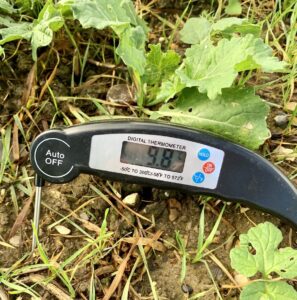
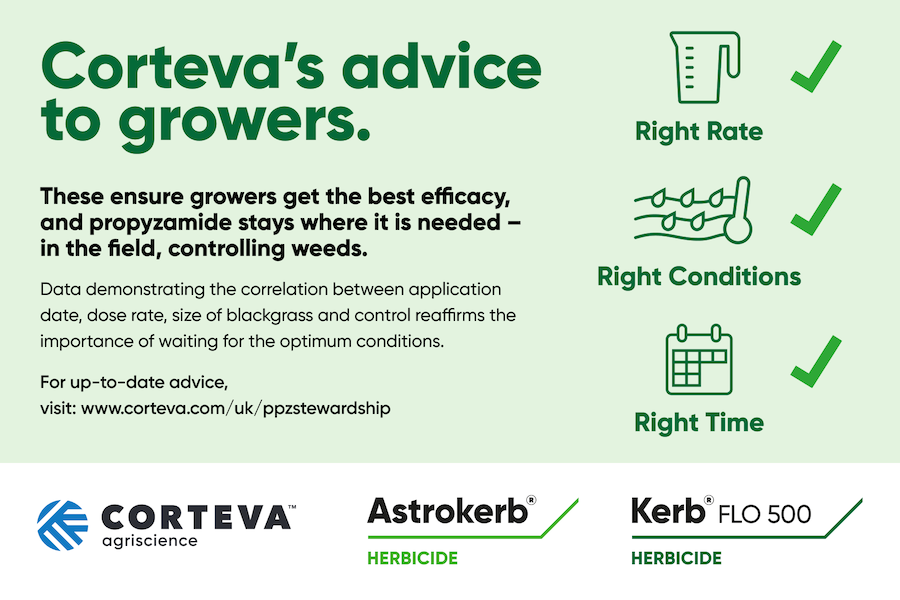
Propyzamide performs best when soil temperatures at 30cm are 10°C and falling, with sufficient soil moisture to support residual activity and uptake by the target weed.
© Corteva agriscience
The challenge for growers is that these conditions can become increasingly difficult to predict.
Warmer, wetter autumns and more variable weather patterns can create shorter application windows and make field access more difficult.
Where there is a risk that fields could become too wet to travel, growers should be prepared to act when conditions are suitable rather than waiting for the “perfect” timing.
The objective is to strike a balance. Apply too early and soils can be too warm, reducing persistence and potentially compromising control of later-germinating weeds.
Apply too late and established blackgrass and ryegrass populations may already be too large for optimum control.
A programme approach delivers the best results
Use a programmed approach for maximum efficacy. In high grassweed situations, apply 850g ai/ha of propyzamide through Astrokerb or Kerb Flo 500 at 1.7l/ha following clethodim.
This approach becomes increasingly important as changing weather patterns influence weed emergence and crop development.
With fewer prolonged cold periods and frosts than many growers experienced historically, there is also less adventitious rooting of larger grassweeds.
As a result, weeds that have been allowed to grow beyond the optimum stage can become more difficult to control than in the past.
Experience continues to show that late October and November often provide the optimum timing for propyzamide applications, although decisions should always be driven by field conditions rather than the calendar alone.
An agronomist point of view
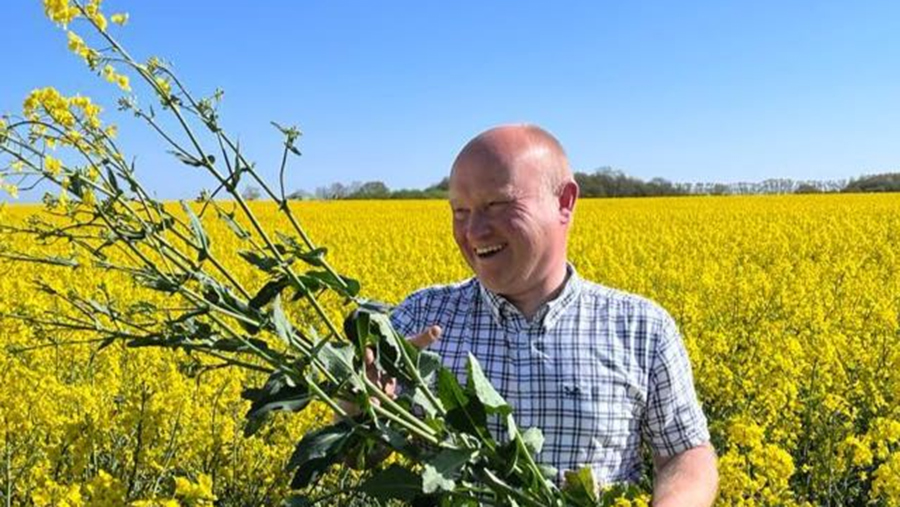
Steve Baldock, Partner at Prime Agriculture © Corteva agriscience
“Propyzamide is absolutely pivotal,” says Steve Baldock, Partner at Prime Agriculture, who advises growers across Norfolk, Suffolk and Cambridgeshire.
“Where we have blackgrass and ryegrass, we simply would not be growing oilseed rape or winter beans without it.
“As other actives have fallen by the wayside, and we’ve become more cautious about over-relying on graminicides in rape, it has become even more important.
“The past couple of seasons brought early-drilled rape and big grassweeds, which put pressure on us to go early.
“This year is very different. Particularly in the east, little rape went in early, so grassweeds are further behind and less numerous.
“The challenge is how dry it is. Soils are cracked and warm, and they won’t cool properly until it rains. Applying to cracked ground ahead of heavy rain risks losses straight to water, which we can’t afford.
“We need enough rain to get soils back to field capacity and close those cracks before we apply, in line with stewardship.
“It will be a waiting game. If we then get the wet winter many are predicting, the window could be narrow, so growers need to be ready to get it on quickly once conditions are right.”
© Corteva agriscience
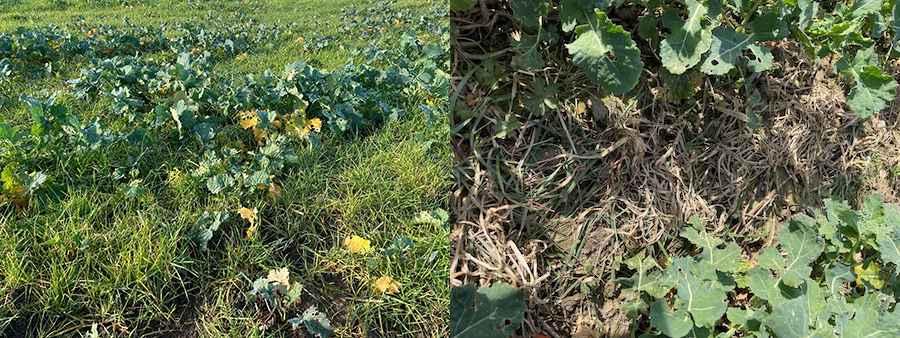
How to know your propyzamide application is working
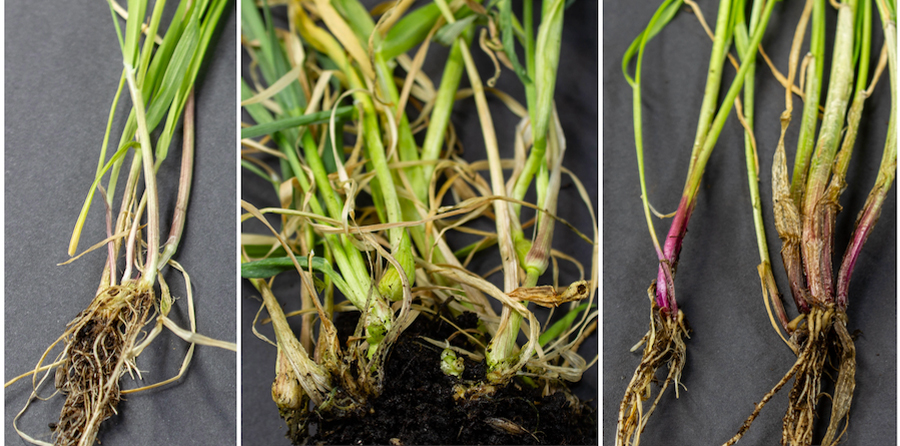
Club-shaped or swollen root tips
- Plant death is slow (12 or more weeks): Affected weeds that have emerged will slow or stop growth and initially look stunted, followed by chlorosis and necrosis.
- Grassweeds: Typical symptom in grassweeds is swelling of the meristem at the stem base, caused by cell growth continuing but cell division being stopped.
- Other symptoms: Other symptoms of affected plants include a dull appearance, sometimes with reddening.
© Corteva agriscience
Stewardship protects performance
Getting the best from propyzamide is not only about efficacy. Stewardship plays an equally important role in protecting both water quality and the future value of the chemistry.
Careful product selection, attention to field risk factors and correct application timing can help minimise the risk of propyzamide reaching watercourses while ensuring the active ingredient remains where it can deliver maximum benefit.
Tools such as the Propyzamide Stewardship Hub and Kerb weather data can help growers track soil temperatures, assess conditions and make more informed application decisions.
A unique mode of action
Propyzamide remains an important resistance-management tool for UK growers.
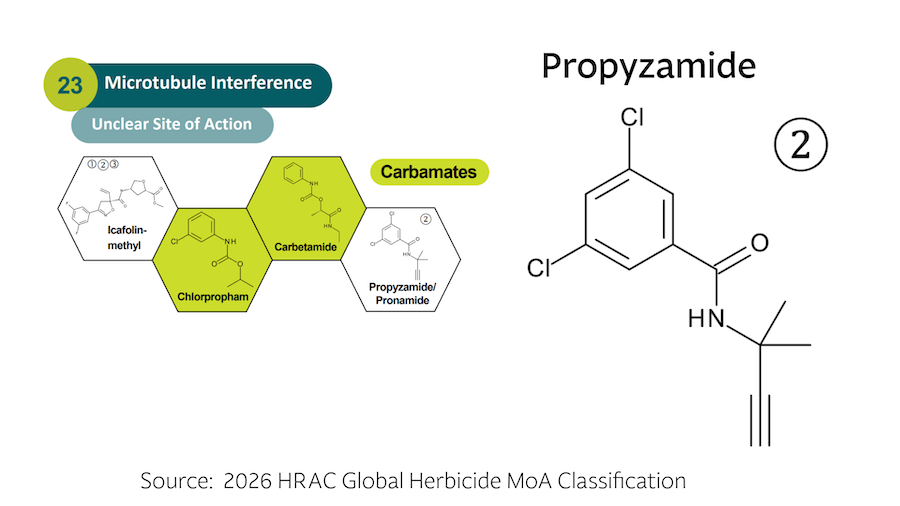
The Herbicide Resistance Action Committee (HRAC) recently reclassified the mode of action from Group 3 (microtubule assembly inhibitor) to Group 23 (microtubule interference).
Importantly, it remains the only registered Group 23 herbicide available to UK arable growers.
Combined with the absence of confirmed resistance in arable crops globally, this makes propyzamide a valuable component of integrated grassweed management programmes.
© Corteva agriscience
Key takeaway
As autumn progresses, the growers who achieve the most consistent grassweed control are likely to be those who combine good timing, a programme approach and robust stewardship.
In an era of warmer, more variable autumns, success with propyzamide increasingly comes down to being prepared, monitoring conditions closely and acting when the opportunity arises.
“Success with propyzamide often comes down to being ready when the window opens. Soil conditions, field access and stewardship all need to line up, so planning ahead and keeping a close eye on conditions is just as important as the product itself.” Hugh Guinan, Field Technical Manager, Corteva Agriscience
© Corteva agriscience
Find out more about the solutions, resources and services from Corteva Agriscience, supporting OSR growers at www.corteva.com/uk/osr
Sign up to receive Corteva technical emails for in season updates, plus the chance to win in our monthly prize draw at www.corteva.com/uk/signup
Use plant protection products safely. Always read the label and product information before use. Astrokerb® contains propyzamide and aminopyralid. Kerb® Flo 500 contains propyzamide.
Provided by
Corteva Agriscience is a global crop protection company providing innovative conventional and biological solutions that help farmers protect crops, improve yields and farm more sustainably.