How to raise yields and trim costs for higher wheat margins in 2026
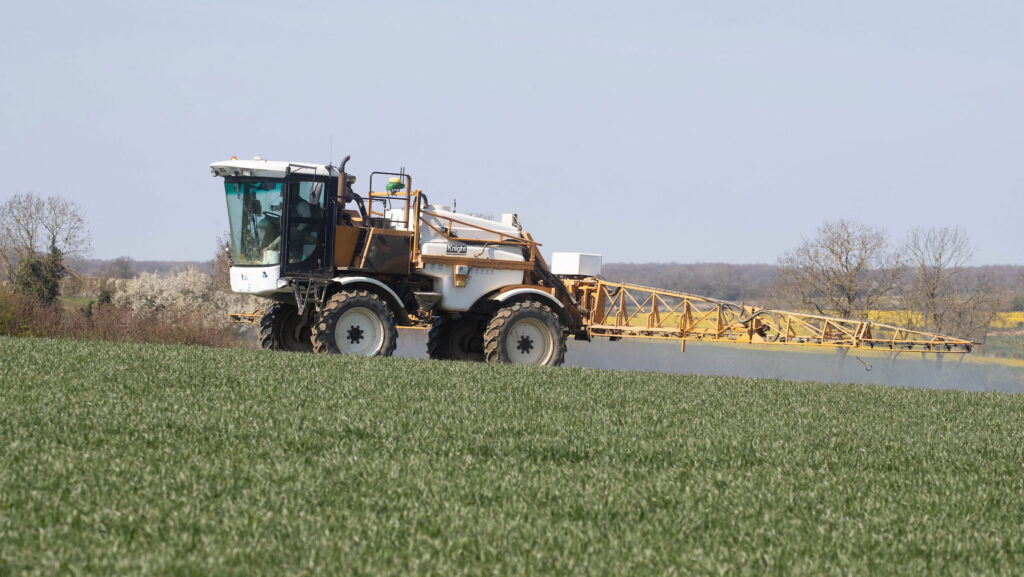 © Tim Scrivener
 Arable farmers looking to make a higher margin in 2026 have two options to get the most from well-established autumn drilled crops showing good potential, according to a leading consultancy.
With wheat prices likely to remain at about £170/t for the foreseeable future, growers should be weighing up how to increase output and make savings in variable costs, advises agronomist Jock Willmott of Ceres Rural, who cautions against being impatient and taking actions that come with a financial penalty.
See also: Two new generation SDHI fungicides at risk of cross-resistance
“Given current market uncertainty, it’s not surprising that farmers want solutions that they can run with now,” he says.
“The balance that needs to be struck is how to make input reductions without compromising productivity.”
As the agronomic options available are getting fewer and less effective, farmers and their advisers are having to make bigger calls, he adds.
“Whether that’s variety choice, fungicide programmes or fertiliser strategy, they all need to be aligned to influence productivity.
Inputs not just a cost
“There’s no getting away from the fact that cashflows are tight, but inputs shouldn’t be seen as just a cost – they can become a potential income foregone opportunity too.”
Jock points out that increasing yields by a modest 0.25t/ha and reducing variable costs by just £30/ha can combine to give a 30% increase in output, producing a higher margin.
“When we did the figures on a first wheat with a yield of 8.4t/ha and a cost of production of £143/t, there was a 19% increase from pushing yield slightly and a 13% increase from small variable costs savings.”
He points out that putting those together made quite a difference. “But it takes attention to detail to achieve crop potential with balanced expenditure.”
Longer term, growers should aim to bring winter cereal planting forward by 10-14 days to improve consistency and improve soil organic matter levels, to help with water management, advises Jock.
Rising fungicide costs
His colleague George Badger says that scrutiny of costs is understandable, given that the past two years have shown an average spray bill of £228/ha on arable farms and that fungicide costs have increased by £3-4/t in that time, to an average of £14/t.
“We welcomed the introduction of new fungicide products and active ingredients in 2024 and 2025 but they come at a cost,” he explains. “Unfortunately, due to weather extremes, most farms haven’t seen any extra yield.”
George questions whether growers are challenging input spend enough, given that spray costs in the UK are £100-180/ha higher than those in Denmark, France and Germany.
Co-formulated versions of older fungicides are often more expensive than buying two straights, he notes, with some combinations of two generics offering savings of 50-60% compared to co-formulated fungicide products.
“The convenience of having fewer cans and the peace of mind that formulation claims offer must be weighed up against the potential savings. Every active has to be justified for the situation.”
Independent agronomy
In the same way, the use of independent agronomy advice saved growers £3/t or £26/ha in fungicide costs in the dry 2025 season, he highlights.
“Growers with the confidence to challenge their agronomist on spend were more prepared to take calculated risks, which paid off last year.”
Looking ahead, George adds that technical innovation such as real-time measurement and input replacements such as bio-stimulants may be relevant for arable businesses as they change the way they farm.
“Better results tend to come from having flexibility and management skill rather than the use of inputs,” he says. “It’s getting the right balance between profitability and sustainability that most growers are aiming for.”