Two new generation SDHI fungicides at risk of cross-resistance
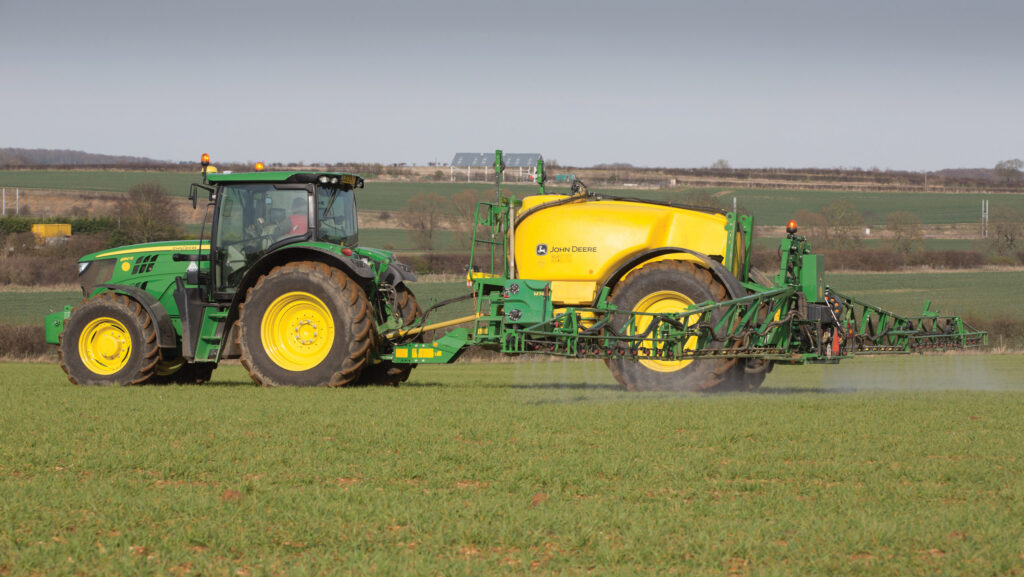 © Tim Scrivener
 Growers are reminded to use diverse fungicide sequences this season, following an early sign two new-generation SDHI fungicides – Miravis Plus (pydiflumetofen) and Vimoy (isoflucypram, brand name Iblon), can develop cross-resistance.
Laboratory analysis, funded by AHDB and carried out by independent crop consultant Niab, found isolates that were less sensitive to Miravis Plus and Vimoy following solo SDHI treatments.
Crop consultant Adas technical director, Jonathan Blake, says: “Both SDHIs select similarly, with risks of cross-resistance, which means the use of one active may well drive resistance to the other.”
See also: Huge linseed demand fuels high spring contract offers
Although a change in field performance has not been identified and application of SDHIs on their own are not advised, the finding is an early warning for industry.
“SDHI resistance is becoming more complex, with double mutants and new field mutations emerging. Selecting for insensitivity to SDHIs can occur and this is a concern,” says Jonathan.
Fungicide rethink
The finding may prompt growers to rethink fungicide programmes this season.
“Isolates that are sensitive to one will be sensitive to the other, and isolates less sensitive to one will generally be less sensitive to the other. They’re both SDHIs, so it’s no great surprise,” says Jonathan.
“Where we’ve applied either Miravis or Vimoy alone in the AHDB fungicide performance trials, follow-up lab studies have indicated sensitivity to these SDHIs does appear to have shifted. There is a small collection of isolates (15-20%) that appears a little less sensitive to SDHIs than we have seen previously.”
The good news is that there is plenty of other chemistry available, with different options for growers. Forewarned is forearmed.
Use different modes of action
“In principle, good practice is to use mixtures and sequences of different modes of action,” continues Jonathan.
For septoria control, he advises including a multisite in the mix, and avoid repeat use of the same mode of action where possible.
“This will increase the effective life of these at-risk groups, which is really important. It will also improve field efficacy,” he says.
“If we’re seeing a shift in efficacy to a given mode of action in the field, and we’re using that mode of action repeatedly, we’ll get better efficacy from something else.”
The key take-home message for farmers and agronomists is that research has shown what can happen in the lab, so this needs to be used to prevent it happening in the field.
Growers are advised to remind themselves of the Fungicide Resistance Action Committee guidelines to reduce risk of resistance build-up.
Co-formulation fungicide added for spring
New fungicide Jessico Fusion is set to benefit disease control programmes this spring, with the first approved co-formulation of Bayer’s SDHI Iblon (isoflucypram) and Corteva’s Inatreq (fenpicoxamid).
Registered for use in wheat, triticale, rye, spelt for the control of septoria, yellow rust and brown rust, Jessico Fusion contains 50g/litre fenpicoxamid and 35.5g/litre isoflucypram.
“At a full label rate of 1.5 litres/ha, it’s quite a loaded product,” explains Jonathan Blake.
Septoria protectant trials
The new fungicide performed well in the 2025 septoria protectant AHDB fungicide performance trials, with comparable performance to other leading mixtures and stronger control than azole-only benchmarks.
In curative situations designed to separate product performance under severe disease pressure, Jessico Fusion showed good activity.
“Its performance closely matched that of Univoq and was difficult to separate statistically,” he says.
While Miravis Plus remains the top-performing single active for septoria control and Peqtiga (fenpicoxamid) ranks closely behind, Jessico Fusion still provides good control and a strong yield response.
AHDB fungicide performance trials are conducted by Adas, Niab, SRUC, and Harper Adams University.