

Gloucs estate reveals award-winning approach to arable and nature
 © Tim Scrivener
 Frampton Court Estate in Gloucestershire won this year’s prestigious Silver Lapwing Award for delivering a diversity of habitats alongside an integrated farming system.
Peter Clifford, who took over the business from his parents seven years ago, stresses he inherited much of what is in place on the farm, with a mosaic of species-rich grassland, woodland and lakes on farm.
A total of 37 miles of hedges, newly created and restored ponds, orchard replanting and wood pasture have since been added to the mix.
Annual surveys to track value to wildlife are carried out.
See also: How nature-friendly practices built farm’s climate resilience
Silver Lapwing Award
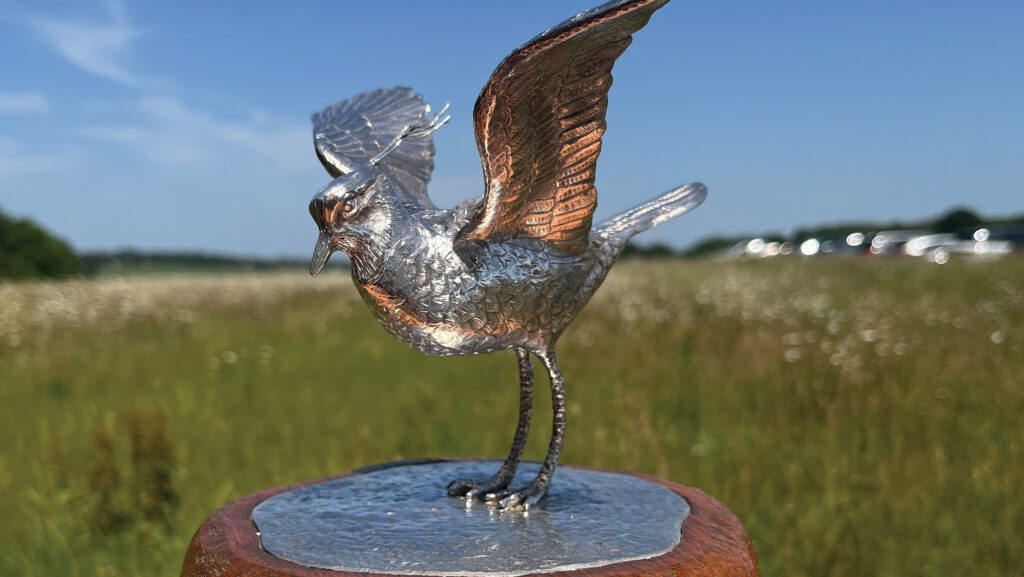
Silver Lapwing Award trophy © Louise Impey
For a farm to win the prestigious Silver Lapwing Award it must demonstrate how it excels in integrating a successful business with the delivery of conservation measures in wildlife habitats, explains Chris Butler, chairman of the Farming and Wildlife Advisory Group (FWAG) Association.
“The 47th Silver Lapwing Award winner was chosen from five finalists; all of whom showed how biodiversity and environmental protection is embedded in their production systems. It’s a delicate balance.”
The judges this year were Rebecca Inman of FWAG, Sussex farmer Martin Hole and consultant Jim Egan.
While 61ha of marginal land has been taken out of arable, Peter is confident it is being used more strategically.
Wood pasture, species-rich grassland and permanent pasture riparian buffers are all grazed with cattle at low stocking rates.
“After looking at all the options, we decided not to go down the solar route.
“Whatever we embark on has to be sympathetic and in keeping with our surroundings.”
The estate hosts numerous red list species and has 69ha on the Severn estuary managed for wading birds.
The site adjoins the Slimbridge Wetland Centre. Among the birds recorded last year was a breeding pair of cranes.
Low-input arable
The arable enterprise has changed considerably since 2023, with nine crops grown in a low-input system across 162ha.
Local dairy farmer Ed Spencer manages the arable. A mutually beneficial muck-for-straw agreement has seen it become more profitable.
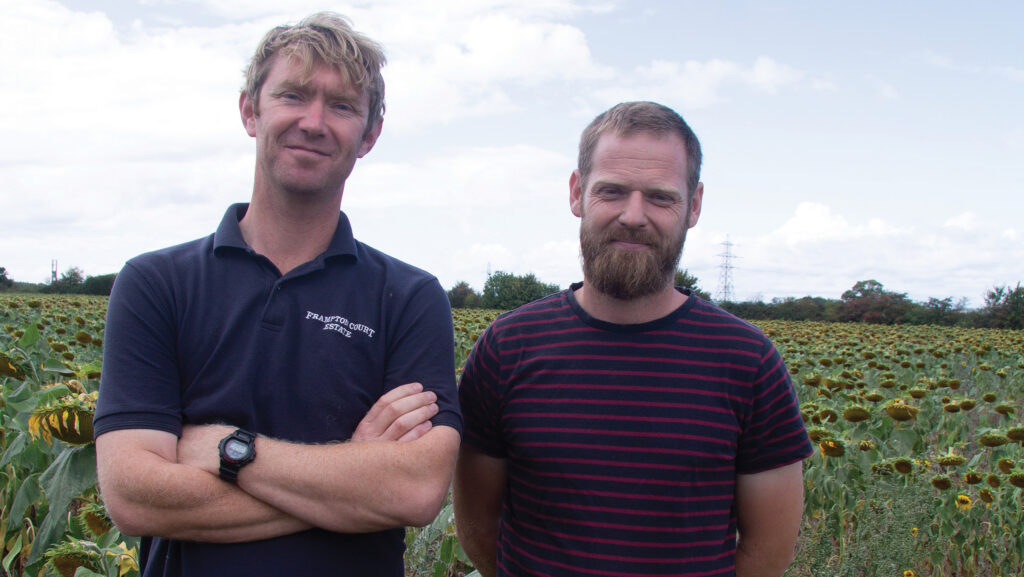
Peter Clifford and Ed Spencer © Louise Impey
“We are producing less, but our costs are down and profits are up,” reports Peter.
“Fertiliser has been replaced by muck, while the use of sprays is minimal.”
Insecticides were dropped and sheep are doing most of the job that was done by fungicides.
“Any early disease on foliage is eaten by the sheep, reducing the inoculum and the need for fungicides,” explains Peter.
The removal of herbicides from the system is proving more difficult, but it’s a challenge they are working on.
“We have to use glyphosate – without it, we would have to go back to some serious cultivations.”
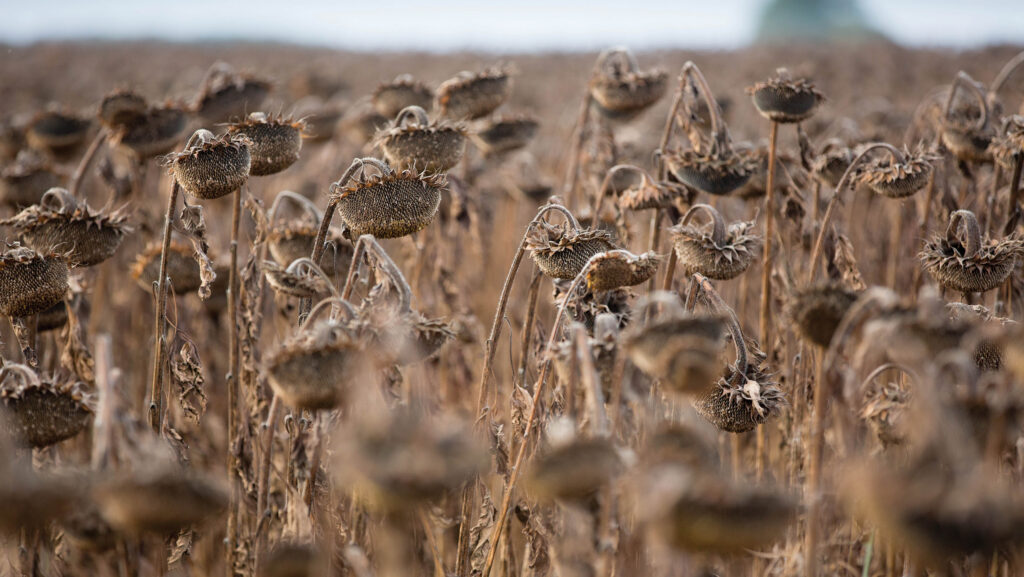
Maximum use is made of local markets, with the farm’s rye going to Shipton Mill, while sunflowers are grown for Gloucestershire-based Green Farm Seeds.
Maize is grown for the dairy and wheat is sold to local animal feed mills.
Fruit trees and funding uncertainty
Orchards on the estate are being re-instated, so cider, perry juice and fruit can be produced. Eighty varieties of apple, pear and plum trees have been planted.
A Higher Tier Countryside Stewardship scheme covers much of the farm and there is an existing Sustainable Farming Incentive (SFI) agreement in place.
The Higher Tier funding supports specialist, rarer habitats and has helped with tree planting, arable reversion and orchard planting.
The Newt Conservation Partnership has supported pond creation and the Gloucestershire Orchard Trust supplied trees.
Peter is optimistic he will be able to continue with nature recovery and add to what the estate is offering – even if public funding is removed or reduced.
“We are luckier than some in that we have been able to diversify, with holiday lets and leisure activities.
“There are also other potential income streams, such as biodiversity net gain (BNG) and carbon markets, which have potential.”
In the same way, eco-tourism ventures are of future interest, as are facilities such as wild swimming and wildlife hides.
A renovated wool barn on the farm is used for weddings and other functions, including as a filming location. “I’m an optimist,” admits Peter.
“I think we can adapt – there are multiple opportunities. Of course it’s worrying to think about losing funds but we must be prepared for the future.”
Future direction
Peter Clifford sees flooding and drought as a major concern.
The old river defence was abandoned some years ago so it’s a challenge to protect the farm and village from flooding.
A wet woodland helps to act as a filter for one of the two lakes on the estate, with aquatic survey results showing the difference that makes to water quality and plant species diversity.
Peter is looking into a syntropic system when it comes to establishing a new agroforestry enterprise in an arable field.
That involves mimicking natural ecosystems using multi-layers of plants, according to their light and height needs, with continuous pruning to build soil fertility.
Tree establishment has been challenging, even where deep circles of mulch and repeat watering are carried out.
“It may be better to grow trees from seed so that they are more resilient and better able to cope with the local conditions.”
The wood pasture is being left to populate naturally, making it a long-term project.
A very diverse habitat is developing, with bramble working as a natural tree guard for young oaks and beef Shorthorn cattle coming in to graze it over the winter.

Staying sharp shouldn't be a chore
Explore more / Transition
During the series we follow our group of 16 Transition Farmers through the challenges and opportunities as they seek to improve their farm businesses.
Transition is an independent editorial initiative supported by our UK-wide network of partners, who have made it possible to bring you this series.
Visit the Transition content hub to find out more.
