Trial shows maize yield lift with drone-applied foliar N
 © Tim Scrivener
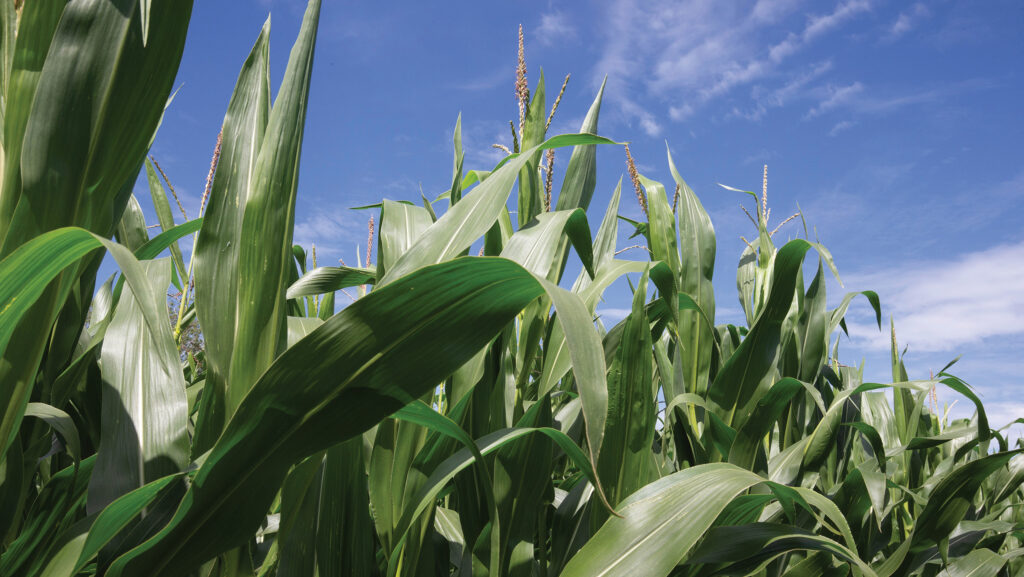
 Using a drone to apply late nitrogen to maize increased predicted yields by up to 10t/ha in trials carried out by an agronomy company in Leicestershire.
Hutchinsons crop nutrition specialist Rob Jewers explains that maize crops need more than 30% of their total nitrogen requirement after the tassling stage, which is a key period to maximise cob fill.
See also: How grain maize earns more profit than wheat for two growers
However, meeting this later demand can prove challenging, as crops can quickly become too tall for conventional machinery. In addition, during the summer months there is also a greater chance of dry conditions limiting plant uptake of granular nitrogen in dry soils, and increasing the risk of losses through volatilisation.
Where uptake is limited in dry conditions, foliar nitrogen is preferable. However, Hutchinsons agronomist Greg Hopkinson points out that high temperatures can limit sprayer application windows due to the risk of scorch.
One solution is to use a drone. “Drones offer greater flexibility, thereby creating a larger window for applying foliar N.”
© MAG/Richard Allison
Drone trial
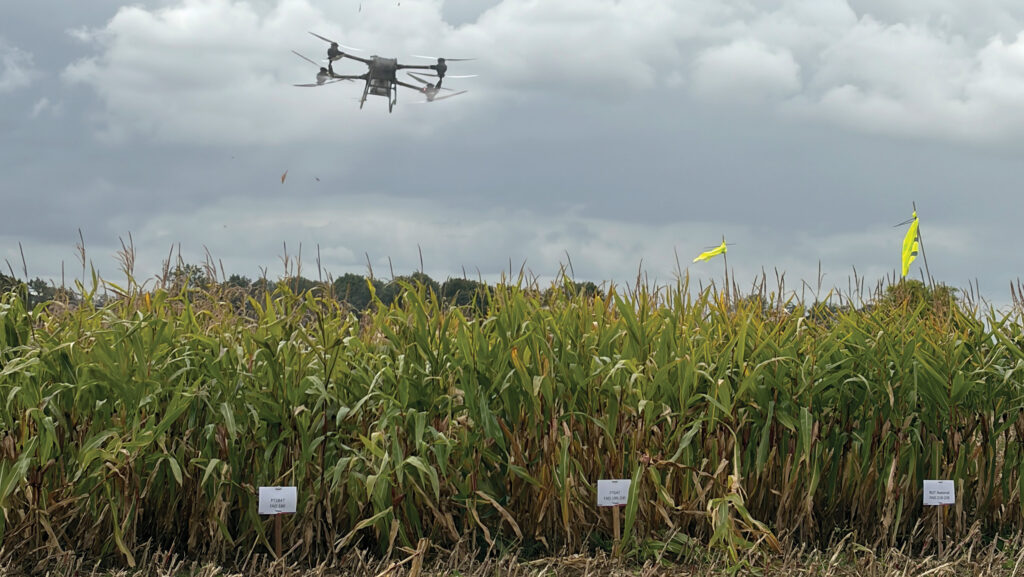
A drone was trialled at the Leicestershire trials site near Broughton Astley, with three different products applied on 22 July.
The products tested were a methylated urea product – N-Durance. Rob explains that the nitrogen is in the amine form, which plants can easily absorb.
It was applied at 20 litres/ha and he says with crops under stress and undergoing rapid growth, they saw good results this year.
They also trialled Peleton, a foliar nutrition product that provides extra macro- and micronutrients such as phosphorus, potassium, magnesium and zinc. The third product trialled, Align-N, is an 18% foliar urea product.
Results based on plot cuts showed an extra 10t/ha fresh weight for maize treated with a mix of N-Durance and Peloton compared with the untreated plots. In contrast, Align-N offered no benefit.
Looking at the economics, Greg says the £35/ha drone application cost plus the cost of the product total £115/ha. Given the 10t/ha increase in freshweight and assuming a value of £40/t, farmers can get £400/ha extra benefit at a cost of £115/ha.
Seeding
The other area Hutchinsons is investigating at the Leicestershire site with the drone is seeding into a standing maize crop.
In most years, Greg explains that there is little opportunity to establish a cover crop after maize due to the later harvest, but sowing seed into a standing crop could be a solution.
It means the cover crop is almost established at harvest, which helps mitigate any autumn soil erosion risk, provides some grazing and can also earn environmental income.
The Sustainable Farming Incentive cover crop option is worth £129/ha and with the £45/ha cost of seed plus £30/ha to sow by drone, it can make more back. For livestock farmers, the drone can be used to sow grass seed in maize to offer late-season forage.
Trial results |
|
|
Treatment |
Predicted freshweight yield (t/ha) |
|
Untreated |
38.44 |
|
Align-N |
30.23 |
|
N-Durance |
42.71 |
|
N-Durance + Peloton |
48.62 |
|
* Based on 40t/ha average yield |
|
Demand for drones increase
James Poynton of SAS Agri Drone Services applied the foliar nitrogen products at the Leicestershire site using a DJI T50 drone.
He says the company is seeing more demand for drone services to apply foliar nitrogen to crops such as maize and seed stewardship crops across the UK.
For spraying, the drone has a 40-litre tank, and he points out that the limitation is the product volume of 100 litres/ha. However, he says his colleagues are working to reduce this and have been trialling a product that can be applied at 30 litres/ha to maize.
With the spreader, it can carry up to 50kg of seed and with a typical rate of 5kg/ha, it can apply 10ha with each load. James explains that for seed, the blades create a downdraught vortex, resulting in good coverage of the ground despite having a standing crop.