Breeder’s tips on managing later drilled OSR crops
 © Tim Scrivener
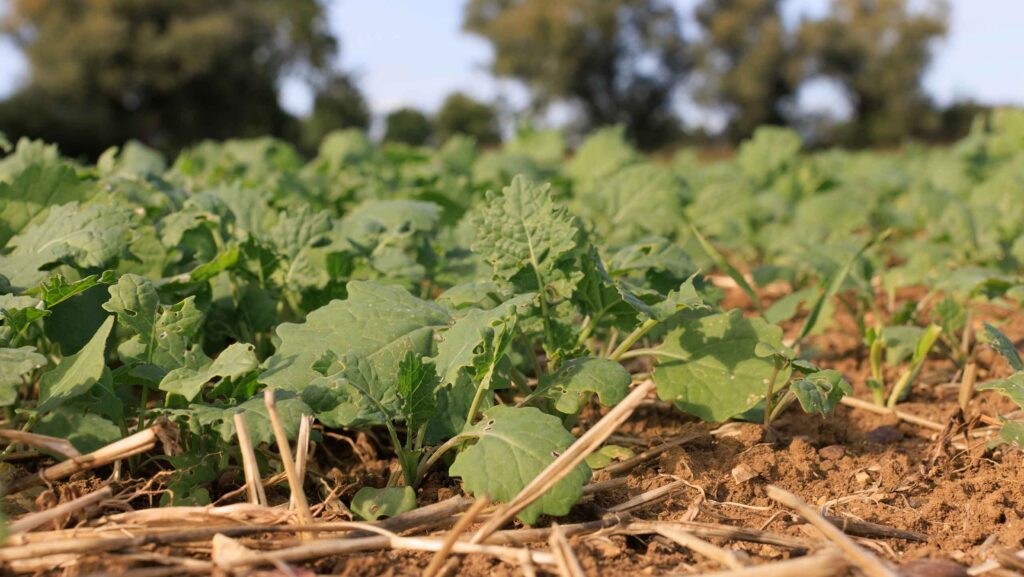
 Trials carried out by an oilseed rape breeder, as well as a Lincolnshire grower’s experience offer some pointers on how best to manage later drilled crops to ensure winter survival and maximise yields.
Hot, dry summers, milder autumns and a deeper understanding of cabbage stem flea beetle behaviour have seen the drilling of winter oilseed rape delayed in recent seasons.
As the window has moved, the questions around timing, plant vigour, variety selection and crop management have become more important.
Drilling window has moved
Craig Padley, who runs NPZ UK’s trial sites in Cambridge and Wisbech, says the old drilling calendar no longer holds.
“It used to be that we would drill by 10 September, but with climate change that’s no longer relevant,” he says.
“I would be happy to drill during the third week of September. The plants are quite small going into the winter, but they have eight leaves and a reasonable root diameter and length, so they survive the winter without a problem.”
See also: SDHI fungicide-resistant phoma discovered in OSR
This year’s dry start to the autumn brought the trial drilling into line with farmers, most of whom were unable to use the earlier slot. The company’s early drilled trial went in on 20 August, just ahead of the rain because the ground was, in Craig’s words, “like concrete”.
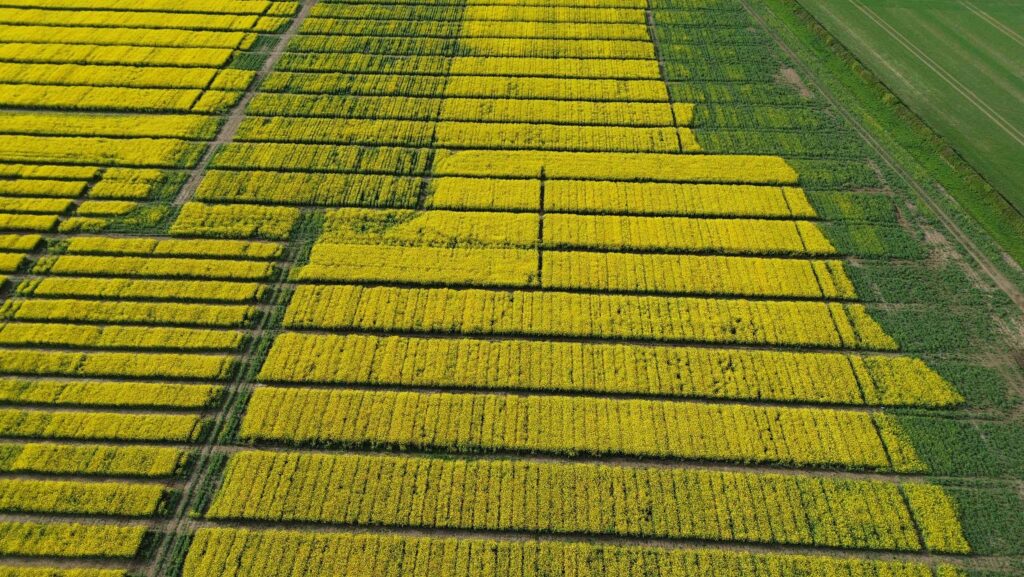
NPZ UK’s own trial data for the previous season points to late drilling not being a gamble. Last year, the late-sown plots averaged 4.68t/ha, against 4.37t/ha for the crops drilled on the usual date.
The difference, he says, is largely down to cabbage stem flea beetle larval damage in the spring.
“Earlier drilled crops, with the warmer soils, had on average about 20 larvae per plant; the late-sown plots escaped them,” he recalls.
© NPZ
Why timing matters
Craig points to NPZ-funded research by Prof Ute Kropf of the University of Applied Sciences in Kiel into day-degree requirements to explain why a later drilled crop develops differently.
“Plants need about 150 day degrees to germinate and put out their first cotyledons, then roughly 120-150 day degrees for each pair of leaves,” he says.
“Once you pass about 1,000 day degrees the plant starts to differentiate, meaning the flower buds begin developing.”
He explains that with an early drilled crop, it races through the differentiation stage, passing 1,200 day degrees quickly and moving into its reproductive phase.
This means stem extension starts before the onset of winter, and at this point differentiation stops and the maximum number of potential flowers is set.
“After that, the reduction phase of these potential flowers begins. With plants focusing nutrients on lengthening the main stem, some potential tillers and buds are dropped before they can flower.”
With a later sown crop, 1,200 day degrees is not passed before winter sets in and bud differentiation carries on into the spring, he says.
That, he adds, is where plant growth regulators play their part. “We’ll apply them when the crop hits four to six leaves to hold the plant for two to three weeks.”
Vigour is the driver
“Varietal choice is really important when it comes to later drilling,” Craig says. “You need a variety that will emerge rapidly in the autumn and continue to develop quickly through the season.
“These are often hybrids, but not all hybrids are suitable – some are bred for their performance in the earlier drilling windows.”
Late drilling OSR
On the Wolds in Lincolnshire, James Thompson farms 260ha on a silty clay loam over chalk and has made late drilling a deliberate feature of his OSR system rather than a compromise.
“We would always avoid drilling until the end of the first week of September, so that the crop is being sown closer to some rain. We’ve never drilled in August,” he says. “It has always worked for us.”
Over the years, James has tried many approaches to establishment. He has settled on leaving long stubble in the previous wheat crop, applying chicken manure and drilling with the Sprinter drill with 1in Dutch openers at 85-100 seeds/sq m.
Companion crop
A companion crop with buckwheat and phacelia distracts pigeons and flea beetles, as well as giving him a secondary source of income.
“After drilling we roll twice, then it is about monitoring for slug and flea beetle predation,” he says.
“We tend to go with foliar nutrition in the autumn; as soon as we have true leaves we will apply NKH Delta. In total our OSR crops get two foliar feeds to get them up and away as fast as possible.”
The result, he says, is “a small and neat plant to go through the winter” – one that has never needed a plant growth regulator.
Vigour is what he looks for first in a variety.
“I don’t chase the latest variety. I find one that works well and stick with it, getting consistent results,” he says. “I can’t have a crop that wallows about, doing nothing for weeks. Vigour is my ultimate driver.”
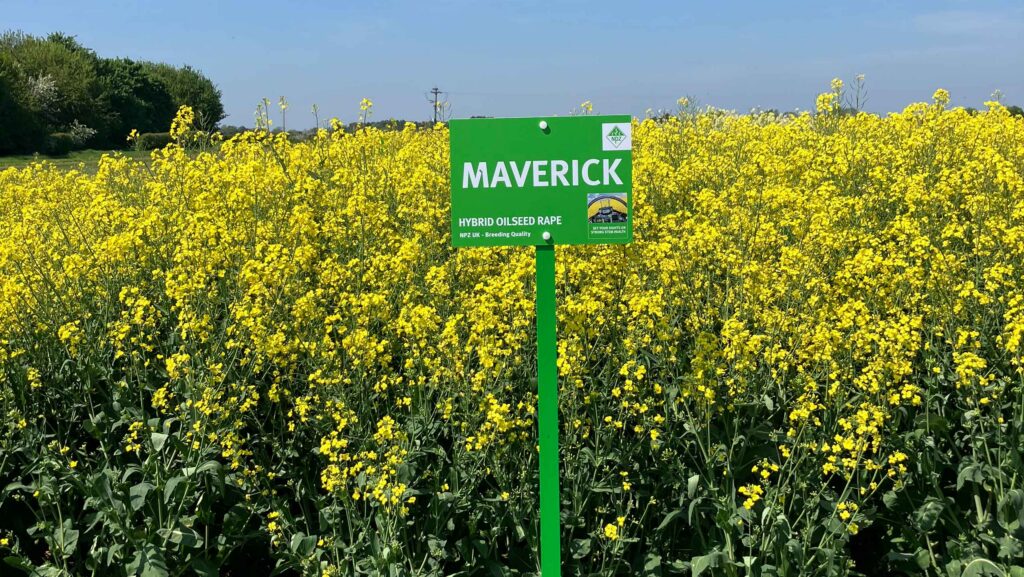
He has grown a lot of NPZ’s Maverick over the past three years, which is valued for its rapid establishment and spring vigour, and says it is a good match for his drilling dates.
© NPK