OSR area forecast to reach eight-year high in 2027
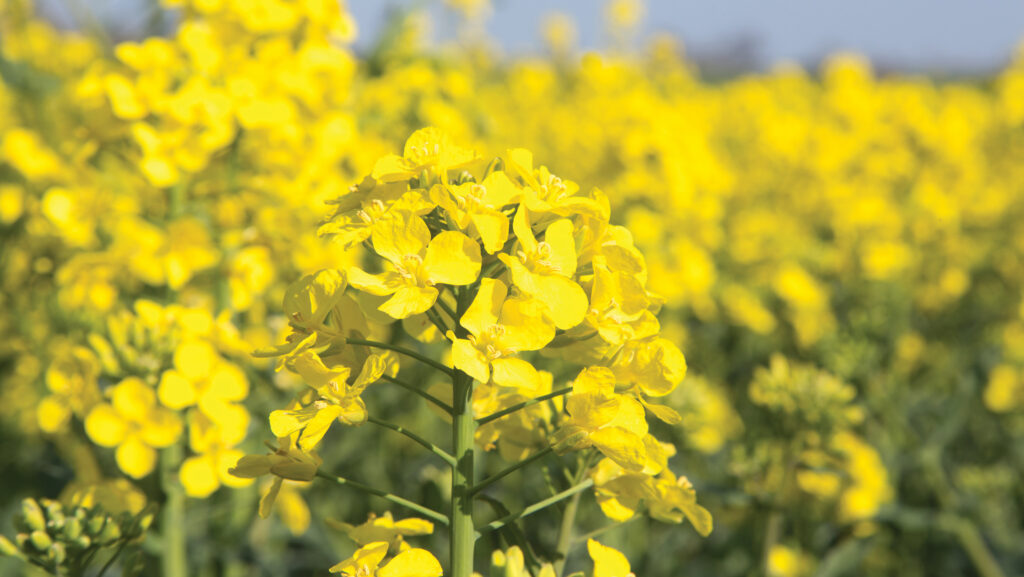 © Tim Scrivener
UK arable farmers intend to plant 415,000ha of oilseed rape for harvest 2027, up 28% on 2026 and the largest area since 2019, The Andersons Centre’s Early Bird Survey for AHDB shows.
The survey, published on Friday 13 November, is carried out each autumn by The Andersons Centre to give early insight into autumn plantings and spring planting intentions.
This year, more than 60 agronomists from the Association of Independent Crop Consultants and the Agricultural Industries Confederation, independents and nationals alike, contributed data covering 615,000ha of UK arable land.
See also: SFI ‘risks shifting oilseed rape production overseas’
The survey was mainly conducted in late October, with most data in by 6 November and submissions accepted up to 9 November.
The Andersons Centre’s analysis points to a more favourable margin outlook for oilseed rape than for rival crops, following improved yields in 2026 as the crop suffered less than other arable crops in light of the drought conditions.
A good autumn OSR drilling season this year has helped, and some growers are more confident managing cabbage stem flea beetle (CSFB). However, the figure is provisional, and how crops fare over winter will influence the final harvest area.
The gain comes largely at the expense of spring crops. Spring barley planting intentions are down 11%, which would put the national area at 531,000ha, the lowest since 2006.
The survey links this to two difficult years in a row for spring crops and continued pressure on demand from malting, brewing and distilling. Total barley area is forecast down 7% to 897,000ha.
Graham Redman, a partner at The Andersons Centre who led the survey, said: “There has been a resurgence in farmers’ confidence in planting OSR. It had a big knock more than two years ago and has rebounded over the past two seasons.
“Spring barley and pulses are down substantially. There are fairly tight margins with barley and with pulses there are concerns about dry weather and the slightly depressed prices.”
Oat area is forecast to fall 18% to 136,000ha for harvest 2027, with spring oats making up two-thirds of the total – the lowest area since 2015. Pulses are down 20%, with weaker gross margins than oilseeds and variable yields in recent years the likely causes.
Winter cereals are almost unchanged after good autumn drilling conditions this year, similar to autumn 2025.
Wheat is up 1% to 1,664,000ha, almost entirely winter wheat – while winter barley is down 1% to 366,000ha.
Uncropped arable land is expected to be stable, as Defra’s Sustainable Farming Incentive in England and other environmental schemes have not had extended budgets this year.
How the numbers are built
The Andersons Centre’s survey captures the percentage change agronomists expect on their clients’ farms, which is then applied to provisional 2026 UK areas to produce the 2027 forecasts.
No provisional national 2026 figures are published, so the baseline combines Defra’s June Survey for England and the Scottish government’s June Agricultural Census with 2025 areas carried forward for Wales and Northern Ireland.
The survey has an accurate record in previous years and is a strong indication of next year’s harvest area.
But it is only a snapshot in time. Estimates for larger crops are more reliable, as are those for winter crops, which reflect actual plantings rather than intentions for spring crops.
Final adjusted results, including regional breakdowns for the main crops, will follow the official UK June survey results in mid-December.