

SFI ‘risks shifting oilseed rape production overseas’
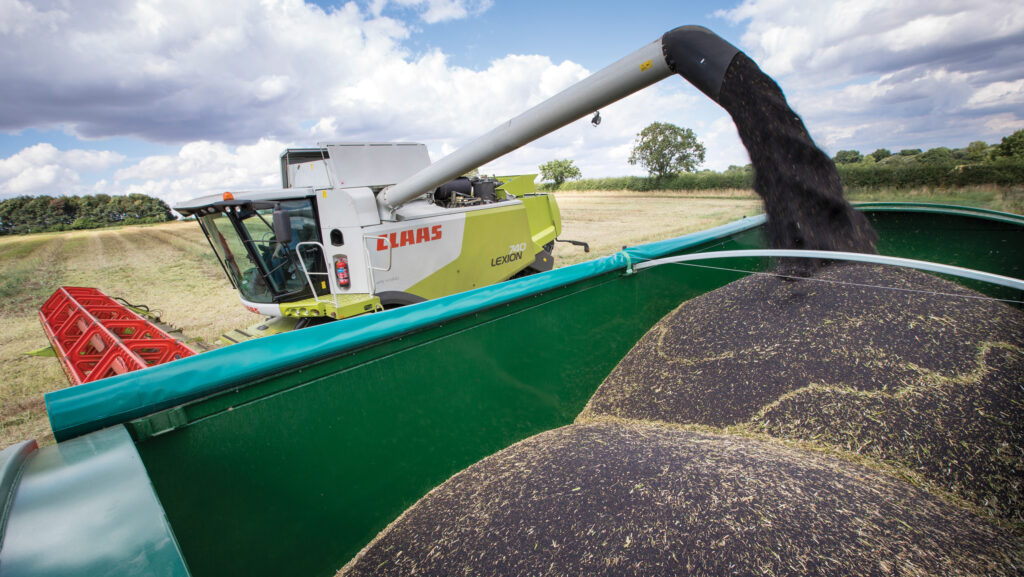 © GNP
The Sustainable Farming Incentive (SFI) risks taking productive land out of rotations and shifting food production overseas, increasing reliance on imports, United Oilseeds managing director James Warner has warned.
Speaking at the co-operative’s corporate day on 5 November, Mr Warner said the structural change brought about by SFI had taken “vast swaths” of agricultural land out of production, contributing to the UK growing its smallest oilseed rape crop area for 40 years in 2025.
He estimated about 550,000ha of land was now covered by SFI agreements that took it out of conventional production, including 180,000ha of fallow land. The latter figure represents about 1m tonnes of potential crop production.
See also: UK oilseed rape crop: Why there’s growing optimism in 2026-27
While SFI payments totalled £256m, Mr Warner estimated that the foregone output value from the 550,000ha, assuming a standard five- or six-year arable rotation, could exceed £750m.
He stressed that his concern was about the wider effect on the industry, rather than individual farmers’ decisions to enter schemes.
“BPS was a subsidy alongside production; SFI is an ‘or’ rather than an ‘and’,” he said.
With less food being produced domestically, demand would increasingly have to be met through imports, effectively shifting production overseas.
Mr Warner observed that Brazil became the fastest-growing country for OSR cultivation and had overtaken the UK in planted area this year. However, yields there averaged about 1.5t/ha, compared with just under 4t/ha in the UK.
“For every hectare we take out of production here, 2-2.5ha is needed in Brazil to replace it,” Mr Warner said, questioning whether this represented a genuine environmental gain.
Net importer
The UK was expected to need almost 2m tonnes of OSR in 2027, against domestic production of just over 1.2m tonnes, leaving net imports of more than 700,000t, according to United Oilseeds’ estimates.
Farmer Chris Padfield, of RN Padfield & Sons, Hawthorns Estate, Staunton, Gloucestershire, said the choices farmers made between break crops such as OSR and environmental options were an important consideration.
He agreed with Mr Warner that because the UK is currently a net importer of OSR, production was being moved to countries such as Brazil, where more land was needed to produce the same amount of crop compared with the UK.
However, he said schemes like SFI could also support more diverse and resilient rotations, helping farmers reintroduce livestock, establish herbal and wildflower leys, build soil fertility and reduce fertiliser requirements.
He said SFI was a “broad church”, with options such as overwintered stubbles and avoiding insecticides able to complement productive farming.
Mr Padfield farms 300ha of owned land, with 260ha in grass, wildflowers and an organic mid-tier scheme, alongside rented land managed conventionally.
OSR is now his most profitable crop, he said, and had performed well during the past two dry years.
Having dropped the crop following the neonicotinoid ban, he had reintroduced it using later drilling, vigorous varieties and careful timing around suitable weather windows to reduce flea beetle risk.
Mr Warner said the industry’s OSR Reboot campaign was helping to address the agronomic and research challenges behind the decline in OSR plantings, with areas increasing year on year.
The co-operative estimated the latest UK cropped area of OSR at 355,000ha based on certified seed sales and an allowance for farm-saved seed.
Mr Warner said the ambition was to rebuild UK OSR production towards 2m tonnes, which would equate to about 500,000ha, to enable the UK to be self-sufficient in the crop.
Market movements
Paris rapeseed futures have fallen by about €30/t over the past three to four days, as European harvests are completed and attention turns to supplies from Australia and Canada.
Managed-money funds have reduced their “net long” position from about 80,000 contracts to 40,000, adding to downward pressure on prices.
UK ex-farm oilseed rape prices have fallen from about £450/t to £420/t.
United Oilseeds managing director James Warner said the crop continued to offer farmers a useful form of risk management within arable rotations, as its price was linked to Paris futures, biofuels and crude oil, whereas other combinable crops were more closely linked to wheat futures.
Explore more / Transition
Follow the experiences of our 16 Transition Farmers and access in-depth supplements, expert webinars, live events and practical content covering the challenges and opportunities facing farm businesses.
Transition is an independent editorial initiative supported by our UK-wide network of partners.
Explore the Transition hub for the latest insights, resources and events.
