UK oilseed rape crop: Why there’s growing optimism in 2026-27
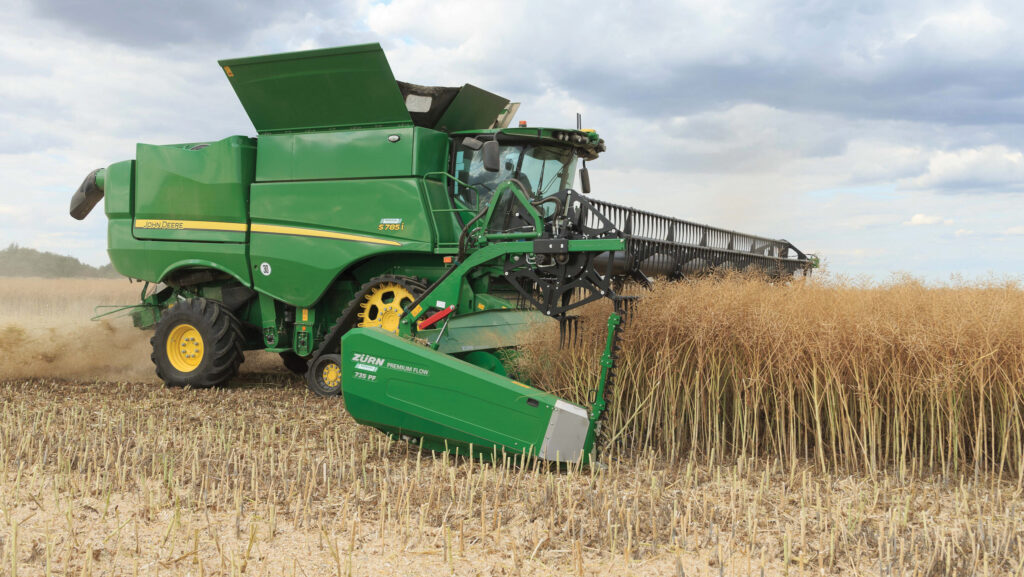 © Tim Scrivener
 There is growing optimisim in the UK oilseed rape crop this coming harvest due to greater knowledge on managing cabbage stem flea beetle, ideal establishment conditions along with an industry initiative and stronger prices.
While still below historic levels, it represents a partial recovery from its 42-year low of 243,000ha at harvest 2025.
This season, according to the AHDB Early Bird Survey, farmers planted 316,000ha, although traders estimate the area to be closer to 285,000-300,000ha – up around 24% on last season.
See also: Farmer sets OSR world record in the Lincolnshire Wolds
Good sowing conditions last autumn ensured the crop established well before wet winter weather set in.
This meant that, despite the dry spring, growers are quietly happy with how crops are looking as they approach final growth stages.
Chris Spedding, commercial director at Premium Crops, predicts yields will be about 3-3.5t/ha, although with the crop looking its best for some time, he wouldn’t be surprised if it ended up near 4t/ha.
James Warner, managing director at United Oilseeds, would like to see yields beat the five-year average of 3.3t/ha.
“Last year, we got to 3.7t/ha on average across the UK; if we repeated that, then that should produce just over 1m tonnes, which is a really important milestone, bringing us closer to the self-sufficiency target of 1.8m-2m tonnes.”
Each increase in UK production will boost confidence and therefore drive larger planted areas, year on year.
OSR future prospects
- Crops currently looking good, despite wet winter due to good establishment
- Forecast average yield of 3-3.5t/ha
- Margins for 2026 harvest revised down to £825/ha due to higher costs
- Industry predictions suggest a 10% increase in cropping OSR for 2027
Establishment, pests and resilience
Good crop establishment has been key this year; clement conditions in the autumn allowed the crop to get well established, reducing weather-related loss compared with previous years.
Frontier estimates winter crop losses of just 5-7% – significantly lower than typical levels – with mild weather, good drilling conditions and relatively low cabbage stem flea beetle (CSFB) pressure all helping.
United Oilseeds believes the lower cabbage stem flea beetle pressure this year can be linked to post-harvest cultivations and adoption of the 10 Shared Strategies for Success.
“If you can disrupt the life cycle when the beetles are vulnerable, you can have quite a big impact,” says James.
Kirsty Richards, Frontier’s national technical manager for seed, agrees.
“There’s no magic bullet to solving CSFB – it’s about setting up the crop in the best way to reduce the impact of an attack.”
Market forces and global influence
So with a larger crop forecast, what does this mean for market prices? Right now, global events are having a significant influence.
The ongoing Middle East conflict, in particular trade route disruption, is reducing availability of important resources including oil and urea – pushing up input costs.
However, this has also supported OSR prices, with increased demand for biofuels in particular boosting the market.
“There’s a much closer link to energy markets from rapeseed,” says James.
“In Europe, which is our benchmark market, about two-thirds of all the demand for rapeseed oil is for biodiesel.”
Prices increased by about £25/t in the space of three weeks in April, to about £400-£450/t ex-farm.
For harvest 2026, where input costs have already been accounted for, this is good news.
Yet growers also need to factor in input costs when planning for next season.
“Growers need to be closely watching what prices are available, taking the decision to buy some of their nitrogen requirement now at these levels,” remarks Jim Knightbraid, head of customer proposition at Frontier.
Availability could be another concern, warns Graham Redman, author of the Nix Farm Management Pocketbook.
“If it is available, then it will be expensive. But is expensive better than not having it at all?”
Looking ahead to 2027
Graham predicts the gross margin for 2026 to be around £825/ha, based on a median yield of 3.5t/ha – a fall of £81/ha on the previous year’s forecast of £906/ha.
However, despite the rising input costs, higher OSR prices mean it is likely that this year’s actual margins may be higher.
“It is early days for 2027, but as things stand, costs will be up – fertiliser and fuel in particular.
“However, the output prices might be considerably higher by then, too.
“Note, European OSR futures are at contract highs and there might be some way to go yet,” says Jim.
Industry predictions suggest a 10% increase in cropping OSR for 2027, and this confidence is reflected by specialist growers, too.
“Adding value with speciality crops like high oleic, low linolenic and high erucic acid rapeseed varieties is working,” notes Chris.
Premium Crops fulfilled its grower orders for 2027 in March.
“There are three things that will encourage rape production – low risk, decent yield and a good price – if you have all those, everything else will fall into place.”
However, where specialist crops are concerned, growers would be wise to ensure they have a contract in place before planting.
The role of industry support
The OSR Reboot, grain pools and de-risking schemes will have undoubtedly helped grower confidence.
“Farmers are already significantly further ahead in the marketing of their harvest 2026 crop than they have been at any point in the previous three years,” says Jim.
While de-risking schemes not only give growers confidence, they also encourage better decision-making.
“In the absence of support, growers have tended to carry on with some crops that realistically were never going to perform to the level they needed to.
“That’s continued this perpetual cycle of yields coming down and grower frustration.”
Frontier is so confident of the success of its de-risking scheme (which waives the cost of OSR and companion crop seed on areas that fail to establish), that it intends to increase the area covered by 50% in 2027.
“It is the best varieties [with better resilience, like Dompteur and Karat] that are available to growers on that scheme – setting people up to have the best success possible,” adds Kirsty.
A strategic future for OSR
Reboot initiatives alone will not augment cropping area in the years ahead; favourable prices and reduced pest pressure are also key.
To meet domestic demand, United Oilseeds would like to see a return to 400,000-500,000ha.
But achieving this sustainably requires adopting best practice – following the 10 Strategies for Success – choosing varieties with the right characteristics, thinking about planting windows and careful geographic planning of where to plant the crop.
Sowing timing should be driven by conditions, not calendar date, stresses Jim.
“Growers should be giving attention to the conditions in-field, and if the weather forecast is right to plant this crop.”
OSR remains a useful crop in rotations – but its success will require a more strategic approach, with careful planning and collaboration with neighbouring farms being key, adds Paul Browning, marketing manager at United Oilseeds.
“You cannot just do it how you used to do it. We need to pay attention to build back stronger.”
Winter oilseed rape gross margin estimate for harvest 2026 |
|||
|
Production level |
Low |
Average |
High |
|
Yield (t/ha) |
3 |
3.5 |
4 |
|
Output at £410/t (£/ha) |
1,230 |
1,435 |
1,640 |
|
Variable costs |
|||
|
Seed (£/ha) |
– |
73 |
– |
|
Fertiliser (£/ha) |
– |
261 |
– |
|
Sprays (£/ha) |
– |
277 |
– |
|
Total variable costs (£/ha) |
– |
610 |
– |
|
Gross margin (£/ha) |
620 |
825 |
1,030 |
|
Source: Nix Farm Management Pocketbook |
|||