How precision nutrition system can enhance potato yield
 © Phil Weedon
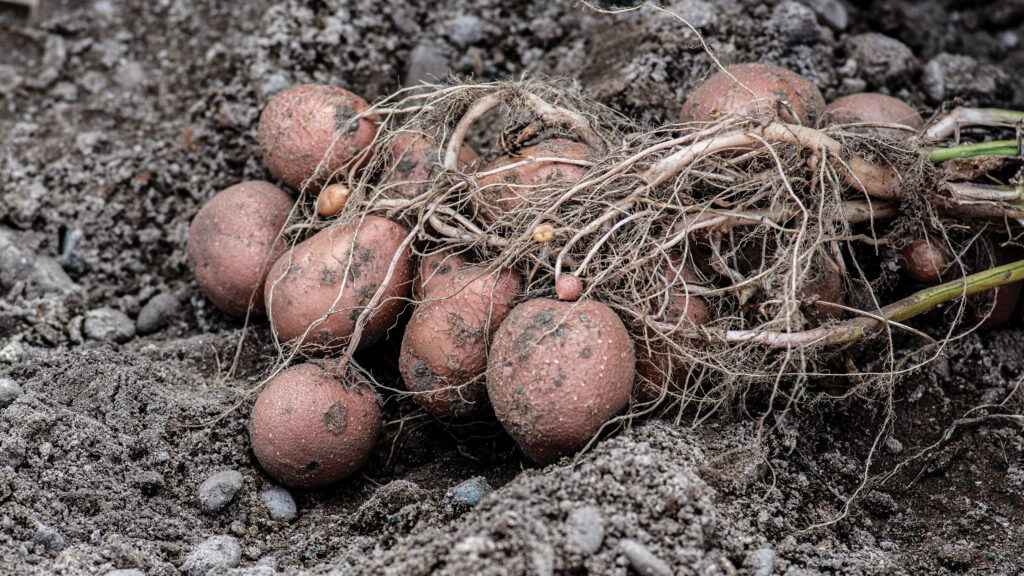
 Potato production requires a highly accurate nutrition programme at every growth stage – be it tuber set, initiation or bulking to achieve optimum yield and quality.
Starting with an understanding of soil nutrients to highlight nutrient interactions and antagonisms and avoid unnecessary applications is key.
Simon Fox, soil scientist and crop nutrition specialist at Emerald Research, notes that standard soil analysis isn’t enough.
“It focuses on a narrow set of nutrients, usually phosphorus, potassium, magnesium and pH.
“While this information is useful, it often falls short of the level of detail required to support a commercially produced high-value crop like potatoes,” he says.
See also: How a passion for nature turned into thriving bird food business
Advanced soil analysis
That’s why we he set out to develop OptiYield – a precision soil and crop nutrition-system designed to provide detailed information on the physical and chemical properties of soils, with potato, vegetable and even cereal production in mind.
The advanced soil analysis tests for more than 30 soil parameters to evaluate true nutrient availability to each crop.
These include antagonisms, organic matter, texture and clay mineralogy effects, effective nutrient supply rates during periods of high demand and biological activity.
“This allows growers to make truly informed decisions that optimise fertiliser applications, input efficiency, cultivation activities and long-term soil management,” says Simon.
The systems also consists of a digital platform that can tailor inputs, creates fertiliser plans, monitors crops and records data.
Crop-specific recommendations
Each plan is field-specific. It uses field-by-field calibration that accounts for local conditions, soil type, variety, yield targets, manure use and rotation history.
“This is not generic advice – it’s precision agronomy powered by machine-learning algorithms trained on 35 years of UK field data,” says Simon.
The system can make base fertiliser recommendations and suggest specific foliar nutrition programmes.
It can also integrate biostimulants into the portfolio, with timing, placement and compatibility guidance.
Bioactive products
OptiYield integrates a range of bioactive products that complement the nutrient programme and reduce reliance on synthetic chemical inputs.
These are natural formulations that can support crop resilience, stress tolerance and disease resistance:
- Diamond range Formulations providing both nutritional and elicited disease protection benefits. Particularly effective in potato and brassica production.
- Symposium range Proprietary microbial consortia and organic biostimulants selected for UK soils. Enhanced nutrient cycling, improved soil structure and support for natural disease suppression.
- Foliar nutrition suite (Folia-N, OptiMag, OptilMan, SuperPhos) Foliar products that deliver nitrogen, magnesium, manganese, zinc and phosphorus when soil uptake is restricted by environmental conditions.
- Organically based biostimulants (SeaSpray 50, BioBoost, BioZest) Supporting stress tolerance, photosynthetic efficiency and improved root development.
Intelligent data platform
A digital platform provides users with real-time decision support and record-keeping capabilities.
Satellite imagery monitors crop health and growth stage, with artificial intelligence forecasting of nutrient requirements based on weather patterns, soil moisture and crop development.
“There is also a performance analytics function which shows yield response, return on investment and environmental metrics.
“It can track carbon footprint and critical supply chain sustainability requirements,” says Simon.
Independent validation
The system has been validated through independent trials and on-farm testing across multiple UK trials. It found:
- 10-18% yield increases with improved tuber quality and reduced internal defects
- 31% reduction in carbon emissions through optimised input use and reduced spray applications
- Improved crop uniformity and storage quality, particularly valuable for processing contracts
- Increased net margins
This report is from Farmers Weekly’s Arable Insights Live: Potatoes event on 17 September at Dyson Farming Research, Lincolnshire