Winter beans beat wheat gross margin for northern grower
 Will Dakin © MAG/Emma Gillbard
 Winter beans are producing a greater gross margin than most 10t/ha wheat crops at Will Dakin’s arable farm in Northumberland.
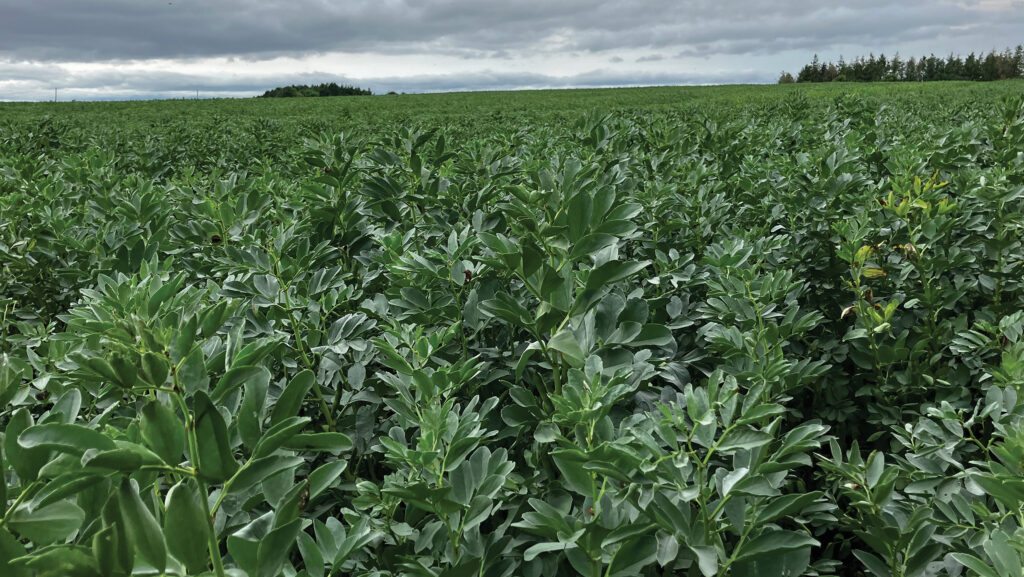
Deeper, earlier sowing with a modified one-pass drill saw beans average 6.8t/ha last harvest. In fact, three fields yielded more than 8t/ha, out of a total 160ha last harvest.
See also: How tech approach lifted ‘field of the future’ margins by 26%
“Based on a 6.5t/ha bean crop, we can achieve a gross margin of £1250/ha. That’s the equivalent of a 10t/ha winter wheat crop.
For every 1t/ha increase in bean yield, that’s another £250/ha greater gross margin,” says Will, who is optimistic for this year’s crop.
What’s more, including beans in the rotation is seeing a 1t/ha yield bonus in the following winter wheat crop at the farm near Berwick-upon-Tweed.
Bean establishment
“Beans hate compaction,” says Will. “They need a friable tilth beneath the bean for good establishment and deep rooting.”
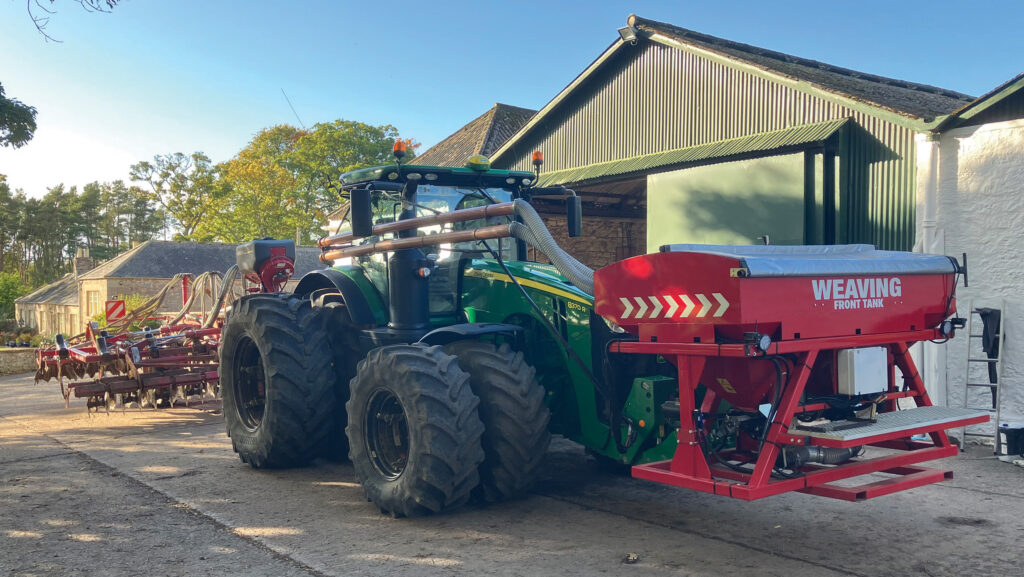
This led him to develop a one-pass establishment system by welding a narrow 25mm tine to a Horsch Terrano cultivator.
The machine strategically loosens a channel of soil to 28cm. A seeder unit places the bean at 14-18cm, which encourages deep rooting.
Meanwhile, the top 7-10cm of soil is gently cultivated with a set of tines to encourage lateral rooting.
Previously, beans were established using either a two-pass system with the Terrano followed by a subsoiler, or by broadcasting seed and ploughing.
“We could get depth with these methods, but we couldn’t achieve the consistency.
“The one-pass system has been a gamechanger over the past four years. It is also another way to fight compaction,” says Will.
© Will Dakin
Earlier drilling
The deeper drilling allows the crop to be established significantly earlier on the fam’s heavy clay soils.
Will now routinely drills around 21-22 September, whereas conventional agronomy advice often recommends drilling in mid-October.
“Normally you’d worry about having too much top growth exposed over winter and risks of frost, but the deeper drilling slows emergence and encourages deeper rooting, which helps balance that risk.
“The earlier drilling extends the growing season and captures more sunlight. It helps maximise pod fill during June,” he explains.
Seed rates are tailored according to drilling date and seed quality. The target is 30 established plants/sq m, increasing to 32-35 plants/sq m when drilling early.
Where farm-saved seed has lower germination, rates are lifted to about 40 plants/sq m. Row spacing has also been tightened from 50cm to 30cm to produce a more competitive canopy.
Pollination from 100 beehives pays off
One of the less conventional yield improvements – but nonetheless important – has come through encouraging pollinators into the crop.
By working with a local beekeeper, more than 100 hives have been positioned around the bean crops during flowering. Will estimates effective pollination can increase yields by 20-30%.
“It’s a great symbiotic relationship,” he says. “The bees benefit from the beans and we see much higher pollination.”
One season provided a valuable lesson. “A few years ago, we grew a 7ft-tall crop that looked fantastic, but it flowered so densely and grew so quickly that the pollinators couldn’t access the flowers properly.
“It actually turned out to be one of our poorer-yielding crops. It reinforced that it’s not just about producing biomass – good pollination is essential.”
Variety choice
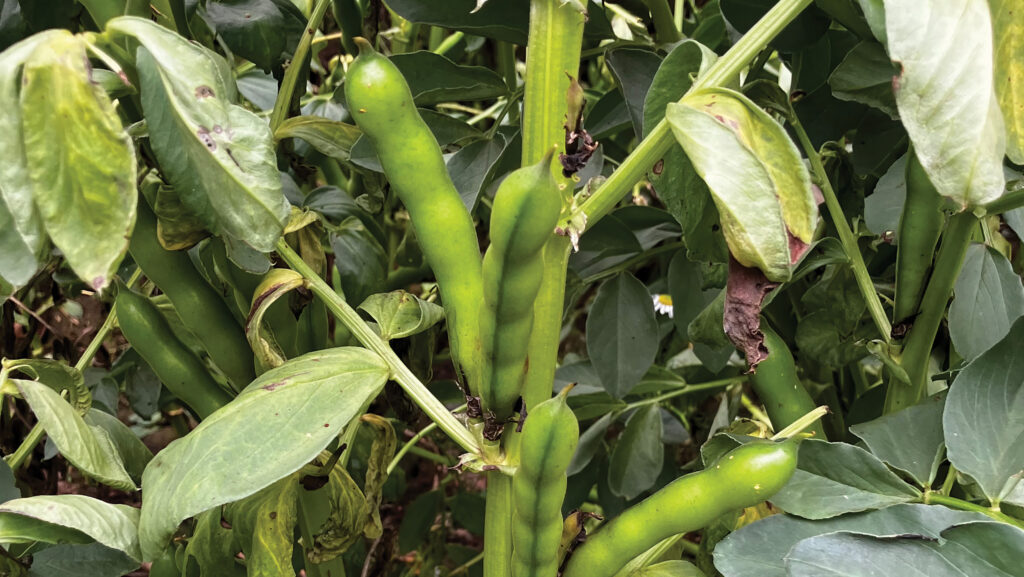
Last season Will grew the variety Tundra, which went on to win the YEN bean competition with an impressive yield of 8.15t/ha.
The YEN crop received a mix of bacterial inoculants and biostimulants, but results were not consistent.
“One of our farm’s standard fields – which didn’t receive extra biostimulants – yielded more than the YEN crop.
Long-term farming practices such as building organic matter contribute more to yield than a short-term product,” says Will.
Beans are destined for human consumption, which attracts a £20-60/t premium over feed markets.
“Quality and appearance are critical, so everything we do is geared towards producing a clean, marketable sample,” says Will.
This year he opted for variety Vespa for its improved standing ability and earlier maturity.
© MAG/Emma Gillbard
Crop protection
Protecting green leaf area is central to Will’s management strategy.
“Chocolate spot is the disease that can really limit yield, so our aim is to keep it out of the crop for as long as possible.”
The fungicide programme is built around triazoles and strobilurins, with a four-spray fungicide programme required to keep crops clean this year as chocolate spot pressure remained high this season.
“Keeping the crop green well into August allows it to continue pod fill. If you’ve got the yield potential, it’s 100% worth spending the money,” he says.
The establishment system has proved equally successful across the family’s other farming enterprise based in Shropshire, despite contrasting soil types and geography.
A further 120ha of winter beans destined for livestock feed are grown in Shropshire.
Bruchid beetle is not an issue in Northumberland. “We might fail to meet the premium one year in five.
In contrast, the farm in Shropshire will only make the premium one year in five,” explains Will.
© MAG/Emma Gillbard
Nutrition considerations
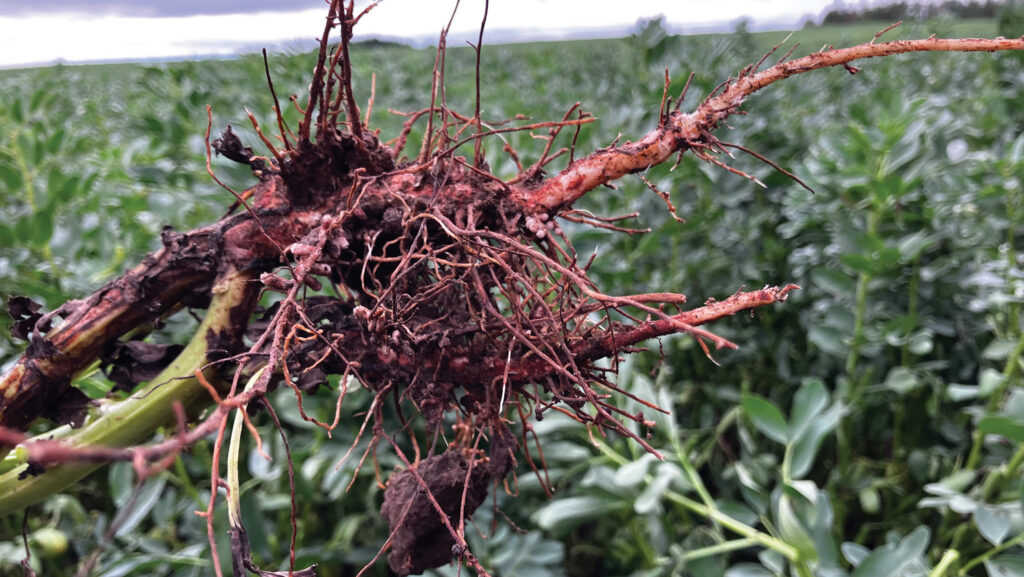
Routine tissue testing highlighted molybdenum – which plays an important function in nodulation as critically low.
Foliar molybdenum is now routinely included in the first fungicide spray.
Muriate of potash is applied routinely across the farm, and biosolids are incorporated into the rotation every three to four years.
An early application of polysulphate provides a dose of sulphur, which isn’t usually recommended for beans, but Will finds it makes a difference to crop performance.
© MAG/Emma Gillbard
Benefits beyond the bean crop
The benefits of beans continue into the following wheat crop, where winter wheat after beans delivers a 1t/ha yield advantage.
“We don’t reduce nitrogen, but winter beans are excellent soil conditioners.
“The soil structure and rooting benefits really show up in the following wheat. We averaged 11.8t/ha last harvest for winter wheat,” notes Will.
With average bean yields now approaching 7t/ha and gross margins matching or exceeding high-yielding wheat, Will believes winter beans deserve a much bigger place in modern rotations.
“People often underestimate what winter beans can achieve,” he says. “If you’ve got the potential to grow them well, they can be one of the most profitable crops on the farm.”
Minimising harvest losses
Harvest losses are kept to a minimum through careful combine setup. Last season the farm used a New Holland CR10.90 with a MacDon header, which Will says delivered exceptional performance in beans.
“Losses were virtually non-existent. It was probably the best bean harvesting setup we’ve ever had.”
The machine has since moved to the business’s Shropshire operation, with a new John Deere X9 joining the Northumberland fleet for harvest 2026.