Beet growers advised to focus on pests as rain arrives
 © Louise Impey
 Sugar beet growers are being advised to remain vigilant for pests and diseases after the first rainfall for several months, in a year when light land yields are expected to be as much as 25% down.
The prolonged hot, dry spell has seen stressed crops coming under continued attack from both beet moth and beet army worm, but the change in the weather means that the concern from now on is cercospora leaf spot, warns Dr Alistair Wright, head of crop protection at the British Beet Research Organisation (BBRO).
See also: Drought threatens sugar beet harvest prospects
“We know that there are cercospora spores present in crops and they will germinate on wet leaves, especially given the warm temperatures – moisture and temperature are needed together to drive the disease.
“Given the conditions, protecting the canopy with a second fungicide spray will be needed in many crops.”
He advises against treating yellow canopies, which are a common sight this year where crops have been affected by the drought.
“The fungicide needs to go onto green leaves as they expand and grow.”
Not surprisingly disease pressure has been low this season, he continues. “Powdery mildew has been present, but otherwise it’s been all about pests. Crops have been under attack for a while.”
Pest pressure
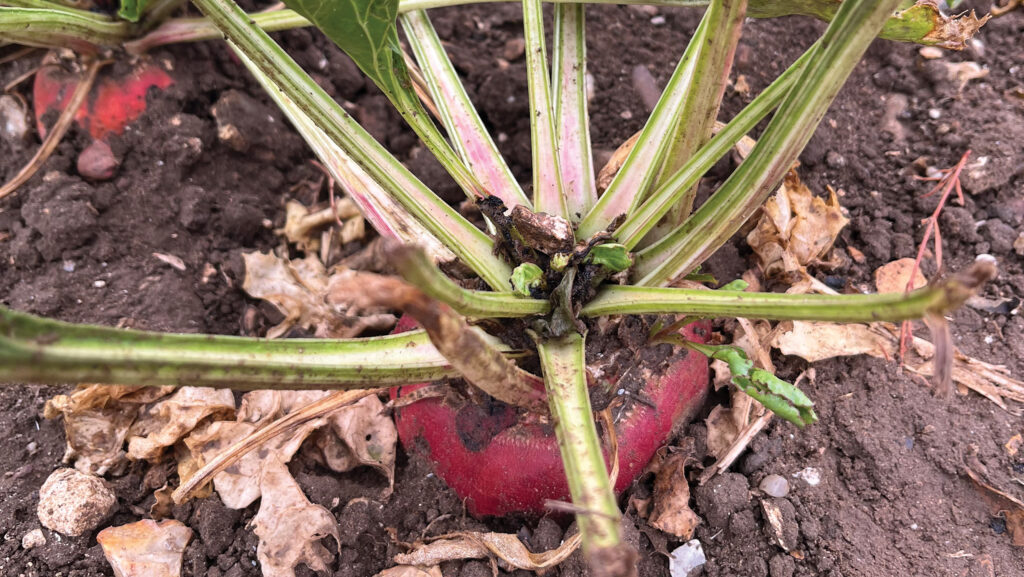
Beet moth has been found in many fields this year, some of which have every sugar beet plant infected, reports Alistair.
“In such a challenging year, it means that any newly forming leaves are very stressed. These crops may have to be lifted early.”
Helped by the warm dry weather, the moths have continued to arrive and lay eggs over several months, with caterpillars from overlapping generations causing both leaf and crown damage.
The emergency authorisation for the use of Coragen (chlorantraniliprole) for beet moth control is in place until 30 September, he notes.
“But there’s no point spraying now as you need to target egg hatch – the rain will help by washing the eggs away and bringing some turgidity back to canopies.
“In addition, moth activity will slow down now as temperatures drop.”
BBRO work has shown an 80% reduction in larval numbers from a well-timed application with Coragen. “We’re looking at other insecticides too – there is another diamide product which looks promising and comes at a better price point.”
Diamides are better for beneficials than pyrethroids, he confirms. “We also saw very little efficacy on beet moth from Hallmark (lambda-cyhalothrin).”
Beet army worm has also been found at some sugar beet sites, having moved from the western side of the country from fodder beet crops.
A migratory moth from southern Europe, the resulting caterpillars are voracious feeders and can defoliate crops.
“The advice is to get crops harvested where damage is very bad – that may mean lifting them ahead of factory opening.”
The pest doesn’t tolerate cold and will die off over the winter, although the BBRO does plan to trap for them next year, reveals Alistair.
“Unlike beet moth which gets into the crown, the caterpillars stay on the leaves. So they’re easier to control and pyrethroids do work.”
Drought tolerance
Work being done by BBRO with drought tolerance genetics show that current recommended beet varieties are still higher performing than new material, even accounting for a 20% yield loss caused by a hot, dry summer.
Dr Georgina Barratt says that they are continuing to assess new lines and look at their ability to add resilience but doesn’t expect them to replace current choices any time soon.
“We have some very good varieties which perform very well across sites, so even when they are impacted by a lack of moisture, they still perform better than the drought tolerant types we’ve tested.”