Cereals 2026: Wheat options with better yellow rust resistance
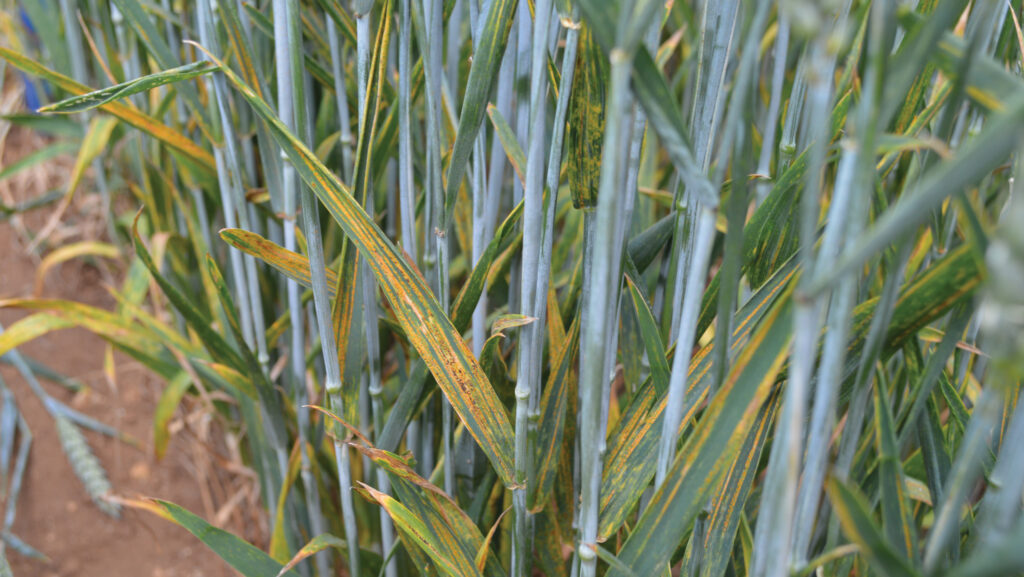 Yellow rust on winter wheat © David Jones
 More seed of winter wheat feed varieties with good resistance to yellow rust will be available this autumn after the resistance of many popular wheat varieties fell sharply last year.
Limited amounts of seed of new feed wheat varieties such as Challenger, Defiance and Sparkler with improved yellow rust resistance will be available, although not enough to drill the whole feed wheat area.
Clare Leaman, cereal varieties specialist at consultant Niab, advised growers to try and limit the area drilled to very susceptible varieties, and look for alternative varieties to spread the risk from the disease.
See also: Yellow rust resistance blamed on dominant wheat varieties
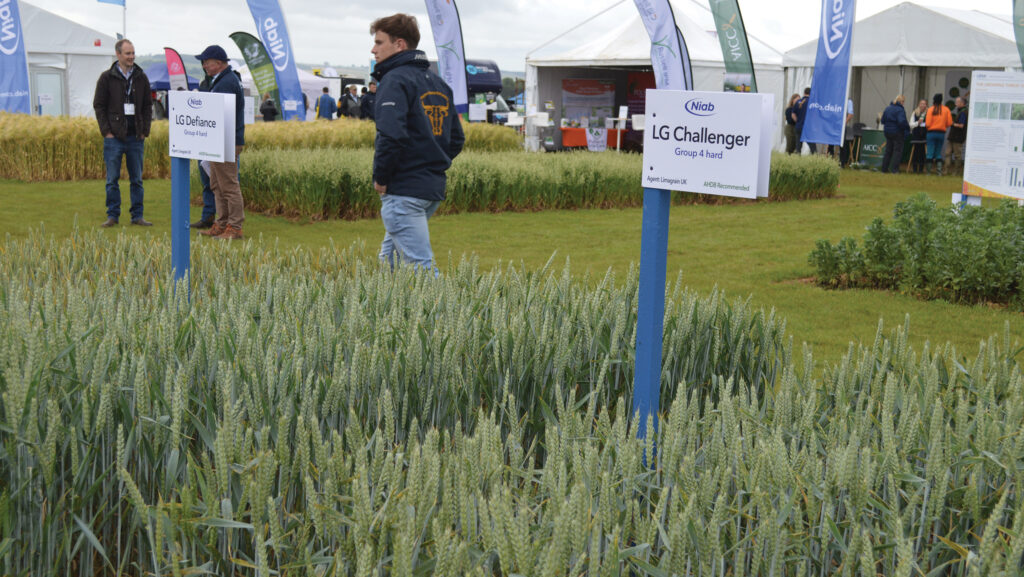
Defiance and Challenger winter wheat varieties © David Jones
“Defiance and Challenger are obvious choices, and Sparkler is a good soft feed wheat, but will have to compete with Bamford,” she said at the Cereals event, held in the Cotswolds, Oxfordshire.
She suggested trying to limit the area of yellow rust susceptible Group 4 feed varieties like Beowulf.
Growers might also consider Group 2 Arnie or Group 3 Bamford, as well as older varieties such as feed wheat Graham.
“Yellow rust is easy to control, but once it gets away it can be difficult to control, so growers should try to reduce the area of Yr15 varieties if they can,” she added.
In early 2025, a mutation of an existing yellow rust race overcame the widely used Yr15 yellow rust resistance gene, which resulted in the resistance rating of top feed varieties such as Champion, Beowulf, Dawsum, Typhoon and Scope falling dramatically.
For autumn 2025 drilling, there was a limited choice of varieties with sufficient seed available without the Yr15 gene.
But the situation is set improve this autumn led by Limagrain’s hard feed wheats Challenger and Defiance, and Elsoms’ soft feed wheat Sparkler.
It is likely to improve further for autumn 2027 drilling with several new varieties with potentially good yellow rust resistance coming up for inclusion in the AHDB Recommended List (RL) later this year.
These include feed varieties such as Checkmate, Bastion and Kraken.
Mix new and old
Frontier’s national technical manager for seeds, Kirsty Richards, advised growers to mix the new genetics with older varieties as these still have a lot to offer.
“Growers should be thinking about the mix, and not throw out the older varieties because of yellow rust,” she said.
Kirsty suggested growers might pair up varieties and grow Scope as an early driller, with a stiff straw and good septoria resistance but poor yellow rust resistance, alongside Defiance as a later driller, with its good yellow rust resistance and good performance.
Champion, with its good septoria resistance but poor yellow rust resistance, might still be a good choice for growers in the wetter West where septoria is a bigger problem than yellow rust.
There is set to be enough seed of Defiance to account for 8-9% of the certified wheat seed area, 2-3% for Challenger and 4-5% for soft feed wheat Sparkler.
And some may opt for older varieties with good yellow rust resistance such as Graham.
All three new varieties entered the AHDB Recommended List in December 2025. Defiance showed a yield of 109% and Challenger 107%, just behind top yielder but yellow-rust susceptible Aintree on 110%.
Sparkler was the top yielding soft feed wheat at 106% equal with Redwald.
Defiance has an 8 rating for yellow rust resistant in a 1-9 scale, where 9 shows good resistance and 1 is very susceptible, while Challenger and Sparkler score 7s, and older varieties such as Graham and soft milling feed wheats Hexton and Zealum score 8s.
Toby Reich, head of agriculture of Elsoms, said there is enough seed for Sparkler to gain 4-5% of the market, and expects that to increase the following season with particular appeal to growers in the North and West.
“It’s the highest yielding of the soft milling feed wheats, and has done particularly well north of Lincolnshire, while it has Graham and Skyscraper in its parentage,” he said.
It is likely to appeal to northern growers looking for a soft feed wheat to supply the distillers.
It could do well in the wetter West, with the second highest septoria resistance score on the RL of 7.2, only behind Mayflower on 8.5.
Limagrain’s Challenger had attracted interest due its wide drilling window, good performance across many soil types and regions.
It performs well as a second wheat and also has a high specific weight.
Defiance suits a later drilling slot from the last week of September onwards.
It has only a moderate score of 5 for resistance to lodging using a plant growth regulator, so straw strength may be a concern.