What can growers learn from 2011?
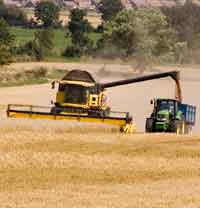
No arable farmer needs reminding of the many challenges faced in 2010 with the long, cold winter, a dry start to the summer with drought affecting many crops and the catchy cereal harvest. This was followed by slow, wet start to the potato and sugar beet lifting campaigns.
But on the positive side, wheat prices rose and the malting barley situation has improved. So what are the prospects for crops in the ground and what are the indicators telling us on what to expect in 2011?
Wheat
A year ago few could have predicted the devastating weather and soaring futures markets that we have witnessed this harvest. In a matter of weeks wheat prices jumped by £10/t, then again, and again, as yields across Russia were decimated by drought.
Yields across Europe were also affected, and in the five months to November, British wheat prices gained £70/t – a rise of almost 75%.
Sadly, few farmers actually benefited from the increase in price, as many sold forward at values well below the £160/t achievable in November. With yields and quality affected by rain during August, they were hit doubly hard, said Sebastian Graff-Baker, partner at farm business consultant Andersons.
“Many of the businesses who made sales early committed between two-thirds and three-quarters (depending on final yield) of their 2010 harvest at a price equivalent to feed wheat of £90 to £110/t.” Feed wheat production costs, including rent, finance and all labour, averaged about £100-140/t.
“Yield losses could increase wheat production costs by £15-20/t. What price the sector can achieve for the unsold tonnage will determine the contribution of the combinable crop enterprise to business profitability.”
Uncertain financial markets meant fund traders had piled into commodity futures, compounding the volatility of prices this year. But the strength of current values, and lower global grain stocks, had also boosted prices for 2011 and 2012, within a range of £130-140/t for November.
Having a forecast budget and cost of production was essential to reduce risk in such volatile times. “Quite simply, if a grower does not have a target price, how can he know when to sell,” said Mr Graff-Baker. “It may be prudent to take the opportunity to market a percentage of 2011 grain at a price significantly above the predicted costs of production.”
Some producers had slashed wheat production costs to £100-110/t over the past two to three years, by reorganising their operations, he added. “This level of efficiency is essential if there is to be any significant contribution to the overall business profit.” Better selection of crops, and reducing costs by either contracting work in, or out, could make a dramatic difference.
Although poor global wheat production this year would erode stocks, they were not as low as in 2007, when the last price spike was triggered.
“Experience from 2008 also shows that high prices can trigger a big increase in production the following year. This might point to downwards pressure on prices for harvest 2011.” However, the better prices currently available, alongside options to reduce costs, pointed to an encouraging future for the sector, he said.
Oilseed rape and pulses
Oilseed rape also looked increasingly profitable, with a steady improvement in average yield over recent years due to better varieties and crop management, said Richard Means, partner at Strutt & Parker.
“Strutt & Parker average yields for 2010 stood at 3.74t/ha, against a five-year average of 3.39t/ha. This, coupled with a significant price increase, makes the crop look very attractive.” Linseed could also prove profitable, with contracts available based on oilseed rape prices plus 20%. “That would give you a harvest price in the region of £400/t.”
But a place in the rotation for pulses was coming under intense scrutiny after many crops suffered desperately in the past two years’ dry growing conditions. “Blackgrass problems aside, it is hard to argue against a wheat, wheat, rape rotation at this moment in time, unless pulse contracts and prices catch up.”
Greater research was essential if protein crops were to compete against imported soya, warned Guy Gagen at the NFU. “We need much better varieties that behave more reliably and yield better.”
Estimated gross margins, based on the Farmers Weekly/Savills’ Virtual Farm Model | ||||
First winter wheat | Second winter wheat | Winter oilseed rape | Spring beans | |
2010 | £874/ha | £683/ha | £777/ha | £613/ha |
2011 | £795/ha | £599/ha | £819/ha | £530/ha |
Potatoes
Potato growers have had a mixed year, with the drought in the spring giving the prospect of a real shortage. However, rain in August and September aided bulking and yields were estimated at 3.6% below last year. With a reduced planted area, the Potato Council put the total crop at 5.8m tonnes – 6.1% down, year-on-year.
Harvest supplies and customer pressure dampened the initial price response, but by November exports were soaring and producers were growing in confidence, with average prices some £50/t above the same time last year. “The best material will provide significant reward for those well-managed businesses with high quality samples in store,” said Andersons’ Jay Wootton.
“With more return now available from processing than for some time, the packing sector has to think carefully about the sustainability of some offers of price for 2011. Growing potatoes for the packing market is a high risk and capital intensive business. It presently looks a poor relation compared with current commodity pricing and the market outlook.”
Further consolidation was likely within the sector, said Laura Drew, horticulture adviser at the NFU. “I see the bigger growers getting bigger, with those who have good storage facilities likely to be in the strongest position.”
Growers with little irrigation had suffered particularly badly with the drought, added Savills’ Andrew Wraith. “Those farms who don’t have the infrastructure may be questioning the higher risk crops.”
Sugar beet
Sugar beet yields were also affected by the drought this year, with yields back to a five-year average following two of the best years on record in 2008 and 2009. With a beet price of £26/t, growers with yields of 28t/ac would achieve an estimated gross margin above that of wheat or oilseed rape, says Mr Means. But next year, with a price of £23.60/t, the gross margin was likely to fall well below wheat and rapeseed.
Associated costs like track repairs, damage to soil structure and reduced cereal yields also had to be considered, and this year’s sale of Contract Tonnage Entitlement (CTE) concentrated the minds of many growers. “Cereal price increases made increasing beet area look less attractive for some growers,” said Mr Wootton.
The long-term success of the new pricing formula for 2011 also remained to be seen, and further restructuring was likely. “Professional growers will expect that the return available will improve, and some poorer performers will need to rethink their farm policy.”

Staying sharp shouldn't be a chore