

Why one farmer grows 6m flower margins around every arable field
 © Louis Phipps
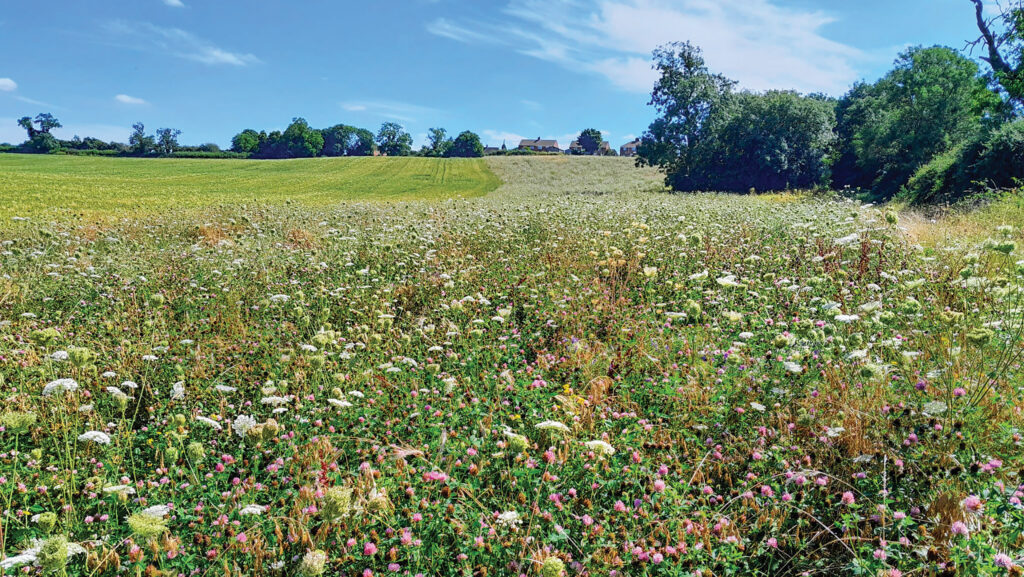
Six-metre floral margins surround every arable field on Louis Phipps’ Northamptonshire farm to improve wildlife connectivity and enable better winter management of hedges.
The farm is on relatively heavy ground so the window to trim hedges is narrow. Planting the floral margins has improved access to the fields later in the winter, allowing a longer period of time for birds to eat the berries before hedge trimming, explains Louis.
See also: Why pollinators are key to Scottish grower’s 6t/ha bean yield
“We also wanted to connect stewardship areas throughout the farm, so that you have pollinators and beneficial invertebrates closer to where we’re actually growing crops, rather than just tucked away in field corners.”
The floral margins have now been in place since 2021 on the family farm. When choosing the seed mix, Louis’ greatest consideration was selecting species he knew the farm grew well.
“We’re on quite on heavy clay loam ground, so we don’t get a massive diversity of flowers that will grow. Red clover and birdsfoot trefoil grow well, while knapweed grows anywhere and has a long flowering season,” he says.
Sainfoin was included in some margins but Louis notes it can be quite sporadic depending on conditions.
“We’ve put wild carrot and oxeye daisy in the grass-flower margins, and in our mixed bird and pollinator plots we always include phacelia, as well as teasel and fennel in our plots aimed at grey partridges.”
Establishing the flowers
Seed-bed preparation is particularly important for wildflower species because wildflower seeds are very fine and cannot germinate if buried.
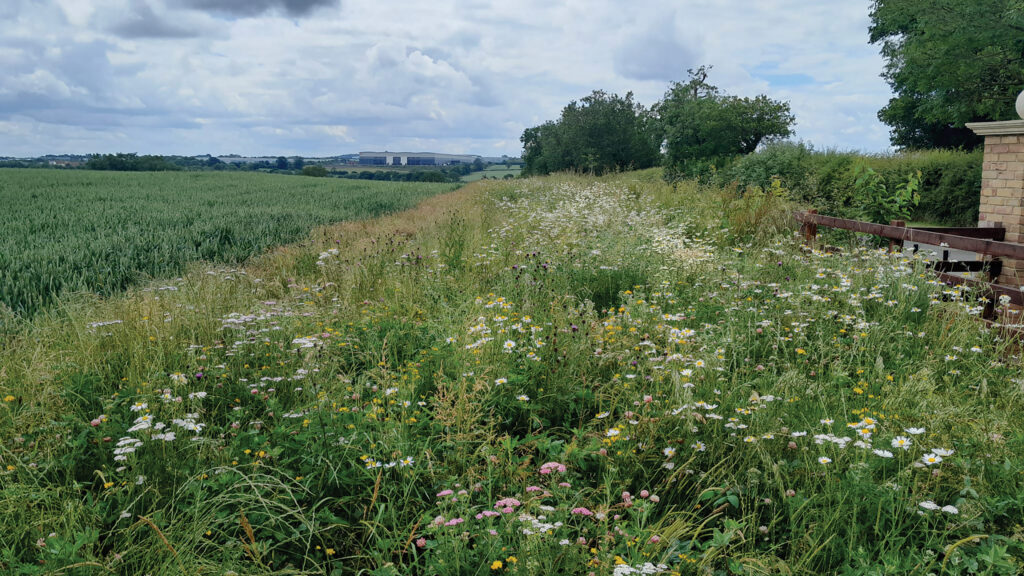
Autumn or spring establishment into warm, moist conditions is recommended. All of Louis’ margins went in after cereal crops in the autumn.
© Louis Phipps
“The fields were either cultivated and/or power harrowed and the seed broadcast with our grass harrows and air seeder and then rolled a couple of times.
“Rolling is really important to keep the moisture in and get good seed to soil contact.”
Wildflowers are also best planted in nutrient-poor soil, to give them a competitive advantage over weeds and grass.
According to the AHDB, one method to reduce fertility is to sow a quick-growing, non-leguminous green manure crop, such as phacelia or buckwheat, then mow it and clear the cuttings. Soil fertility should reduce with each “sow and mow” cycle.
Topping margins
During the first year, floral margins require close management to allow target species to dominate over annual weeds. For Louis this meant topping six to seven times in the following spring and summer.
It is recommended to mow the sward to about 10cm and remove cuttings to keep soil fertility low. However, “blanket mowing” should be avoided for flowers that are being used by beneficial insects.
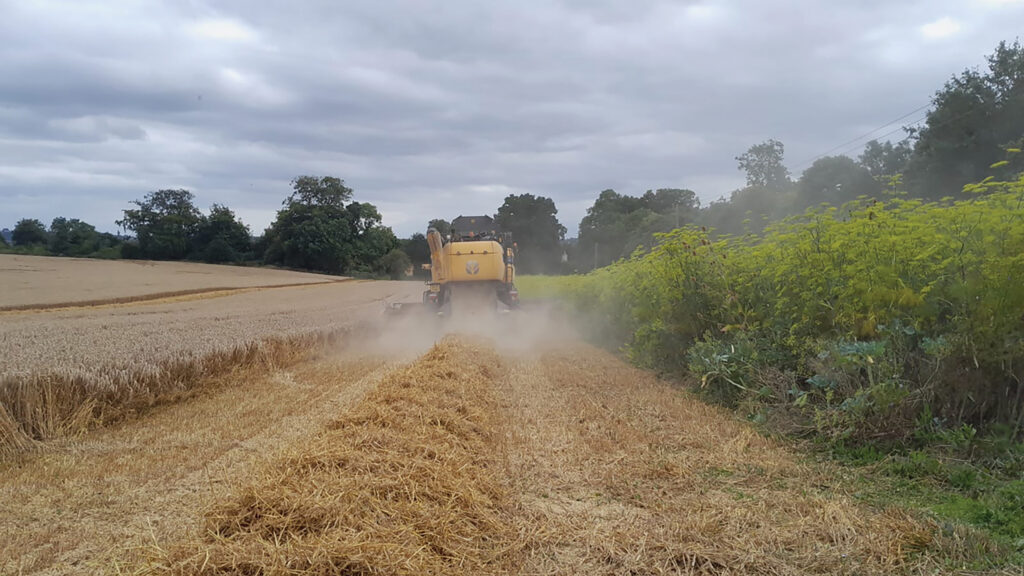
“From August onwards, we cut and bale a portion of the margins, usually the 3m closest to the crop, as winter feed for the farm’s suckler herd.”
© Louis Phipps
Last year, the margins produced 200 bales. “They are not unproductive by any stretch.” Baling is also important for reducing that nutrient return to maintain a diversity of grass and flower species in those margins.
While Louis has not done any formal analyses on beneficial insect numbers, ad hoc monitoring has seen a vast increase in biodiversity, he says.
“We still get aphids, but we also have thousands of beneficials evident in the crop. We haven’t used insecticides for four years, without any repercussions.
“We’ve maintained good yields and haven’t seen any insect-borne diseases. We do select resistant or tolerant varieties such as Feeris and Kestrel, so we are really going down the route of integrated pest management rather than insecticides.”
Subsidy and funding
Louis’ floral margins were funded through either mid-tier Countryside Stewardship and Severn Trent’s STEPS scheme.
Under the Sustainable Farming Incentive, eligible growers can receive £798/ha a year for the use of floral margins under the CIPM2: Flower-rich grass margins, blocks or in-field strips action.
“You need that to justify establishing those mixes given the price of seed and with the amount of topping in the first year – our topping costs were £50/hour which would be much higher now with the price of diesel,” says Louis.
“It is worth it once they are established, but if you’re only in a three-year SFI agreement, you’re not going to be keeping much of that money.
“It has transformed our farm in terms of connectivity but also the enjoyment of walking around the farm. It means things like the management of hedges, fencing and everything else is easier. It just makes sense for us, even if we are making fields that bit smaller.”

Farm advice and AI survey

Staying sharp shouldn't be a chore
Explore more / Transition
Follow the experiences of our 16 Transition Farmers and access in-depth supplements, expert webinars, live events and practical content covering the challenges and opportunities facing farm businesses.
Transition is an independent editorial initiative supported by our UK-wide network of partners.
Explore the Transition hub for the latest insights, resources and events.
