

Advertiser content
How Claydon is helping farmers cope with a changing climate
Wider working window
In recent years we have seen bad weather stay bad for a prolonged period. Regions have experienced record precipitation in autumn and winter with seemingly no let-up in torrential rain.
For farmers practising conventional tillage, this could mean that when ploughing and cultivating operations are complete, the weather window may already have closed for operations due to ground conditions deteriorating rendering the seeding operation inoperable.
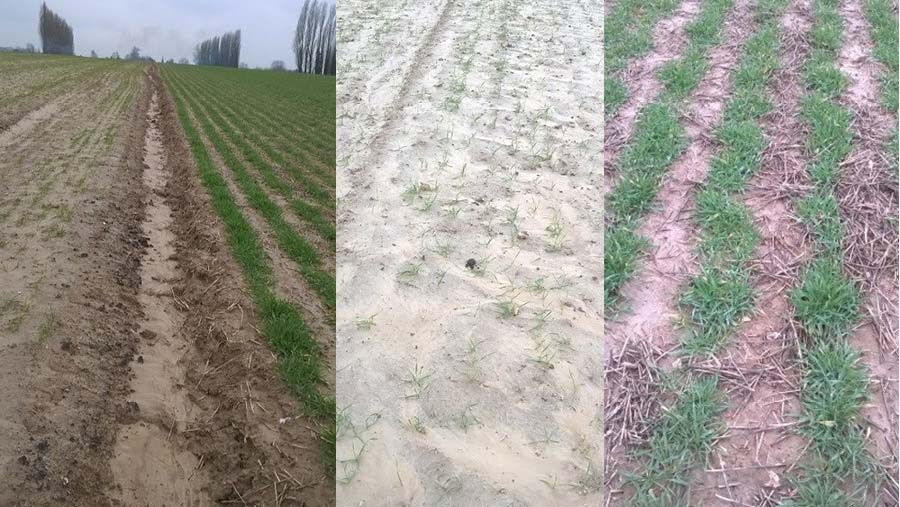
The difference in establishment in a wet season: photo 1) conventional on left, Claydon on right photo 2) conventional close up 3) Claydon close up © Claydon Drills
Without the need for prior cultivations, Claydon direct strip seeding offers a much wider working window to get seed in the ground; it provides a better option to drill when conditions are more favourable resulting in reliable germination and encouraging the crop to grow away quickly.
The environment also benefits in times of torrential rain; by not having large areas of cultivated soil exposed the risk of soil erosion and ponding is reduced.
Drilling in tough conditions
Drought and low rainfall can lead to hard, baked out soils and making a seedbed in a conventional system can be a slow process and tough on machinery.
Fuel and wearing parts bills can be high and establishment can be patchy due to poor soil to seed contact and dehydrated soils.
Direct disc drills may also struggle to penetrate hard soils.
The tungsten carbide protected leading tine on the Claydon drill penetrates hard soils and loosens and aerates the soil in the seeded rows. It places the seed beneath a mulch of crop residues and, by not inverting soil or disturbing its profile, it maximises the opportunity of drilling into moisture, giving the seed the best possible start.
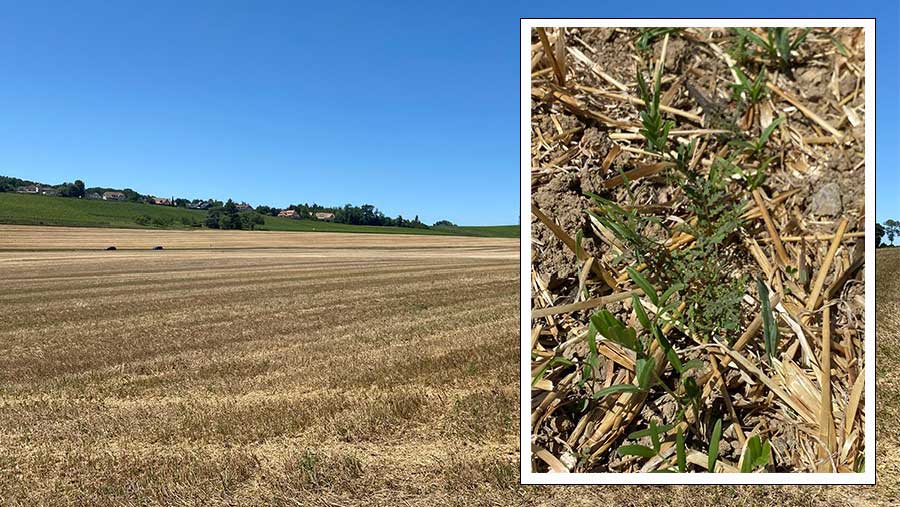
Field Claydon-drilled with cover crops in Switzerland in hot, dry, hard conditions July 2022 with emergence a few days later. © Claydon Drills
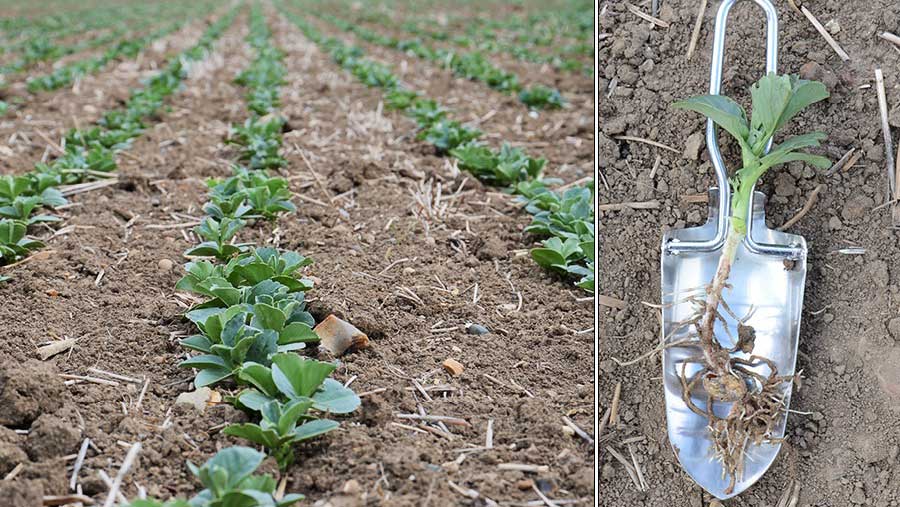
Claydon-drilled spring beans in Kent developed strong, healthy roots and tapped into moisture in the undisturbed soil in a dry spring. The Claydon front and seeding tine pull up moisture to the seeding zone to aid germination. © Claydon Drills
In wetter conditions, conventional and min-till systems can damage soil structure and cause smearing, leading to poor establishment.
Zero-till disc drilling can also smear and lead to straw hairpinning.
The Claydon tines create drainage in the seeded rows. Wheels run on undisturbed soil minimising compaction.
A Lincolnshire farmer has recently returned to Claydon direct strip seeding after 2019’s wet autumn in which he was unable to establish any crops with his no-till disc drill. Having previously been a Claydon customer, he bought another drill in 2021, preferring the leading tine which encourages water to drain away
“It provides much greater tolerance over a wider range of conditions . . . Half of our wheat follows maize and the Claydon Hybrid is ideal in that situation because it provides more flexibility and is an insurance policy against variable weather.”
Another grower from Lincolnshire has also returned to Claydon after traditional no-till as he finds the leading tine necessary to relieve headland compaction in wet weather caused by heavy machinery.
“I missed the tine concept and experience had shown yields from the Claydon Opti-Till® System were significantly higher, so in 2020 I bought a new 6m Claydon Hybrid”.
Versatility and reliability
The standard leading tine and A share set up on the Claydon drill is recommended for most drilling situations, although the comprehensive range of seeding share, fertiliser, consolidation and tine and disc options available make it a most versatile drill with the ability to establish crops in a wide range of soil types, conditions, climates and weathers.
To find out how Claydon Opti-Till® can help you address problems with establishment in a changing climate contact your nearest Claydon dealer or visit claydondrill.com
Provided by
Establishing a better way