How simple steps can protect and save farm lives and others
 © Alamy Stock Photo
 Knowing what to do in the face of a serious injury helps prevent many deaths from trauma before a casualty reaches hospital.
The repercussions of an injury at any level above minor can ripple out widely, affecting not only the injured, but also the wider workforce and the business.
Lone working risks and the fact that emergency services can take a long time to reach many farm locations make it all the more important that those on the spot know what to do when there is an incident or an emergency.
See also: Health and safety policy – what farmers need to include
Serious injury training
Ryan McCormack is Farmers Weekly’s farm manager of the year 2025, managing Dennington Hall Farms near Woodbridge in Suffolk.
This covers 1,600ha, of which 1,200ha is regenerative arable, while meat from the farm’s Red Poll cattle is sold to butchers, restaurants and direct to consumers.
Safety training has been stepped up on several fronts for Ryan’s team of assistant manager, two full-time operators and two part-time work experience students.
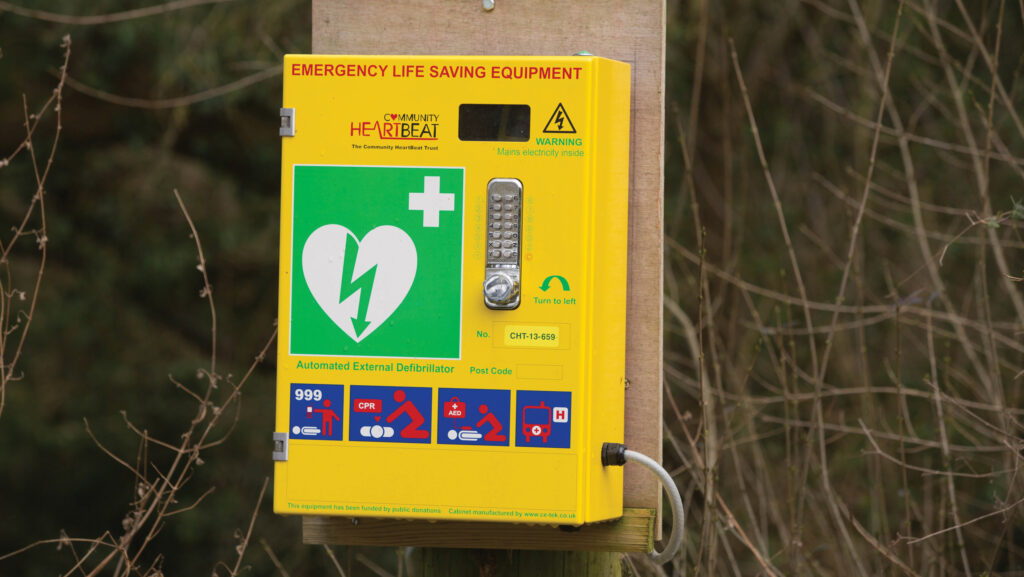
“In the past year we purchased a defibrillator for the farm and the entire team completed CPR/BLS (cardiopulmonary resuscitation/basic life support) training and automated external defibrillator level two training.
© Tim Scrivener
“All team members have also undertaken the farm lone worker serious injury course. All now know how to deal with a serious injury on themselves and how to resuscitate and use the defibrillator on others.”
This cost £300 for a half day’s training for the whole team, through DAC Education, which also supplied the defibrillator at £1,065.
A timesheet app lets Ryan check on his phone who is still at work and who has gone home for the evening. “This means I can check that any staff members working late have gone home safely.”
First-aid instructor Dave Coyle, who is managing director of DAC Education, reminds employers that The Health and Safety (First-Aid) Regulations 1981 require employers to provide employees with the right kit and training for the risks they face.
This led him to devise his firm’s lone worker training, alongside many others.
The regulations apply to all workplaces, including those with fewer than five employees, and to the self-employed who are required to ensure they have adequate and appropriate equipment to provide first aid to themselves while at work, and to assess the hazards and risks in their workplace.
Hi vis lowers risk
On the Faccombe Estate in Hampshire, manager Al Brooks, is also the independent judge for the FW 2026 Awards Farm Manager category.
He has a strict policy of yellow hi-vis being worn at all levels when at work, provided by the business.
“It’s part of the deal – if you’re walking across the yard, you wear hi-vis. The onus is on the employer to provide personal protective equipment (PPE), so make it part of the uniform.”
The farm also has a policy of no denim at work – if it gets wet, it quickly gets tight.
© Tim Scrivener
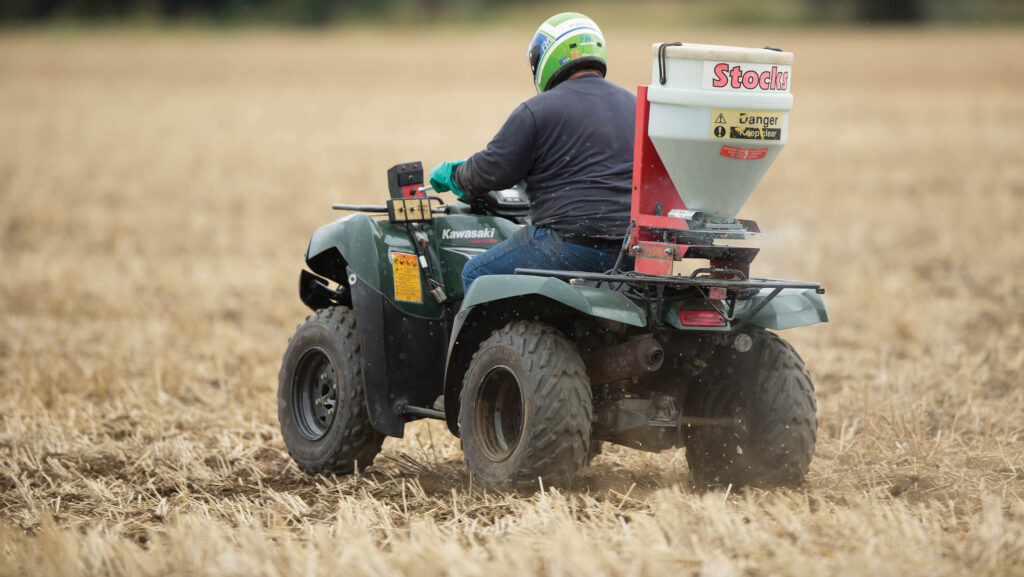
Helmets on quads are obligatory and each employee can be provided with their own helmet. Hearing protection is freely available and the business also provides sunscreen, safety sunglasses and gloves.
Tool-box talks on health and safety are held twice a year, and casual conversations can be had which “happen” to have a safety angle, suggests Al.
He also organises more than basic first aid training.
“First aid training that is not the normal course, but rather one that deals with chainsaw wounds, gunshot wounds and stab wounds and so on is graphic and more relevant,” he says, as is getting someone in front of staff that is missing a limb due to a farm machinery accident.
It’s about simple rules to reduce risk, says Al, for example, never drive forward into a space if it can be avoided – following this reduces the risk of accidents when reversing out.
Further examples include always propping machinery appropriately while attaching or working on it. When using kit where there is the risk of flying stones, such as a topper, always lower the tractor’s rear window.
Managing mobile phones in the workplace
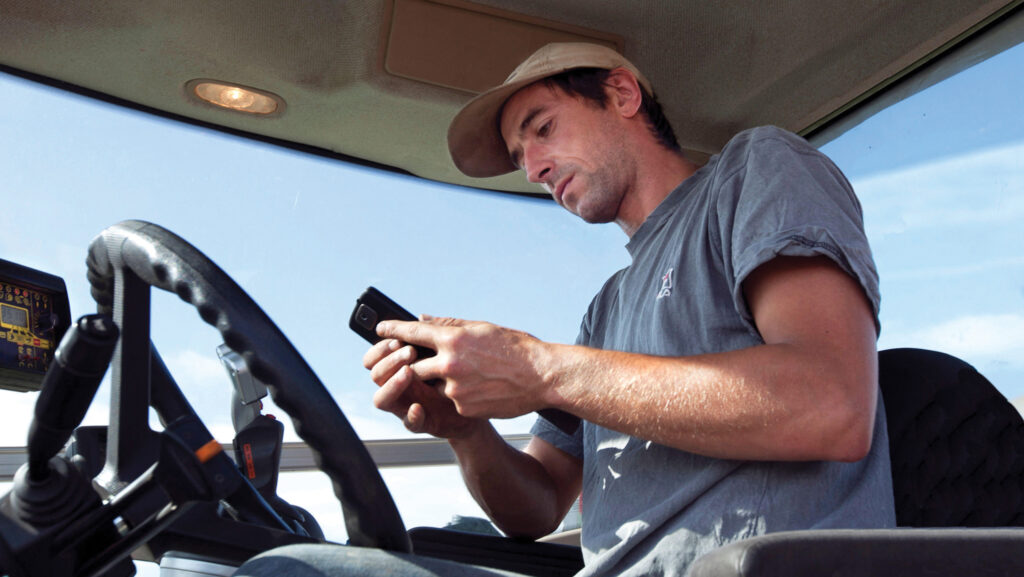
The past 10 years have seen several people jailed for 10 years or longer, having caused deaths by mobile phone use while driving.
Using phones on the move is a risk to the user and to others, and is a growing problem, says Oliver Dale, managing director of farm safety specialist Safety Revolution.
“Increasingly I see phones being used on the move and, unfortunately, it’s the proverbial accident waiting to happen,” says Oliver. “You look up at a tractor stopped at traffic lights and the driver is using their phone.”
He advises imposing strict conditions on how and when mobile phones may be used at work and banning the use of personal phones while at work, instead issuing work mobiles.
This does not mean family and other personal contacts cannot be contacted while at work, but the parameters on phone use must be clear, he says.
“It’s about managing down mobile phone use, always leading to prevention.
“People [employers] may baulk at the cost of providing mobile, but I think it’s a very sound investment. Cost can be moderated because a work phone doesn’t have to be the latest model, it doesn’t have to have top level functionality.
“It should also be part of the policy that ‘in case of emergency’ contacts such as managers and family should be in that phone, as well as emergency procedures to be followed.”
The farm accident stats are still stacked against older and younger people, points out Oliver, and in the case of younger people in particular, the use of phones and especially social media is a growing problem for individuals and businesses.
Battery basics
Problems associated with battery charging are on the rise, and a bit of thought on a few basics can help avoid both injury and damage, advises Rob Gazely, a partner at adviser Ceres Rural.
Rob has seen a rise in incidents resulting in fires, explosions, acid burns and toxic gas exposure associated with battery charging, mainly of car and industrial-type batteries.
Most of these can be prevented by following some basic pointers, starting with the charging environment, which too often is an inappropriate place, such as on a bench in proximity to tools such as pillar drills, grinders or gas canisters.
“Choose the right place to charge,” says Rob. “This needs to be a dedicated, well-ventilated area, free of any other combustibles.”
His advice includes:
- Consider fire and explosion risks and ensure no naked flames, ignition sources or hot works are anywhere near the battery
- Good ventilation is essential, as lead acid batteries can give off hydrogen gas when being charged
- Prevent overheating by not over-charging – disconnect batteries when fully charged and ideally don’t leave charging batteries unattended overnight, unless the battery is specifically designed for this
- If batteries get hot while charging, disconnect and isolate them immediately
- Never charge damaged or incompatible batteries
- Ensure personal protective equipment is used when charging or handling large batteries – eye protection and gloves should be worn due to the risk of contamination or battery acid leaks
- Wash hands after handling batteries as this gets rid of electrolyte residues – these appear as a white, powdery substance, which is hazardous and highly corrosive
- For best practice, include battery charging in the farm’s fire risk assessment and keep a battery charging checklist for staff on the wall in a suitable location
- Route cables appropriately – if charging on a surface, route cables up from the back of the surface rather than in front of it. If cables have to trail on the floor, use cable protectors to help prevent trips and damage to the cables.