How to maximise permitted development rights on farm
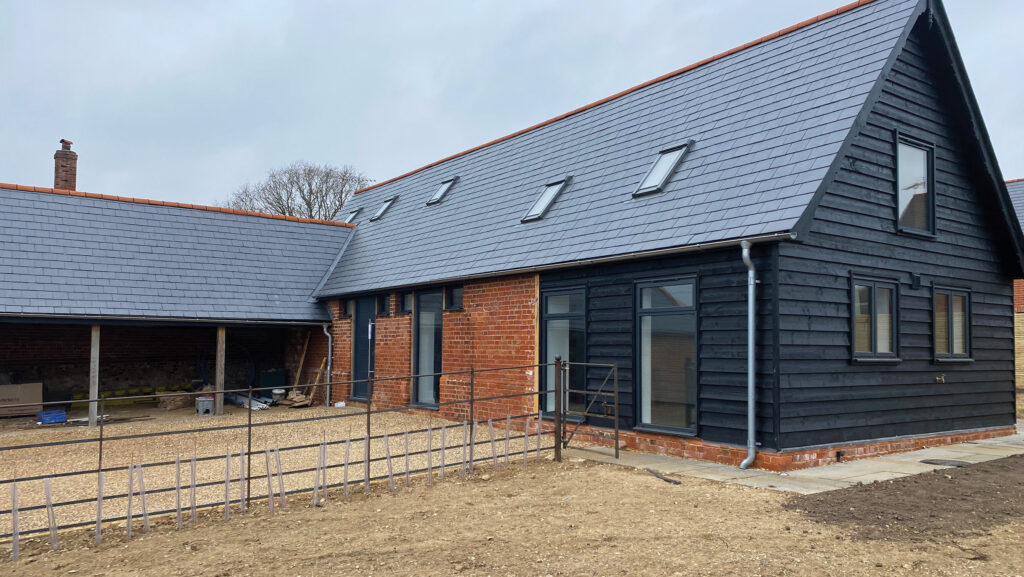 A three-home Class Q barn conversion for a client of Foxes Rural © Foxes Rural
 Class Q permitted development rights, which were introduced in April 2014, were designed to increase the supply of rural housing by allowing redundant agricultural buildings to be converted into homes without full planning permission.
Originally known as Class MB, the legislation was renamed Class Q in 2015 and has become one of the most significant planning tools available to rural landowners.
However, the rules around the permitted development rights (PDRs) have evolved, with some of the most significant changes coming into effect last year when the overall floor area that could be included in an application rose from 865sq m to 1,000sq m.
See also: Planning conditions: what they are and why they matter
At the same time, the total number of dwellings that could be included in a Class Q project was increased from five to 10. However, the maximum size of each dwelling was also cut significantly to just 150sq m, down from 465sq m.
Although Class Q requirements can be quite restrictive compared with a full planning application – you are not allowed to demolish a structurally unstable building and rebuild it, for example – they have certain advantages.
Lower barrier
“There is a far lower barrier to achieving planning permission,” says Guy French of planning consultancy Foxes Rural.
“Unlike a full planning application, where local councils subjectively interpret national planning policy, Class Q is a national PDR, so every council in England is working to the same set of rules.”
That said, achieving Class Q success is not guaranteed, generally due to basic mistakes during the application process, says Guy.
“Often, we are picking up the pieces for people who have already made an application.”
Common issues include trying to gain consent for a building that is not structurally sound. If the roof of a building has, for example, collapsed, it is important to repair it first, he advises.
“There’s a perception that traditional barns are best for Class Q, but it can be easier to prove that buildings with lots of steel in them, like Dutch or portal-framed barns, are structurally sound,” he adds.
Care with building use
It can also be a problem if the last use of a building isn’t considered agricultural, Guy points out.
“If you’ve been parking your jet ski in there, you’ve nullified the agricultural use, so you’ve got to have evidence of it being agricultural.”
Plans drawn up by architects who don’t really understand the limits of Class Q legislation can also be an issue, as can buildings not considered habitable due to lack of natural light or an extremely noisy location, he adds.
Class Q – the right option?
Farmers also need to think hard about whether using Class Q to convert redundant farm buildings into residential dwellings is the right move in the first place, warns Guy.
“Before 2015, we had no mechanism, other than an agriculturally tied dwelling, to be able to get somebody like a stockman living on a farm, so Class Q is really useful for that. I’ve also seen farms survive and flourish by being able to sell or rent Class Q assets.
“But it definitely doesn’t suit every holding. I’ll go to a lot of farms where they’ll say they really want to get residential consent.
“But when we point out that the building is in the middle of the farmyard, and converting it could cost half a million pounds, they change their minds.”
Class R, which covers the conversion of redundant farm buildings into commercial uses, including holiday lets, may be a lower-cost, higher-return option, he advises.
“Class Q is often a little bit of pub talk, but it’s not always right for the farm.”
Class Q considerations
- Applications can include up to 10 dwellings with a total floor area of 1,000sq m
- The maximum area of each dwelling must not exceed 150sq m
- A rear single-storey extension of four metres is permitted, provided it is built on existing hardstanding and is within the area limits
But…
- Buildings must have been part of an agricultural holding on or before 24 July 2023
- Be an agricultural building structurally capable of conversion without significant alteration
- Be fit for habitation when converted. Rooms must receive sufficient light, for example
- Have access to the public highway
- Not be listed or in certain designated areas, such as National Landscapes and conservation areas
Wider farm planning
It is also important to look at wider strategies to make the most of your farm’s planning potential, says Guy.
You can, for example, only use Class Q once, so don’t waste it on creating holiday lets if Class R would work better. If you have two farmsteads, ensure a Class Q application only covers one of them.
And bear in mind that using Class Q will also negate the ability to apply for agricultural PDRs if you need to build a new grain store or shed sometime in the future.
But it is also worth noting, points out Guy, that Class Q can be claimed within just two years to convert an agricultural building constructed with full planning consent rather than under a PDR, which requires 10 years.
Race for space
One of the limiting factors for the use of Class Q PDRs is the relatively small footprint of the individual dwellings that can now be created since the legislation was updated in 2025, says Oliver Spicer, the founding partner of Studio Spicer Architects, which has managed numerous projects since the legislation was introduced.
Class Q, however, can still be extremely useful as part of the process for gaining consent for a bigger replacement dwelling or one that would not be allowed under the PDR, Oliver says.
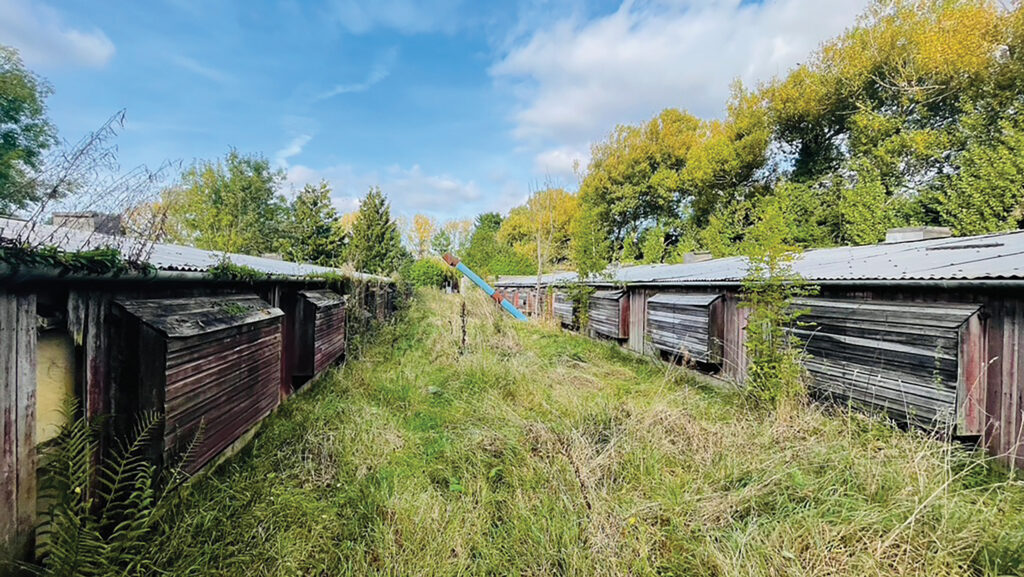
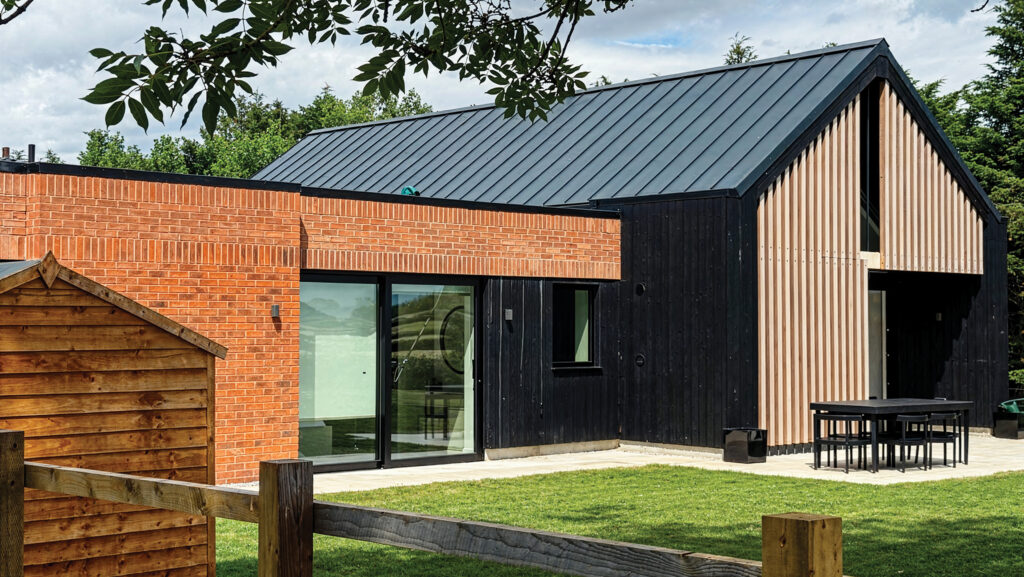
Before and after – A mix of Class Q and full planning was used by Studio Spicer to transform these poultry sheds © Studio Spicer
© Studio Spicer
“There is a very useful piece of case law known as the Mansell case, which in 2017 set a precedent that makes it much easier to argue that consent should be granted as part of a full planning application.”
Under the ruling, if it can be shown that a Class Q consent already exists or there is a very high chance that one would be granted, that becomes a material consideration during the planning process.
“Basically, it makes it harder for a planning authority to say no if you want to build a higher-quality, more attractive home than one that would be created using a Class Q PDR,” explains Oliver.
“It’s about the concept of ‘betterment’. You are saying to the planners: If you have to give me permission for an unattractive barn conversion, why wouldn’t you give me permission for something much nicer?”
Betterment benefits can include the removal of eyesores, improving the setting of a listed farmhouse, a better-designed and less visually intrusive house, and a better and more workable layout for several houses.
“We picked up on the ruling at the time and since then have done hundreds of projects where we get Class Q consent to convert the agricultural buildings as they are with minimal changes and then ask for planning permission to knock them down and replace them.”
Sites with planning consents for replacement builds can attract extra interest from developers because they don’t come with any Section 106 or biodiversity net gain (BNG) requirements, points out Oliver.
Another benefit of gaining a full planning consent for a replacement dwelling is that it can make gaining an NHBC 10-year structural warranty, which mortgage lenders often require, easier, he adds.
Another option to obtain a larger home with more floor area than allowable under Class Q is to create a single-storey barn conversion and then get consent to add in an extra floor later.
“Lots of barns are tall enough to give you room to do this,” says Oliver.
“Using a mix of Class Q, Class R and full planning consents has made it possible for us to create attractive farmyard schemes on sites that are much larger than the total area permitted by Class Q alone,” he says.
Looking beyond Class Q
- Use Class Q as a stepping stone to gain full planning consent for larger residential properties
- Consider Class R (commercial property) permitted development options when converting redundant farm buildings. Class R can include holiday lets
- To maximise your options, consider using a mix of full planning consents, Class Q and R in one development